Centered: Taking Aim at 2017

I have often vacillated between speaking and not speaking. Many times, I’ve spoken and regretted it. Other times, I’ve chosen not to speak, and found that my silence has hurt me – or worse, hurt others. Occasionally, I’ve held back for a while, allowing a little time to elapse and then tried to speak from my heart in a centered way that was not accusatory or defensive or in another way emotionally manipulative.

In my experience, the latter of those options has generally produced the best results.

And by results, I mean that I have found less cause to regret my words when this is the case. I am not referring to how others have reacted to or responded or felt about what I said.

In personal relationships, I generally err to one extreme or the other. Either I over-explain, over-state, over-emote OR I clam up and suppress my words. The result of both extremes is a disservice to self. When I over-express, I end up becoming hopelessly entangled in rambling sentences, often ending someplace completely unintended – expressing not what I hoped to convey but, rather, drifting  far off-course. When I clam up, I telegraph a message of disregard to my own emotional self that what I’m feeling isn’t important enough to burden someone else with. I don’t believe that everything I feel needs to be shared, but I have learned that sometimes what I’m feeling must be conveyed to another person in order for it to be acknowledged and (hopefully) honored by both listener and speaker – sometimes this is vital for the relationship to thrive. I’ve learned the hard way that relationships do not thrive if one or both parties cannot speak from a place of truth.

In the workplace, I have often told colleagues that I know – and they need to know, too – that my first reaction is rarely my best one. The good news is, it is also rarely my final reaction. But because I know this about myself, the onus is on me to manage my response to various situations and stimuli. It isn’t really fair to ask others to differentiate whether I am knee-jerk-reacting or giving a considered response.

In political life, it is sometimes fun to pronounce a zinger that carries home my point with the surety of an arrow fired from Katniss Everdeen’s bow. When I’m discussing politics with like-minded people, that can be fairly harmless because we’re all shooting in the same direction. But I often wonder what I’ve done to the positive when these arrows are deployed against opposing viewpoints – when the whole exercise is intended to find a soft spot where my point can burrow deep behind someone else’s defenses. I know I’ve managed to wound my opponent – but have I effected a change in their opinion or position? It is a fair question to ask whether the yield is worth the wound inflicted. Often, in my experience, the answer is difficult to ascertain.

Where is the line between saying too much or too little in a polarized world? When does moderation and compromise become collusion and appeasement? When is it necessary for my own holistic well-being to speak and when should my need to speak to be sublimated to the greater good? These are questions that I find myself asking more frequently these days, and to which quick answers are not particularly satisfactory.

That said, I am slowly coming to believe that love speaks from the center.

What do I mean by that? I mean that, looking back, there are a handful of moments when I know that the words I spoke were true and meaningful and carried the full force of love.   In one case, I needed to speak on my own behalf about the ways someone was repeatedly hurting me. I didn’t want to erupt in anger and hurt, but I also needed to stand up for myself and say, “This hurts.” Another instance was when talking with a friend about some personal difficulties she was experiencing. I certainly did not want to add to her pain, but to offer, with compassion, an insight that might be hard to hear. Another final instance was one in which I needed to share a differing perspective with someone in a more powerful role than me. In all three of these cases, I was anxious about what to say, emotionally desirous of a particular outcome, and powerfully drawn toward keeping my mouth shut out of fear. Instead, I took a little time – time to breathe, time to get clear on what the central issue was for me, time to relax the fight or flight response that rears up when strong emotions and fear are at play. I took the time to let go of my need for a predetermined outcome. In other words, I took the time to get centered within myself so that, when I did speak, the words could well forth with the intent of love (as opposed to intent to hurt or to control or to curry favor).

These times in which we are living require something from us. If you’re like me, figuring out what that might be is a difficult and ongoing process of discernment. But I know I will be at my best, offer my best self, when I am able to remain centered, able to access the truth and love available to me in that still place sometimes called my heart, sometimes called my soul.

That, dear friends, is why my one word for 2017 is “centered.”

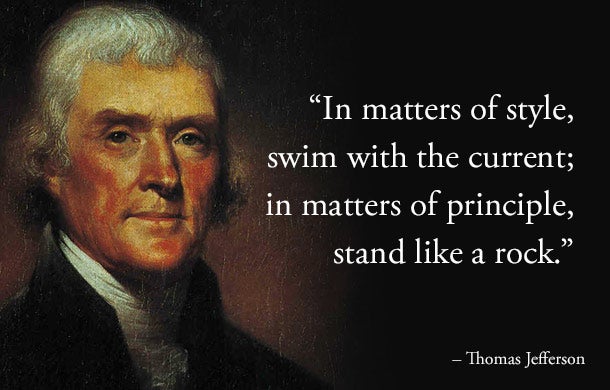
Be at war with your vices, at peace with your neighbors, and let every new year find you a better man.
–Benjamin Franklin


Goodbye, I miss you already.

18393

I’m sitting in the Albuquerque Sunport, waiting to board the first leg of my flight home after spending Christmas in New Mexico with my family. I’ve often felt that airports are the perfect places to understand what it means to be in the moment: you’ve already said goodbye to where you were, and who you were with, but you haven’t yet moved on to new places or new people. You are just there. No past no future, just now. After this past week of frenetic holiday togetherness, I find it relaxing to be in this moment (in spite of my sadness at saying to goodbye to my folks).

While I have been in New Mexico, the world has been shocked by several sudden celebrity deaths. First George Michael, who reportedly died of heart failure in his sleep. Then, Carrie Fisher, who had a heart attack while on a flight from London to L.A.  Finally, Debbie Reynolds, Fisher’s mother, who suffered a stroke while making her daughter’s funeral arrangements.

As each news report came to us, I was more freaked out. Michael was a couple years younger than me, Fisher, a couple years older. Both died of heart-related issues. I couldn’t help suddenly giving thought to my own bad choices and how they impact my health. And when we learned of Reynolds’ death, I remember looking around at my beloved family and thinking, “That’s it: I need to make certain I fully appreciate today–right now–and not allow myself to get caught up in the petty irritations that derail our enjoyment and satisfaction with one another.”

That resolution stood firm right up till the next time I needed to pee and the one bathroom at my parents’ house was occupied (again). Suddenly, I found it pretty difficult to stay in a place of gratitude and appreciation. My promise to be fully in this moment gave way to my memory of past indignities and my current discomforts.

It is easy to be “in the moment” when the moment you are in is tranquil or impersonal (such as waiting by yourself in an airport terminal). Much harder to be in the moment – and grateful for that moment – when things are crazy and crowded and  chaotic and full of people  both irritatingly and gratifyingly similar to oneself. That’s just the way things are within a family.

As I sit here waiting for my flight to begin boarding, I realize that, while I may be relaxed and thoroughly present in this moment, I am also alone. It turns out that all I needed was a tiny bit of breathing space in order to appreciate every one of those shared holiday moments – the good, bad, and downright ugly ones. I would not trade any of them for one extra minute of tranquility.


Note: the title for today’s reflection is a quote from my niece Zoe, who has often said it when parting from loved ones.

Chimes of the Times: A Christmas Story

31242934470_641a0a0796_q

“The Chimes” is Charles Dickens 1844 novella that concerns the disillusionment of Toby “Trotty” Veck, a poor working-class man. When Trotty has lost his faith in Humanity and believes that his poverty is the result of his unworthiness he is visited on New Year’s Eve by spirits to help restore his faith and show him that nobody is born evil, but rather that crime and poverty are things created by man. (from Goodreads, 3.5 of 5 stars)

Christmas, 1974

I am in ninth grade and my brother Jeff, an eighth grader, has his first big starring role on stage: Ebenezer Scrooge in A Christmas Carol, presented by Loveland Junior High. For weeks he works to memorize his lines, our whole family learning most of them by proximity. (“There is more of gravy than of the grave about you!”) During the production, I half-expect to be distracted by the voice in my head declaiming the lines in unison with the actors on stage. Instead, I am mesmerized. I actually forget that my brother is playing a part – he IS Scrooge on that stage. Sure, I like Alistair Sim’s (and Patrick Stewart’s and Albert Finney’s) Scrooge – it is quite a role for an actor, after all. But in my heart, Jeff’s is my favorite portrayal of Ebenezer.

Christmas 2016

It is a year of anxiety, strife, and divisiveness. My brother, now in his middle years, has spent his life creating meaningful theater. Lampost, the theater company he and his wife, Marsha, direct and operate, offers a wide slate of performances and experiences. But most years for the last thirty, they have presented a Christmas production. Many have been musicals, most written by, directed by, and starring Jeff and Marsha – along with various assorted cast members (now including my niece Rachel and her husband Jordan).

For 2016, Jeff has returned to Dickens. This time, the inspiration is The Chimes (described above). Although Jeff wrote this musical several years ago, this is my first time seeing it. My friend Sara and I are thrilled to be in the audience as the lights go down. A sequence of vignettes show characters in period clothing responding to the news of the day, taking us backward in time to 1844. Jeff serves as Master of Ceremonies, introducing the setting and characters. Approximately five minutes into the production, Sara leans over and whispers, “Your brother is a genius!”

Christmas 1844

England. A time of disparity between rich and poor, a time sometimes referred to the Hungry Forties. Many accept the notion that the poor deserve to be so, a result of their lack of industry and/or inferior character. Charles Dickens, seeking inspiration for his latest Christmas story, follows the story of Mary Furley, a poor woman sentenced to hang for a failed suicide attempt that results in the drowning death of her child.  Politicians and arrogant “champions of the poor”, who see the disenfranchised residents of London as sub-human, also provide fodder for his tale.

“I am in great hopes that I shall make you cry, bitterly, with my little Book,” Dickens says, and when he reads it to a group of friends who know – and share – his outrage at England’s Poor Laws, one of them writes, “There was not a dry eye in the house.” (http://www.bbcamerica.com/anglophenia/2012/12/the-chimes-charles-dickens-new-years-carol)

Christmas 1974

I fall in love with Dickens’ A Christmas Carol. Poor Scrooge, such a lonely, bitter, greedy man. I do not identify with his worldview, the stingy old miser. But I am enamored of the thought that he can be redeemed, can see the error of his ways and, even at an advanced age, can change; that it isn’t too late for him to fall in love with the world and the wonderful, unique and diverse individuals who populate it. There are no debtors’ prisons or workhouses in Loveland, Ohio in the 1970s. Still, I understand that one might be moved to desperate acts by an abusive system – I understand the rage expressed by the Ghost of Christmas Present to peoples’ indifference, if not outright inhumanity.

Watching Scrooge/Jeff’s joy on finding Christmas in his heart, I feel it in my own.

Christmas 2016

I watch with awe as the story of The Chimes is revealed through my brother’s adaptation and direction. He makes quite a case for the similarities between 2016 and 1844: the anxiety, the unrest, the disparity and polarization.

“The chimes represent time, and the main themes of the story are summarized in the three wrongs they accuse Trotty of committing:

• Harking back to a golden age that never was, instead of striving to improve conditions here and now.

• Believing that individual human joys and sorrows do not matter to a higher power.

• Condemning those who are fallen and unfortunate, and offering them neither help nor pity.”                (https://en.wikipedia.org/wiki/The_Chimes)

As was Scrooge (A Christmas Carol was published just a year before The Chimes), Trotty Veck is deeply impacted by the vision he is given of a world desperately in need of whatever warmth or good he can offer. Old Trotty, too, discovers that there is life yet to be lived – and love yet to be shared.

1974-2016. Forty two years separate these two performances starring my brother. On a personal level, that’s forty two years of direct inspiration from a sibling who lives his vocation with unwavering love and conviction – forty two years of using his talents to impact the world. But there’s something here that transcends the merely personal, too.

Driving home after the show, through the dark Iowa landscape so far removed from the streets of London where I spent the past two hours in my imagination, I can’t help but think of all the things that separate me from Scrooge and Trotty Veck…much more than the years (172 of them) between myself and Dickens, their creator. The world is so substantially different now: we fly, we visit other planets, we map genomes, we can kill our enemies with exquisite precision. Yet, the world is also the same in many ways: the greed, the selfishness of privilege, and the false virtue used to cloak them; the political divide, where both sides neglect, in favor of their “platforms”, the living breathing people who populate the gulf between them. That love can bridge what divides us is also true now, as it was then.

I think how like Dickens’ protagonists I am. Past my prime, caught up in my own busyness and jaded perspectives, in need of revival. I doubt I will be visited by three ghosts – whether in the form of human-like wraiths or the spirits of chimes. Luckily, I have Scrooge and Trotty Veck – and a brother who can bring them both to life in my here-and-now. These three stand in for the fabled ghosts, and show me much of what I need to know about taking a new path; about softening my heart to those who need what I can share; about redemption despite my ever-advancing years.

Luckily, these three help me to believe the Spirit will find a way to grace us all if our hearts are willing and open to change.

Merry Christmas!


Letting Go of Certainty

“Let go of certainty. The opposite isn’t uncertainty. It’s openness, curiosity and a willingness to embrace paradox, rather than choose up sides.” — Tony Schwartz

On a bitterly cold morning this week, I saw a woman walking toward the large garden at my workplace. I couldn’t believe that a volunteer was actually planning to work in the garden in that cold, despite clearly being bundled in many warm layers. So I watched her and, sure enough, she went right up to the garden gate. As she was lifting the bar that holds the gate shut, a sudden blur of movement rushed past: a deer at full gallop ran behind the woman, not more than a foot or so behind her. A second deer, also at a full run, followed. My heart skipped a beat – they passed so close to the woman that, had she stepped backward while opening the gate at the same moment the deer ran by, they would have collided. Luckily, the deer ran so swiftly that they were out of sight by the time she swung the gate open.

My cry of warning died in my throat. It had all happened so fast I hadn’t even managed to shout. What struck me most powerfully in that moment was that the woman’s bearing and demeanor gave no sign that she had any idea what had just taken place. She had missed both the beauty and the danger of the running deer.

Later, when she came inside to warm up, I told the woman about the galloping deer. She was astounded. She said, “I didn’t hear anything, or even feel any vibrations! Must have been all these layers.” She was torn between disappointment and a kind of retroactive fear.

This incident with the deer seems an apt metaphor for a phenomenon many have been experiencing lately. In our increasingly polarized world, we move bundled-up against the cold world in the certainty of our opinions and beliefs. Certainty feels protective; it offers us a group identity among like-minded people; it gives us a sense that we’re standing strong and prepared against any swiftly moving forces that might seek to knock us down.

Our certainty also has a negative side, though. It prevents outside stimuli from reaching us. We don’t hear the approach of other ideas, other ways of knowing; we remain untouched by perspectives that might increase the keenness of our perceptions or the compassion in our hearts.

Certainty keeps us from feeling vulnerable. When we are certain, we feel protected from having our hearts broken by the world and events beyond our control. Parker Palmer suggests that, being human, our hearts will break regardless of the false layers of protection we attempt to wrap them in. However, he believes that the heart can break in two ways: one is into the hurtful shards of brokenness we typically think of, while the other way is that of the heart breaking open in order to take in new ways of experiencing and seeing the world. To illustrate, Palmer tells these stories:

“A disciple asks the rebbe, “Why does Torah tell us to ‘place these words upon your hearts’? Why does it not tell us to place these holy words in our hearts?” The rebbe answers, “It is because as we are, our hearts are closed, and we cannot place the holy words in our hearts. So we place them on top of our hearts. And there they stay until, one day, the heart breaks and the words fall in.”  The same point is made by the Sufi master Hazrat Inayat Khan: “God breaks the heart again and again and again until it stays open.” (from The Broken Open
Heart: Living with Faith and Hope in the Tragic Gap)

If we hang on to our certainty at all costs, whatever else we’re holding must remain near our hearts at best, unable to enter inside. Our hearts remain closed: unbroken, therefore, unopened.

“A bird in hand is a certainty. But a bird in the bush may sing.” — Bret Harte


A Life of Ordinary Grace

“Strange, isn’t it? Each man’s life touches so many other lives. When he isn’t around he leaves an awful hole, doesn’t he?” – Clarence, the angel, from It’s A Wonderful Life

A few days ago, my dear friend, Ryan, announced in a public statement that he would be leaving his position as a college track and cross country coach at his alma mater. Ryan’s success as a coach, in terms of wins and records set, as well as in terms of his double-digit accolades as conference “Coach of the Year”, is well-documented. And now, thanks to social media, so is his success as an outstanding leader, mentor and human being.

Many of us never get the blessing of knowing with unwavering certainty that we have impacted the world, and the lives of those we’ve touched, for the better. It isn’t that we can’t see with our own eyes or hearts that we’ve done good things. And it isn’t just that no one says “thank you”, because sometimes (maybe often) they do. It is more that the messages aren’t specific or explicit enough to cut through the gelatinous layers of self-doubt and self-criticism we tend to wrap our self-perceptions in.

Reading the tributes and heartfelt messages, the memories and the meaning-making being shared with and about Ryan this week has brought to mind the character, George Bailey, from the movie It’s A Wonderful Life. Because he’s my friend, I’ve been aware of the ways Ryan, like George, has struggled at times – when he’s agonized about being absent as a father or a husband due to the demands of his job; the ways he has tried to grow and sometimes been stymied by forces outside his control. Yet, every day, just like George Bailey, he unwaveringly chose doing the right thing over simply asserting his own desires.

Seen in the harsh light of self-criticism, those daily choices can make you – certainly made George Bailey – feel like a chump. Our narrative of rugged individualism (and our unhealthy cult of personality) in America certainly contributes to this: if you dream big but don’t achieve the exact specifics of that dream, haven’t you failed? George Bailey dreamed of an extraordinarily BIG LIFE, but instead lived a life of ordinary grace. And in his darkest moments, he could only see that as a failure. When he was gifted with the chance to see the world as it would have been had he never been born, George discovered that ordinary grace offers a rich and meaningful, if more subtle, success than living in service to mere ego gratification.

I’ve always loved George Bailey’s story, and enjoyed the plot device of showing him a bleak world resulting from the idea that his kindness and compassion had never existed. But you know what I love more than that story? I love the real-life story of my friend, Ryan, who this week learned how the world is different than it might have been because of his kindness and compassion, his character and unwavering commitment to these values. He didn’t need the intervention of a kindly angel – he simply spoke from his heart. The response has been an outpouring of true stories that plainly show how much light Ryan brings into our world.

I am proud of my friend, and I am grateful – like so many others – for his presence in my life. More important, though, I am inspired. His example demonstrates that each one of us has the potential to serve others in this way. As I follow the threads on Facebook, I see Ryan’s impact moving so far past the sphere of his own influence. So many of those who have learned from him are living those values out in their own lives now – as teachers and coaches and team leaders in business; as parents and siblings and friends. As every-day George Baileys, holding the bleakness at bay by shining their light into the world.

“Courage. Kindness. Friendship. Character. These are the qualities that define us as human beings, and propel us, on occasion, to greatness.” – R.J. Palacio


Taming Torschlusspanik

“Alone, I often fall down into nothingness. I must push my foot stealthily lest I should fall off the edge of the world into nothingness. I have to bang my head against some hard door to call myself back to the body.”  –Virginia Woolf,  The Waves

The first time I lived alone, I had an apartment in what had once been the attic of an old house. Three stories up, my windows were brushed by the branches of burr oak trees that murmured to me on summer nights, as I lay across the mattress on my Murphy bed. I was often afraid in my aloneness, of things both seen and unseen.

One night, I woke to bats swooping around my living room – by the time morning light shone in my windows, I had captured and released three of them. It took a week of bat visitations before the landlords discovered that they were getting into my apartment through the exhaust fan in the bathroom.

I thought the bats were the worst I would contend with, high up in my secluded little studio apartment. But then there was the night a knock came at my door at 2:30 a.m. Looking out my peephole, I saw a man I didn’t know. He said, “Open the door, I baked you some cookies.” I said, “No thanks. Please leave.” But he wouldn’t leave, pounding on my door and shouting at me to take the cookies I didn’t see in his hands. When he finally left, I was shaking; I remember thinking he had to really go out of his way to end up at my door, winding up three flights of stairs and through two security/fire doors.

Another time, a terrifying storm made the whole house shake around me. I had nowhere to go to take refuge (the basement was divided into two apartments). As I huddled on my sofa, wishing the worst might be over, lightning struck an electrical pole right outside my window. A deafening crack, a blinding flash, then darkness everywhere except for a column of sparks being thrown into the air like the scariest Roman candle firework ever.

When you’re young, most of what frightens you about living alone comes from outside yourself: invaders of many stripes, emergencies that you don’t know how to resolve on your own, events that call for strength or skills you just can’t physically muster. But, if you’re lucky, you move through each of these without undue scarring. In fact, being forced to face these things that frighten you makes you feel stronger, more confident. You begin to think you can be self-reliant. You begin to breathe through the fear, and its aftermath is often a form of elation; you say to yourself, “Look at me! Slaying another dragon – third one this month!”

It has been many years and many homes since I folded that Murphy bed into its cabinet for the last time. Living alone is different now. When I lie awake at night, I am rarely afraid of intruders or how I will open the jar of pickled beets I brought home from the grocery store. Instead, the fears that arise living alone in my mid-fifties have less to do with the outside world and more to do with me.

I find myself stumbling into a habit of bifurcated sleep. I fall asleep for a couple of hours, then wake for several, before falling back to sleep. And in that middle-of-the-night wakefulness, my fears multiply. What if I fall down the stairs/have a heart attack/pass out and am knocked unconscious? How long would it take for anyone to notice I’m not around?  I worry about the world and whether I’ve done enough…AM doing enough…to make a positive contribution or a difference.

Accompanying these conscious thoughts is an emotion I couldn’t identify until I came upon this concept:

It seems the word dates back to the middle ages when folks literally feared being shut outside of the city at nightfall, when the gates were closed and locked against marauders. Personally, I’ve had this anxiety that time is running out and I’ve somehow just missed making it through the gate.

To complicate my personal sense of age-induced panic, since the recent election I’ve experienced what many people have reported (and comedian Rachel Dratch coined on Twitter) as “trumpsomnia”. I lie awake worrying about the world – our earth itself, the many forms of suffering, how we do or do not support humanity versus inhumanity. It doesn’t help to know I am not alone is this. There appears to be a a sort of societal torschlusspanik, a feeling that we’ve somehow entered not only a new era in history, but a critical closing of the gates on many of our brothers and sisters. And it is growing, this panic.

Lately, every day has been difficult to get started, and I am beginning to realize that I can’t hold both my own and the world’s gate-closing panic. I’m realizing that I have to let go of it – all of it. As Joy C. Bell says, “You will find that it is necessary to let things go; simply for the reason that they are heavy.” I don’t mean that I must let go of caring about either my own life or the world’s. But I must let go of the panic.

Facing my youthful challenges is what made me stronger and more independent – made me feel like I had slayed dragons. Here, I need a new approach: I have to stop looking at it. Looking at the dragon of torschlusspanik only feeds it and makes it stronger, further diminishing my sense of personal efficacy. Each act of self-compassion, each step on behalf of social justice, each moment of human kindness, is a movement toward taming the panic rather than feeding it. Each of these actions is a way of acknowledging that I am not the gatekeeper, that my level of panic does not affect the gate’s rate of closure. Neither does the fact that I live alone.


The burden and joy of love

Last night the wind kept catching something metal on the industrial building across the street, and it would rotate with a mournful metal screech – not high-pitched as a dog whistle but lower, like a repetitive sharp note on an alto saxophone. Almost, but not quite, melodic; definitely hypnotic.

It was 3:30 a.m. and I was wide awake. And for some reason, my mind kept reaching back into my life and casting up memories that have long lain untouched.

Screeeeeech:  Hubert Humphrey was the first person I voted for who lost a presidential election. I was in, maybe, second grade – my friend Eleanor and I were his lone supporters in our class. (In case you’ve forgotten, he lost to Nixon.) There were protests against the war in Vietnam, in my town as across the country. Walking home from school that day, I saw them in Washington Park, despite the weather. They were not an angry mob. Mostly, they stood in small groups, or walked up and down the sidewalk with their signs. I waved at them, as I did every day. Sometimes, I recognized people I knew waving back.

Screeeeeech: I was with my mom and siblings, going door-to-door asking for donations to support The Cornerstone, a drug half-way house where “hippies” received care, counseling, and had a safe place to come down from whatever drugs they were doing. An older man in a sleeveless undershirt, sitting on his front porch, spit off to the side when I approached him. He smiled as he said, “I’ll tell you what, missy. I’ll give you money if you’ll use it to buy strychnine and feed it to the lot of them!” I was confused, too young to reconcile what seemed a friendly demeanor with words that didn’t seem friendly (though I didn’t know what strychnine was). I held out my donation canister, and took a hesitant step forward. I was grateful when my Mom stopped me, saying, “Jen, let’s move on.”

Screeeeeech: In college, my Dad and I joined the protest when Vice President Bush visited a local campus. I was protesting the military-industrial complex and promoting nuclear disarmament. Dad was focused on protesting Bush’s connection to Big Oil. Most of my friends vied for tickets to the pro-Reagan/Bush rally inside the Fieldhouse, and several of them told me the protest was a stupid waste of time. It was a chilly day, as we waited for the VP and his entourage to come outside after his speech. I moved closer to my Dad, and he took my hand and held it in his.

Screeeeeech: 1991, racial tensions were high in my home town, where crosses had been burned. The city had responded by creating the “constructive integration plan”, to affirmatively bring more diversity to the homogenous city. My father, one of the authors and vocal proponents of the plan, regularly received angry messages, some threats of violence or death, on his answering machine at home. I lived in another city, and I worried about my parents. My dad said not to worry, mostly people just needed to blow off steam. But the first time I heard the threats myself, I understood the word “terrorism” in a new way.

Screeeeeech.

Screeeeeech.

Screeeeeech.

Eventually, I drifted into sleep. It wasn’t restful, and I woke again to the still dark November morning. I felt an oppressive weight – the same that has been on my heart for weeks now. How, I wondered, will I find a way to celebrate Thanksgiving – more important, how will I find thanksgiving in a heart burdened with both fear and worry?

And then my phone trilled at me. And again. And again.

Early morning messages of care and gratitude from friends and loved ones, near and far were my first experiences of the holiday. For me, politics have always been personal; my parents modeled compassionate activism, and I am more proud of that, and them, today than I have ever been. The political ideals I care about: freedom, equality, peace, care for the earth, justice – these are not just words or concepts. The extent to which each one of us experiences them is the measure of how we, as a society, have succeeded in meeting our purpose on this planet.

And all of it, every bit of it, stems from Love. That makes it not just a burden on my heart, but also a joy. In all my recent moments of fear and worry, I’ve forgotten that love is the piece I’ve been called to. That we’ve all been called to. Love in practice may sometimes be a weight to carry, but it also the very fount of joy.

Wishing each of you a Happy Thanksgiving – and much love!

John 15:12
This is My commandment, that you love one another as I loved you.

John 15:17
This is My command to you: Love one another.

Romans 12:10
Be devoted to one another in brotherly love. Outdo yourselves in honoring one another.

Romans 13:8
Be indebted to no one, except to one another in love, for he who loves his neighbor has fulfilled the Law.

Romans 13:10
Love does no wrong to its neighbor. Therefore love is the fulfillment of the Law.

Galatians 5:14
The entire Law is fulfilled in a single decree: “Love your neighbor as yourself.”


Super, Moon

The moon is a loyal

companion.

It never leaves. It’s always

there, watching steadfast,

knowing us in our light and

dark moments, changing

forever, just as we do. Every

day it’s a different version of

itself. Sometimes weak and

wan, sometimes strong and

full of light. The moon

understands what it means

to be human.

Uncertain, Alone. Cratered

by imperfections.

–Tahereh Mafi

I intended to work until early afternoon on Sunday, but got caught up in one of those small crises that sometimes happen – not a big deal, but consuming a disproportionate amount of time. When I finally walked out the front door to head home, it was just after five o’clock p.m.  I was weary; it had been a long and emotional week, with the presidential election and its concerning aftermath, coupled with long hours at work.

Back when I worked on a college campus, I developed a habit after long days like this – walk purposefully, with my head down, so I didn’t accidentally make eye contact with anyone who might have a question or concern. I’m not proud of it, but some days it was the only way I made it out of the work environment. Halfway across the parking lot on Sunday, I realized that I was doing this and laughed at myself. I lifted my head and noted that the only vehicle in the lot was mine – it was highly unlikely that anyone would by lying in wait to prevent my escape home!

The sky that greeted my eyes when I finally looked up from my feet was…spectacular. The range of colors was breathtaking, with striations of clouds colored pink, lavender and red. To my right, the setting sun was a giant ball of  orange fire. To my left, the rising moon was a huge, full, perfectly round orb, glowing white.

I have a long history of taking comfort from the moon. It isn’t that I don’t love the sun – what’s not to love about that gorgeous star that makes life possible for us here on our blue-green marble? But I can’t identify with the sun, I’m way too introverted for that. I’m much more like the moon: reflective, changing, “cratered by imperfections.”

As the poem above asserts: the moon understands what it means to be human. Understands what it is to feel surrounded by darkness and often impenetrable space. Understands that sometimes it feels all you are capable of is reflection, shining someone/something else’s light back at the world. Understands that there are times when it appears to all, even ourselves, that our light has completely gone out.

And yet, the very next night, searching, we find the faintest sliver of light returning.

It is then we remember that the moon has powers and gifts not always visible to the eye (tides that ebb and flow, the stable tilt of our earth’s axis, the gift of workable metals). And we, imperfect though we are, have ours as well. We each have powers to wield staunchly, gifts to share unstintingly. Even those of us most cratered with imperfection are also capable of countenancing light.

Holding onto this thought, I take a hopeful step forward.


The moon does not fight. It attacks no one. It does not worry. It does not try to crush others. It keeps to its course, but by its very nature, it gently influences. What other body could pull an entire ocean from shore to shore? The moon is faithful to its nature and its power is never diminished.  -Ming-Dao Deng


Tertium Quid

cam04637

Power without love is reckless and abusive, and love without power is sentimental and anemic. Power at its best is love implementing the demands of justice, and justice at its best is power correcting everything that stands against love. – Martin Luther King Jr.


I work in an unusual setting – a Franciscan ecospirituality center, founded by a community of Catholic nuns who were inspired by the work of Thomas Berry and Brian Swimme. Most of my work days, like anyone’s, are filled with administrative tasks and efforts to react quickly and appropriately to the small daily crises that arise. However, parts of most days are also intellectually stimulating and/or spiritually challenging in ways that stretch me toward greater understanding or deeper self-reflection.

In particular, one of my colleagues is a scholar and theologian whose intellectual capacities and sheer volume of knowledge dwarf mine and, often, leave me speechless. She has a propensity to pepper conversations with Latin, Greek, or German phrases, which she is then required to explain to me. One such phrase is the concept of the “tertium quid“.

Tertium quid: a third thing. There is a long history of the ways this term has been used or applied in legal settings and in theology. But I have come to think of it as a way of seeking something elusive in our polarized culture: a third way. Not one extreme or it’s opposite, but a wholly different thing, connected but distinct from both. The third way.

Here’s a brief  personal example: I grew up with a tendency to see the world as somewhat hostile to me. This view came through in automatic, frustrated thoughts like “why does nothing ever work out for me?” or “seriously, the universe hates me!”. One day a friend dared me to spend the whole day believing that the universe loves me and that everything was geared toward cooperating with me. It turned out to be a pretty great day. I soon found I couldn’t sustain the belief that the world was ordered for my particular benefit. However, once I stepped outside my entrenched view that it was actively hostile toward me, I could no longer sustain that thinking either. Enter the tertium quid, the third way, of thinking about this: the universe isn’t about me. I am, instead, one small soul within it, and the degree to which I relax and cooperate with it determines, in large part, how well the day goes! Taking myself out of the center of my worldview helps me tremendously (when I remember to do it, rather than fall into old habits of thought).

At this moment in our country, in this incredibly divisive political climate which is proving toxic to our humanity, and physically dangerous as well, I’ve been thinking a lot about the tertium quid. Between the polarized ends of extreme views, there must be a third way.

I am guilty of not seeking it either as consistently or as passionately as necessary. During what, in Iowa, has been a full two years of constant political haranguing between the two parties and their almost comical (if it wasn’t so hurtful) need to force either/or thinking upon us, it has been very difficult to seek a third way. We’ve been so rabid to get our points across that we haven’t given any real time, or effort, to listening. At times, when we have tried to speak, we have given up because of the willfully deaf ears our voices spoke to. Far too often, we have had neither open hearts nor open minds.

Two days post-election, I have no panacea that can cure us – just a profound sadness, a deep fear of the chasm opening further between the “two Americas” we keep hearing about, and a heartfelt longing for us to find ways to heal. Right now, it feels like we are being presented with two roads: the Avenue of Violence and Division or the Boulevard of Dominance and Control. I prefer to seek, and pray we find, a Third Way.

Walking, I am listening to a deeper way.

Suddenly all my ancestors are behind me.

Be still, they say. Watch and listen.

You are the result of the love of thousands.

–Linda Hogan

River Water In My Veins

The Mississippi, the Ganges, and the Nile,… the Rocky Mountains, the Himmaleh, and Mountains of the Moon, have a kind of personal importance in the annals of the world.      –Henry David Thoreau

Image 3

I could not see the river from the yard of my childhood home, high on the bluffs of Dubuque, Iowa. Yet the Mississippi was a felt presence there, always that force by which I oriented myself in the world. Even at play, I paused for the low sad call of a barge whistle. In the Dubuque of my youth, there were the flats and the bluffs, dividing rich from poor; there was the north end and the south end, dividing Germans from Irish. But relation to the river defined them all.

All of my early life was lived along the Mississippi. We left Dubuque for Davenport and Hastings, MN, but both were Mississippi towns. For the four years we lived in Ohio, in a town along the Little Miami River, I yearned for THE river. Despite the fact that the Little Miami is a National Scenic Waterway, I couldn’t appreciate it. The Mississippi River was the water in my blood.

A couple of years ago, on a bike ride with friends in the Twin Cities, we stopped and gazed at the Mississippi, from a point high above it. My friend, V, born and raised in St. Louis, released a satisfied sigh and said, “My river!” I laughed, having just had the same experience – an internal relaxation like that of coming home, accompanied by a proprietary love. Neither of us owns the river, but we both love it fiercely.

Today, in North Dakota, there are people fighting to protect the Missouri River from the Dakota Access Pipeline. People for whom that river speaks of life and home. People whose histories are inextricably bound to the land through which the Missouri wends its slow passage. My heart is with them, because their fight is my fight too – the same “black snake” is intended to pass through our rich Iowa farmland, and then underneath my river, too. Their fight is my fight, and is bigger even than us: because water is life for ALL.

I can’t believe in the safety of this pipeline despite the many assurances we’ve been given by the private company building it and by our elected officials who support it. I can’t believe in it because the history of pipelines gives the lie to their assurances. Pipelines virtually always leak at some point. It doesn’t take long to learn this – check out this list of pipeline accidents in the US since 2000, if you doubt that this pipeline poses a danger to the waters of our rivers, our groundwater, our soil. Look at the pictures of the aftermath of these leaks and explosions – I did, and they broke my heart.

There are many issues and opinions associated with this pipeline. I don’t claim to have all of the information, much less all of the answers, though I am educating myself. What I do claim is my love for one special river and the ways that river feeds, slakes the thirst of, and enhances the earth and its people. And because of that love, I hear in the depths of my heart the voices raised in care for other special places: other rivers, waterways, beloved and/or sacred lands that are endangered by human action.

What I do claim is my belief that water is the sacred right of all creatures on this earth – not to be squandered uselessly, endangered through greed, or owned by corporations.

This blog is as faithful a record of my inner life as I am able to share publicly. I don’t write about issues because they are in the news, or because I think I have either the right or the authority to tell anyone else what to think, feel or do. I write about issues that I am currently grappling with myself, that are affecting my emotional and/or spiritual life. In that sense of giving voice to my inner life, I feel called to make this declaration: I stand with Standing Rock. I stand with them because my heart and my head and my love for this earth and the Mississippi won’t let me remain seated. As the old adage goes, we must stand for something, or we’ll fall for anything. I’m not falling for the oil snake, despite its well-heeled salesmen.