Author: jenion

Flashback Friday
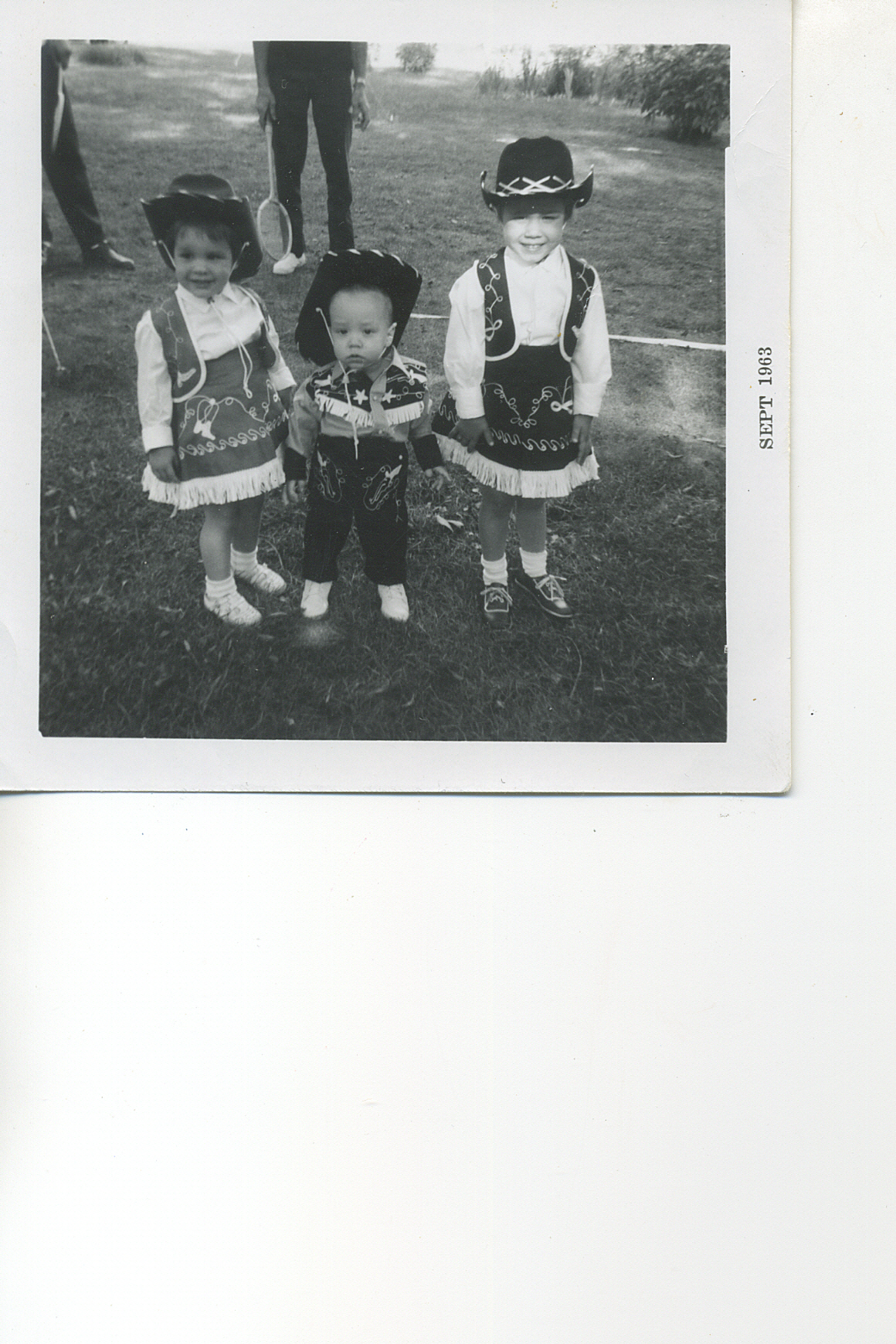
Me, Jeff, Chris:
Welcome to the Wild, Wild,
West-of-the-Mississippi!
Measuring vs Pouring
Do I dare
Disturb the universe?
In a minute there is time
For decisions and revisions which a minute will reverse.
For I have known them all already, known them all:—
Have known the evenings, mornings, afternoons,
I have measured out my life with coffee spoons;
I know the voices dying with a dying fall
Beneath the music from a farther room.
So how should I presume?
–T.S. Eliot, “The Love Song of J. Alfred Prufrock”
“It is the law that is measured out. It is the law that always asks the questions, “How far do I have to go? How much is enough?” But love never asks these questions because love is never measured out. Love is always poured out.”
—Bill Mills, Naked and Unashamed
It is a little strange to begin an entry with two quotes, especially two which come from such completely different sources. The first, from one of my favorite poems (especially to read aloud), strikes me as being all about living life by holding back, by choosing to believe that pouring oneself out into the world unreservedly would be presumptuous. Poor Prufrock feels the insecurities of being ordinary in a world which values the extraordinary – and who among us has not felt that? And feeling that, he holds back. We hold back.
The second quote, above, comes from a source I haven’t read. Instead, this quotation was included in a blog post by Randy Greenwald, and it has stayed with me for days. Love is always poured out. Which is to say, if it isn’t being poured out, if it is being held back, measured, and dribbled out, it isn’t love.
Usually, I would want to blather on and on about what all this means. Today, I simply want to say that in learning to love my life, I have been learning to pour myself out – to allow love to flow unimpeded by insecurities and fear. I haven’t learned to do this perfectly yet. But I have learned that putting myself out there in a careful trickle only results in regret. So I am going to let love (of life, of others, of my flawed self) cascade, flood, gush forth and inundate my world. I hope you’ll join me — and let it pour, baby, let it pour!
Thursday, March 24, 2011

While there are two additional pounds on the scale, I am happy with today’s weigh-in. The past three weekends of travel made it difficult (if not impossible) to control my food choices, though I did so when able. You will note that my poor feet are recovering from many blisters – even comfortable footwear will do this when you walk for 12 hours in one day!
Triple Word Tuesday
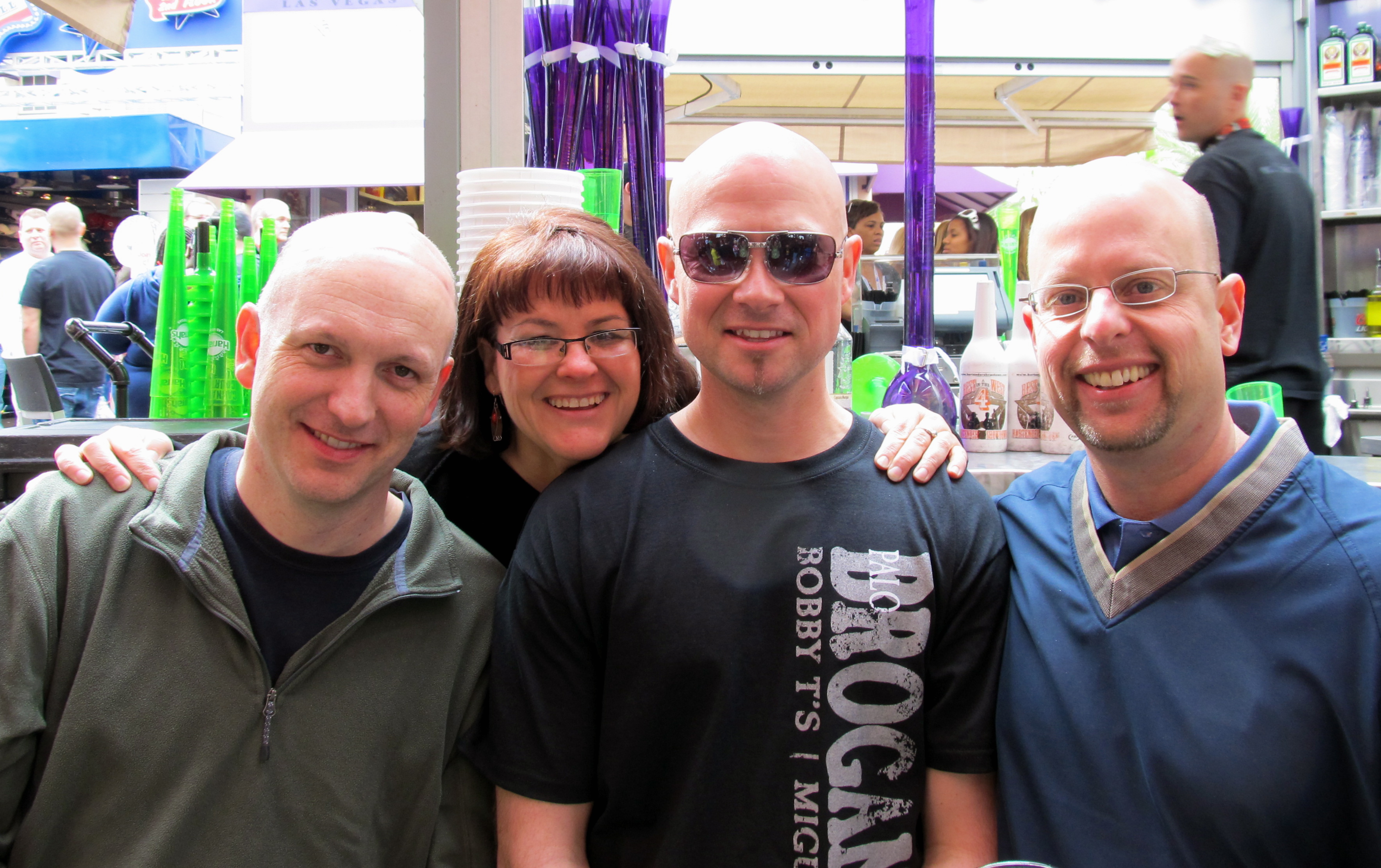
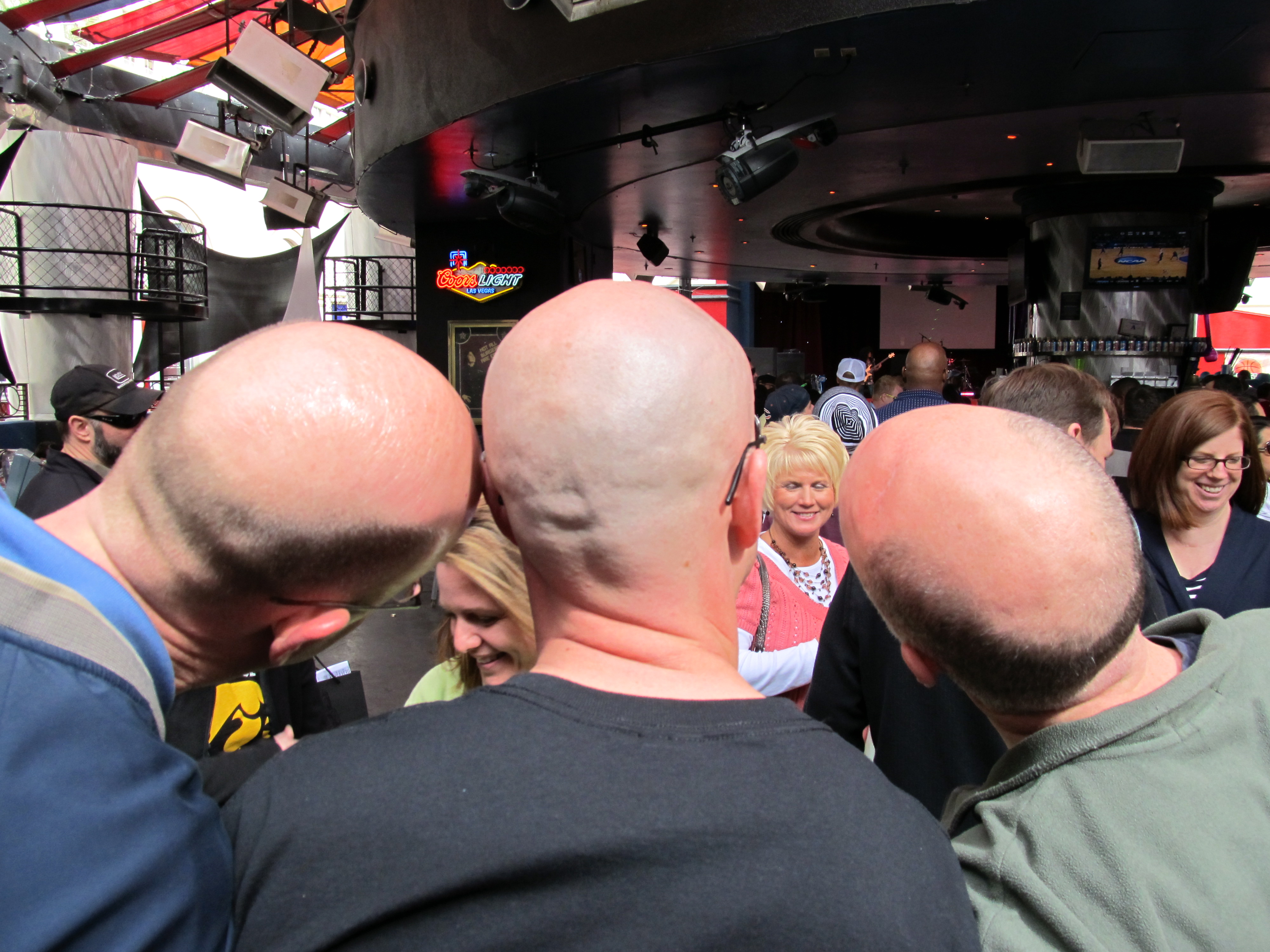
BALD IS BEAUTIFUL!
St. Patrick’s Day
 It seems I am destined to travel on St. Patrick’s Day, instead of actually being someplace where it would be fun to experience the day. For example, the year I went to Ireland, we travelled on St. Patrick’s Day, and arrived early morning on the 18th. Bummer!
Anyway, I wanted to post a short hello by way of letting everyone know that there will be no weigh-in or deep reflection today – I am on vacation!
Enjoy your St. Patrick’s Day in whatever manner pleases you – I will be with people I love…and whatever else the day holds, I hope to lift a glass of Guiness in celebration of the fulness of life!
Conference – Day 3: Innovate
I am a day late posting about Day 3 (Tuesday) of the NASPA Conference. The truth is, Tuesday was so full of content that when I left the final session at 4:30 p.m. I just couldn’t process it. In fact, I had been in back to back sessions all day, with no break or sustenance (even the water bubblers at the convention center were empty), so the first order of business was a large bottle of water, followed by a brisk walk through the Walnut & Chestnut shopping district. Then, a burger and fries at the Hard Rock, and coma – on the bed in my room by 7:00 p.m.
The sessions I attended Tuesday ranged from the politics of advocacy, to legal issues, to creative listening, to using technology both in direct work with students and in connecting with other professionals in student affairs. While I found something of interest (and ideas to return to my campus with) in every session, the most mind-blowing sessions were the technology ones. Hands down.
The fact that the tech sessions were actually called “Un-sessions” leant them an air of informality that I really appreciated. Also, unlike most professional settings, you were not sneered at for having your smart phone in your hands and using it! I think the assumption was that you were tweeting session content, and the Microsoft-sponsored technology room was equipped with projectors and screens so that a running twitter feed could be displayed while the “un-session” leaders both shared their prepared thoughts and ideas, and responded to the real-time tweets.
Twitter was ubiquitous at the conference, and I found it almost humorous to watch. One young star and proponent of technology in our work with students received an almost rock-star response – every gem he shared with the group was tweeted and retweeted so many times it was comical to follow his session via tweets (I finally learned exactly how to use hash tags!). Beyond the “kids with new toys” quality of these sessions, there was real information – on resources for professional development (blogs, on-line communities, live twitter chats, etc.); on creating transformative moments for students using new technologies; on how to begin a dialogue via twitter or Facebook then use it to develop IRL/face-to-face relationships with, between and among students and staff on our campuses.
I know that I was not the only person soaking things in like a sponge. I may be coming late to the technology party, but I’m catching up fast. One person tweeted that she was sick of all the technology sessions and wanted to know what had happened to the usual conference fare. Well, here’s my thought about those day-to-day issues, such as budgets and supervision and conduct and _________ (fill in the blank): they will always be with us. And they will always make up the agenda for regional conferences or state professional gatherings. But for those professionals, like me, whose resources only allow irregular opportunities to attend national conferences, the NASPA Conference 2011 was exactly what it should have been. Challenging. Forward looking. Energizing. And exhausting! My one regret? My flight left too early and I was unable to see the final keynote speaker, Robert Kennedy, Jr. That would have been the cherry on top of a very rich experience.
Triple Word Tuesday
WE WANT PEACE!
Conference – Day 2: Activism
I began the day with an early morning trek to the Philadelphia Museum of Art. It was too early to enter the museum and see the exhibits, but that is not what I was there for, anyway. Like millions of others over the years, I visited the museum to see the Rocky steps. You know, the ones Rocky tackled as part of his training for the big fight in the original Rocky film. One of the reasons that movie has inspired so many is the whole idea of one regular guy taking on a corrupt system and, through application of hard work and heart, overcoming the odds that are stacked so high against him.
Turns out, this was a fitting way to begin the second day at the NASPA Conference. The morning’s featured speaker was Emmanuel Jal, whose autobiography War Child tells the story of his turbulent youth in Sudan, where he witnessed many atrocities, at the age of eight became a child soldier, then a refugee and one of the “lost boys” of Sudan. But Jal’s path was destined to cross that of Emma McCune who saved him (along with 149 other Sudanese children). Jal now works for peace and to better the lives of those in his home country living in poverty. His goal is to change the world. I know he managed to take a bunch of college administrators and turn us into dancing fools this morning, so maybe he will succeed.
The afternoon featured speakers were Ian Cheney and Curt Ellis, the documentary filmmakers who brought us King Corn the story of how hidden corn in our diets has literally changed us. They also took on a project of farming out of the bed of an old pickup, leading to their high-profile Truck Farm. Advocates for sustainable practices in food production, they have also started an activism project modeled on Americorps, called Food Corps. Their aim is to send young adults into communities to teach about whole foods, grow school gardens, and get communities really thinking about the startling effects of our current food consumption patterns in the United States. This is a public health crisis (1 in 3 children is on track to develop Type II Diabetes), it is a social justice concern (our poorest communities have the least access to fresh foods), and it touches everyone. After the session, I spoke briefly with Curt Ellis, who is spearheading the activism side of their ventures. He indicated that Iowa (my home state) is one of the first 10 states to which Food Corps workers will be sent. We spoke about some of the challenges in Iowa of speaking directly and truthfully to farmers and to powerful business interests about these concerns. He said he’s met with higher level management at businesses such as Cargill (to name one major industry in my community) – and he believes that by and large they want the same things he does, among them food that makes people healthy rather than sick. The ten states they’re starting Food Corps in were selected because they already have statewide organizations which will support Food Corps’ mission and purpose. In Iowa, there are a couple of campuses with strong Americorps programs, and they will also be working with the National Center for Appropriate Technology.
In addition to the two featured presentations, I went to two additional sessions. One of these also fit todays theme. The presenters, from Marquette University, discussed the development of a social justice living-learning community based on the life and work of Dorothy Day, founder of the Catholic Worker Movement. Dorothy Day, an activist whose example has inspired many to enter fully into lives of those who have little.
In all, I walked away from today’s formal events ready to take action in both my work and my own life. Inspiration is a great thing, but today’s speakers reminded me that without action, great ideas remain just that. As Emmanuel Jal, Ian Cheney, and Curt Ellis know, inspiration must lead to action in order to spark real change. And this brings me back to Rocky. As we all know, sometimes the road to change is difficult and requires hard work. We love what Rocky stands for because he succeeded through sheer perseverance. Emmanuel Jal fasted for over 600 days to raise money to build a school in Africa because he promised the children he would do it. I don’t know about you, but I definitely call that perseverance! I’m happy to have both the fictional hero and a real life one to learn my lessons from. And the lesson I learned today is that it isn’t really a question of CAN I do it (am I good enough, strong enough, talented enough to change the world). Its more a question of WILL I do it? And the only way to answer yes to that question is…to get busy!
Conference – Day 1: Inspiration
I am currently in Philadelphia, attending the annual conference of the National Association of Student Personnel Administrators (NASPA). The theme of this year’s conference, stemming from our location in this city of our nation’s birth, is “Educating for Lives of Purpose”. I have to admit that, more than twenty years into my professional career in Student Affairs, I can be a bit cynical about meaningful titles and conferences which suggest there might be things seasoned professionals can learn from the programs being offered. Tonight’s opening session, though, may have set the tone for a transformative experience I wasn’t anticipating.
The opening session of professional conferences can be…well, boring. You hear from numerous speakers who congratulate themselves and thank everyone under the sun, give “updates” and “housekeeping notes”. And when that is done, your keynote address is from someone who might be marginally entertaining but, let’s face it, rarely actually knows anything about student affairs. Not tonight.
We began with the theme song to Rocky, which as anyone who reads my blog knows, has personal significance for me beyond the movie. The conference chair gave a gracious welcome, which was succinct and minimalist (as these things go). The NASPA President, Elizabeth Griego, from University of the Pacific, gave a stirring speech on the theme, “We are the people we have been waiting for”. She called us to personally creative leadership, lives and work of purpose, and to ask ourselves whether what we are doing is clear, focused, intentional, and systematic enough to bring about real transformation in the lives of our students and in the communities our institutions are part of.
The featured presenter for the evening was Donna Shalala, President of The University of Miami (and well-remembered as the Secretary of Health and Human Services for eight years under President Clinton). President Shalala made a few brief remarks about her career. She was engaging to listen to, and it is clear that she not only understands the student affairs profession, but sees it as essential to the work of colleges and universities.
President Shalala’s remarks were, however, brief. The majority of her session was devoted to a panel (which she moderated) of recent college graduates who are engaging in lives of purpose through community service: the Peace Corps, Teach for America, City Year, and the Clinton Global Initiative University. These young people were amazing – articulate, thoughtful, bright. And they were challenged, supported, and mentored by student affairs colleagues at each of their respective institutions. As a young woman named Sajena Erazo said, “I pour myself into my students to make them better than I was at their age. And I realize that is what you did for me when I was a student.”
Before the panel, as a way of introducing the panelists and the organizations they are working with, we watched a video. I wrote down one set of words which flashed by on the screen: raise money, raise hope, raise the bar. And while I don’t do a lot of fundraising associated with my career (except for a current pledge drive raising money throughout Lent for Kids Against Hunger), I do believe in the very real possibility of both raising hope and raising the bar in my work. And I am ready to ask myself, as President Griego suggested, “What does it mean to me to live with purpose?” Hopefully, the rest of the conference will also inspire me to ask myself this difficult question. To challenge myself to be the person I have been waiting for.

