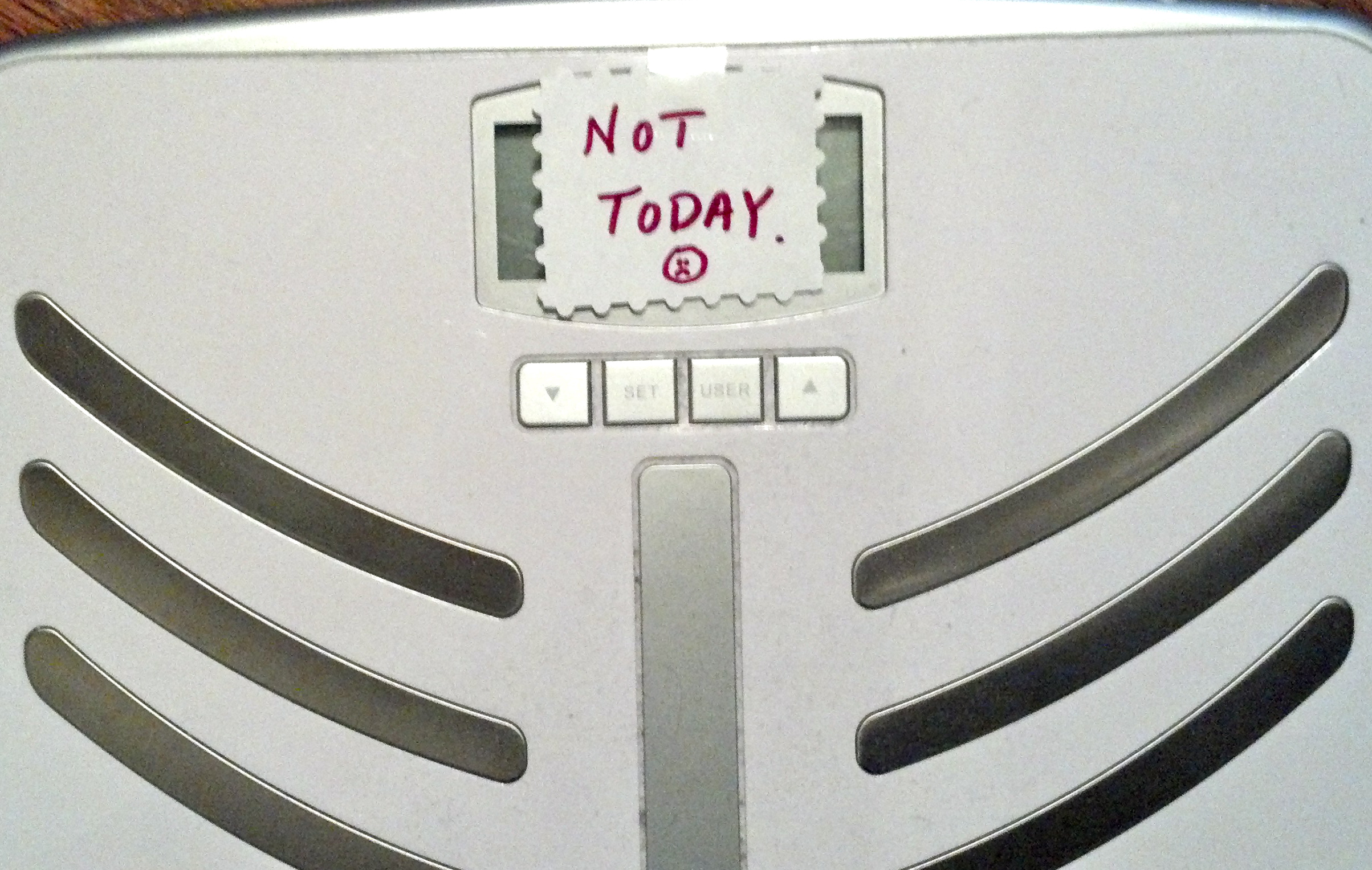
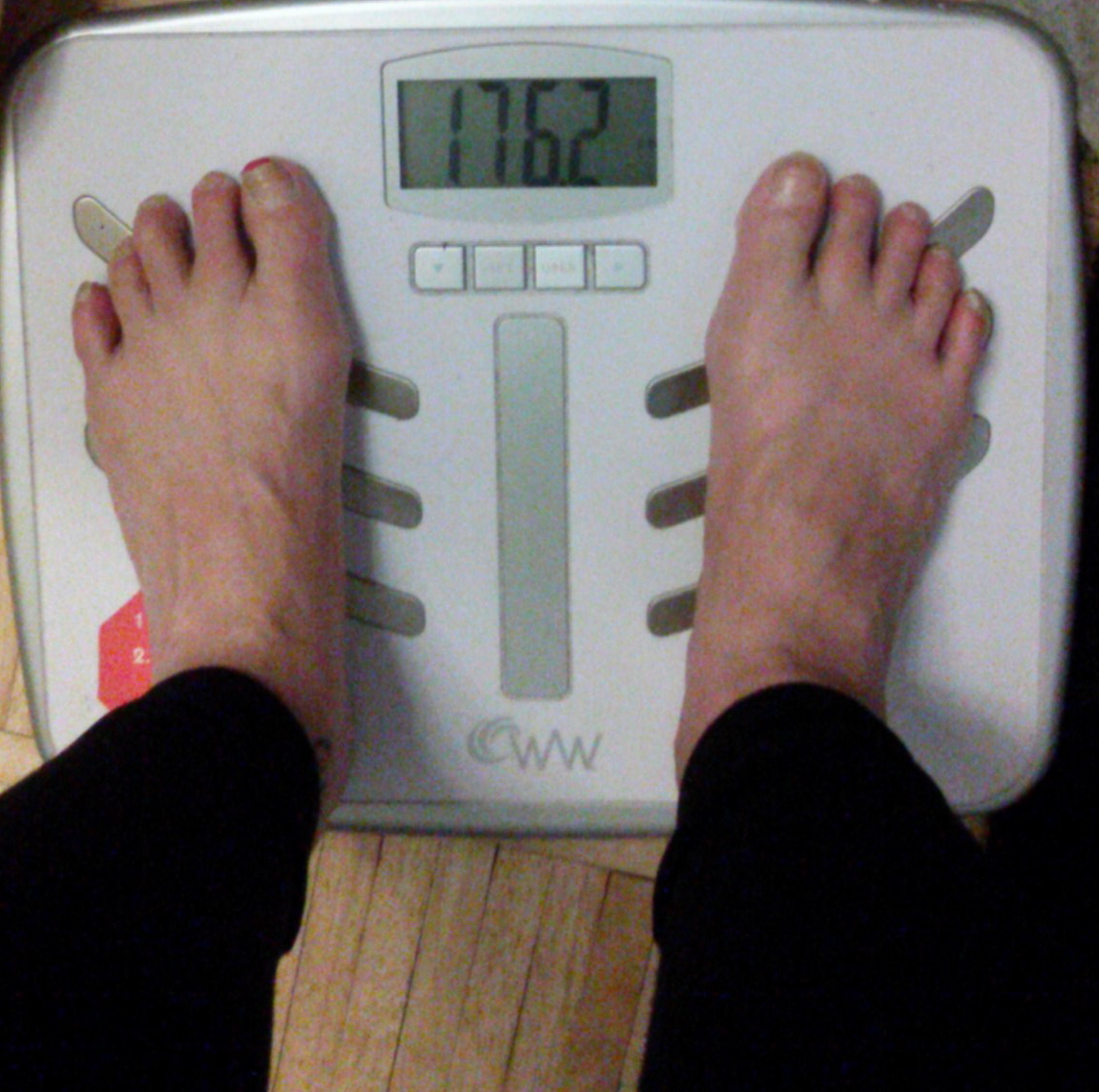
The Goal

After a short night and an eight hour shift on my feet, the last thing I felt like doing was riding. It was in the 90s, humid, windy. For so many reasons, I did not want to ride.

However, I changed my clothes. Pulling the chamois on over already sweaty skin wasn’t easy. Jersey on, hair up. I grabbed my helmet and gloves on the way out the door.

The first few miles were a leisurely ramble. Bike lane to bike path, to street (where I had to stop for a slow Sunday train). Finally, the Hennepin bridge and ramp back to bike path. The long, mostly straight one heading out to the near suburbs. Here’s where I got serious, pushing my legs and lungs to go as fast as possible into the gusting wind.

Something happens, riding alone like this, on afternoons when I think I want to nap instead. A part of me I didn’t know existed until a couple or three years ago presents itself. It still surprises: that piece of me that wants to know what I’m made of. How hard, how fast, how “flow” can I go?

Then, almost before I know it, I’m on the home stretch. The wind is finally, blessedly, at my back instead of in my teeth. This is when I can really think, when the air I’ve been sucking has oxygenated my blood and my brain; when my heart-rate is descending for the first time in an hour or more.

I know the only reason I made myself ride was that I set a weekly goal of 100 miles Monday-Monday. If I hadn’t gotten out, I’d have missed it by 20+ miles this week. I rode hard because I didn’t want to complete the goal as I had the previous week, circling the block to eke out that last mile. Still, both weeks I met (and this week exceeded) my goal.

I’ve never really been a goal-driven person. For many years, I didn’t believe in goals – setting them seemed like one of those things people give lip service to but no one really does. Like always having an up-to-date resume, extra batteries, or underwear in your carry-on in case the airline loses your luggage.

“Why,” I wondered, “does it matter if I meet this arbitrary goal I set for myself?” The answer that came was simple – because I set it. The goal was a promise I made to myself. The 100 miles target may have been arbitrary. But the promise I made was a commitment to myself and for myself and was in no way arbitrary.

I wonder what would happen if I set goals like this in other areas of my life – and made a commitment to myself to keep them? Riding my bike has taught me to appreciate my body – its strength and endurance, its potential (which has not nearly been reached). Can it also teach me to appreciate my intelligence, skills, experience? Can it teach me to celebrate all that I have to offer – and find a way to bring it forth from my internal world into the world at large?

Will my bike be the vehicle that leads me where I need and want to go in my life – that leads me to the person I hope to be? Now that I know goals can be set AND met – BY ME, of all people! – and that I will approach them with resolve once I’ve committed, it’s well past time to set concrete intentions in the other parts of my life.

My biking goal isn’t  “to ride 1000 miles”. But in 100-miles-a-week increments, it won’t be long before I’ve reached that milestone. Instead of setting my sights on my “Pie-in-the-sky” life desires, it seems logical to start with goals that allow me to collect the ingredients, combine them in the right amounts. Eventually, they’ll bake a pie.

I’ve read lots of articles about the health benefits of cycling. They almost never mention (actually they never do) increased capacity to set and reach goals. And while the benefit to mental acuity is sometimes mentioned, the fact that  it can lead to spiritual growth is generally soft-pedaled. I’m beginning to believe that, when people talk about how much they love their bikes or their time cycling, what they’re really celebrating is the fact that riding teaches us to love ourselves. To love ourselves enough to set goals – to make a commitment.


Message on a Coffee Sleeve

Image

When I was a kid, I read the book The Amityville Horror. It scarred me for life. I am not kidding – when the movie came out, all my friends were keen to see it, but I knew better. Nothing had ever scared me like that book. There were several events that haunted me long after I finished reading. One of them was that the main character would wake up every night, look at the clock radio at his bedside, and see that it was 3:15 a.m. (It turned out that 3:15 was the estimated time that several grisly murders had taken place in the house).

After reading that book, I lived in fear of waking in the night to a clock that reads 3:15.  Consequently, it seemed to happen with regularity through my teen years. Each time, I would lie awake listening to my own fearful breathing, waiting for something bad to happen: an apparition, the sound of a footstep or a crash in the next room. (It should probably be noted that I was afraid of the dark itself well into my adult years.) Eventually, I began to wonder: was something outside of myself waking me at 3:15? Was I subconsciously waking myself at 3:15 because I was focusing my fear there? Or was I waking at all times of the night but only remembering the 3:15 a.m. times because I had loaded that time with so much strong emotion?

When the only bad thing that ever occurred as the result of a 3:15 a.m. clock viewing were some seriously messed up dreams, I stopped paying attention. If it happens now that I wake at that time, I might take a moment to laugh at my youthful self, then roll over and go back to sleep.

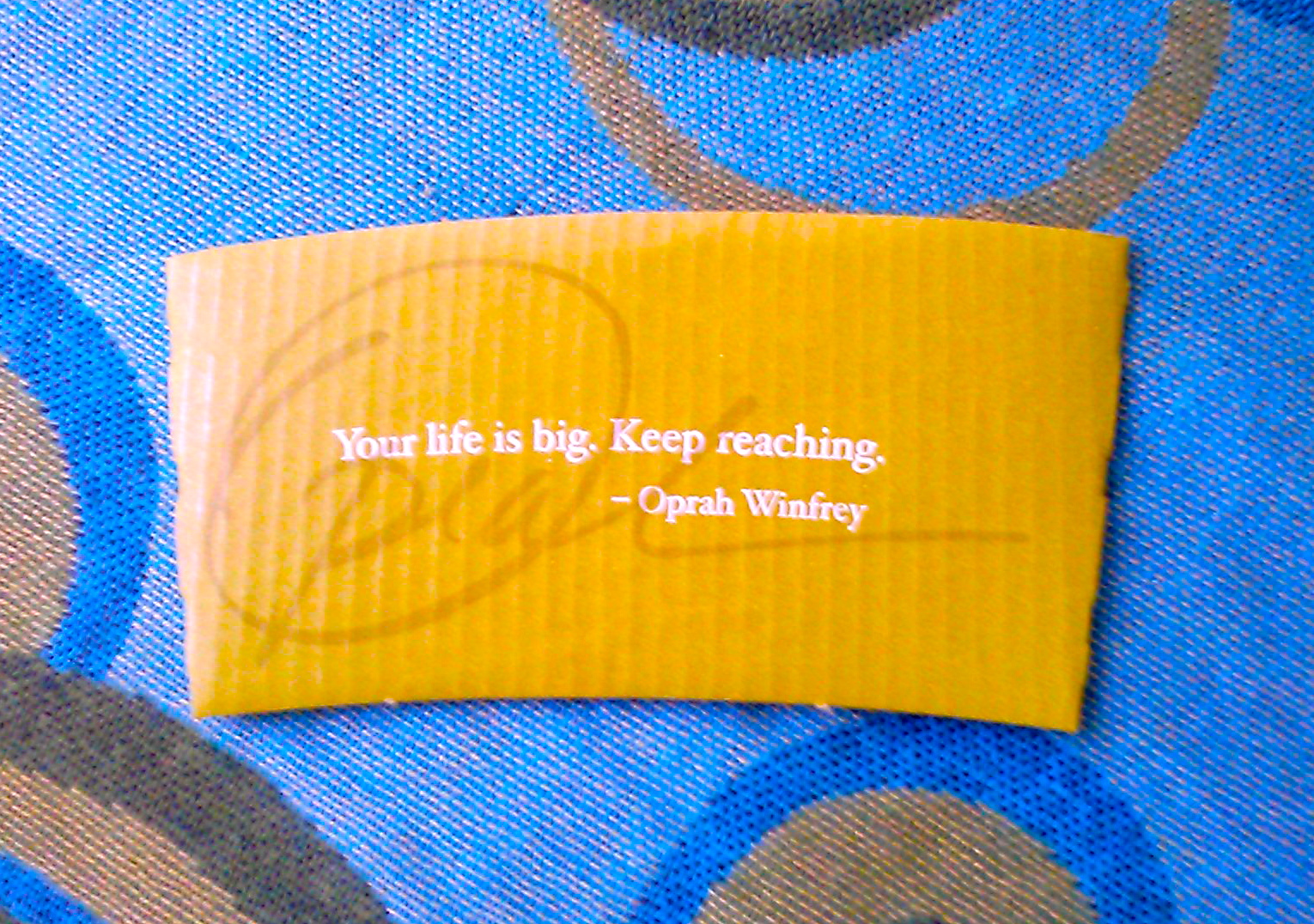
Throughout my life there have been other – similar if far less sinister – examples. Recently, Big Coffee entered into a relationship with Oprah, resulting in new sleeves for each cup which bear motivational/inspirational Oprah quotes. In the course of a busy day, I’m grabbing sleeves and handing off coffees with no notice of the message printed there. However, when I did happen to focus, the same quote kept appearing over and over. “Your life is big. Keep reaching.”

Once I noticed this, I tried playing games to see if the experience would continue when I was intentionally looking for it – for example, I noticed that a sleeve was backwards in the dispenser, so I flipped it – and sure enough it said, “Your life is big. Keep reaching.” In a slow moment, I asked a coworker to name a random number less than 10. She said, “Six!” I pulled sleeves until I reached number six, which told me that my life is big.

As you might guess, I started wondering if there was a personal message here. I mean, I know that millions of these sleeves have been printed and handed out. It was obviously not the corporate intent to use them as a vehicle to speak directly to me. But was there some Other Intention out there, trying to send me a message?

“Your life is big. Keep reaching.” On the up side, this admonition suggests that it is important to keep striving to reach further and higher; to set your sights and ambitions beyond the ordinary and then go for it. On the down side, it could be taken as an indictment – that you are currently living small and need to step it up. The more I thought about it, the more confused I became as to what its meaning was for me. How big IS my life? How big is my life SUPPOSED to be? What exactly is Oprah talking about when she says “big” anyway? And don’t even get me started on “reaching”.

Before I quit my job and moved to Minneapolis, I told people that (in my experience) it takes at least a year to become truly acclimated and comfortable in a new city. July 1 was my one-year anniversary here. Which may shed light on why six words on a coffee sleeve were commanding so much brain power and reflection time from me. From Earth Day to Thanksgiving 2013, my life felt expansive. I felt I was on the cusp of creating a Big Life – which to my thinking meant one which would both incorporate the investment of my strengths and talents in meaningful endeavors AND would offer inspiration to others to make the necessary choices to invest similarly. With winter came the Polar Vortex, and my own personal vortex of anxiety and despair. I had forgotten to take into account that life doesn’t follow an uninterrupted upward trajectory.

No. In fact, the graph of a life is a crazy zig-zagged chart that may or may not make sense at first view. The unexpected happens. The disastrous and the exhilarating happen, and in between are all the moments sloping up to or down to those points. The trick is to learn how to accept with gratitude whichever part of the graph you’re on at this moment – without using that acceptance and gratitude as excuse to stand still. We tend to think that acceptance implies a cessation of striving. But in truth, they are not mutually exclusive.

In truth, achieving the life we want has to begin with where we are. Devaluing where you currently stand is a rejection of the beauty and gifts that are extant in your life. No matter how closely (or not) your current life matches the life you’ve imagined for yourself, there are worthy things in it right this minute. Things that are worth celebration. With my one-year anniversary as a Minneapolitan looming, I’m glad I remembered this.

And here’s something else. When I wake in the middle of the night, whether or not the clock reads 3:15 a.m., what I am thinking about is: how big my life already is; how big it can be; and what new ways I can strive to reach further. If you want an expansive life, as I do, you have to keep in mind that even expansion doesn’t happen at an uninterrupted rate.

With regard to the Oprah coffee sleeves, just yesterday I conducted an experiment to see if the “magic” would still happen. I reached into a brand new box of them, eyes closed, and selected one. Sure enough, it clearly stated that my life is big. And it admonished me to keep reaching. I’ve decided that there’s nothing supernatural happening here, that the only intention at work is my own. Truth be told, in navigating this life, my own intention is the only one that ever mattered anyway.

Learning to Breathe

The address arrived via text that afternoon. Although I probably could have biked, I decided to drive. I didn’t know what to expect, nor did I have any idea how long the session would last. I pulled up to the house, a small two story in a very modest neighborhood. I recognized no one on the porch or just inside the house as I walked to the front door, but they appeared to be expecting me.

Then my friend Melissa materialized, and I felt much more grounded. I was introduced to the others. At first, it wasn’t clear who were the practitioners and who the practice subjects (other than me). Our hosts were a warm and very welcoming couple, and I felt any lingering unease –  my usual discomfort in new situations rather than any concerns related to the purpose of the evening – dissipate.

I had intentionally avoided seeking more than the basic description Melissa had originally given me when she asked if I would be one of her practice subjects as she learned to facilitate something called Rebirthing Breathwork. For one, I wanted to enter the experience with an open mind – and my initial thoughts associated with the word “rebirthing” were anything but open. I’ve never really been a fan of the idea of “rebirthing”: healing the trauma experienced as part of our own births. Also, there was something about past-lives in the brief description I had received. While I scared myself with Bridey Murphy stories as an adolescent (and when I thought about my brother Jeff’s detailed vignettes about his life “inside mommy’s tummy”), I’m also not a big believer in the idea that we may be seeking healing from events which occurred in other lifetimes. Do we live multiple lives with the same soul, if not the same corporeal body? I don’t spend a lot of time thinking about this: my hands, my brain, and my emotions are full enough handling this one life I’m currently living.

After a brief introduction to Rebirthing Breathwork, Melissa and I got started. I laid down on my back on the floor, cushioned by a mat and pillow. And I began breathing. The breathing technique was neither difficult nor complicated. Conscious connected breaths consist of inhaling and exhaling without a pause between the two. At first, it just felt strange. Then, my body wanted to fight it, tensing instead of relaxing. I had to really focus on relaxing my muscles (particularly in my upper torso and jaw).

Eventually, I relaxed into the process. My mind occasionally strayed from my breathing, but when this happened Melissa was there to recall me to focus. The session began at 6:20 p.m. and ended after what felt to me like approximately 40 minutes – I was shocked to learn that 90 minutes had actually passed. It is difficult for me to describe exactly what I felt through the course of that 90 minutes, but here goes:

  • I began to feel a slight tingling sensation in my hands and feet, almost as if my limbs had fallen asleep. The difference was that this tingling spread into my whole body and became a deep, thrumming, energy – almost like electricity – that felt like it was ready to shoot out of the top of my head like a geyser. A geyser of bright, white energy.
  • While I was acutely aware of my body, thrumming with energy, I also had the sensation of my mind moving through space and time at a highly accelerated rate. I described it, later, as feeling like I existed on two planes at once (my body on one plane, my mind on another) with time moving at a different pace on each.
  • Because of the focus on my breathing, my thoughts were not wandering all over, or playing their usual “greatest hits”: what I’m not getting done, what I’m disappointed with, what I’m afraid of. I leaned into the sensation of being in what I can only describe as a non-ordinary reality.

When I was instructed to breathe normally and to take my time returning to the more usual reality of the front porch of a house in a neighborhood in Minneapolis, I took my time. The electrical energy coursing through my body began to dissipate, but it didn’t leave me entirely. In its wake, I felt light and almost giddy.  I didn’t want to open my eyes and let go of that feeling, so I kept them closed while I stretched every muscle in my body. When I did finally open my eyes, I looked at Melissa and giggled. I felt high, euphoric.

Melissa warned me before we started that everyone responds differently. For some people, conscious connected breathing will bring about connection to past trauma, resulting in a range of emotional responses. I connected with nothing but energy and light. The relaxed state I was in immediately following the session remained with me. Later, I slept soundly and throughout the night. Not once did I wake with anxious thoughts or worries – something that has, for me, become routine in recent months.

In the week prior to the breathwork session, I had told my friend Molly that I hadn’t felt “normal” since last fall. There was a weight sitting squarely on my chest – the weight of accumulated stress, anxiety, fear, loneliness that has accompanied my efforts to build a life here in Minneapolis. In the flush of bliss I felt after the breathwork session, I didn’t immediately recognize that this weight had lifted. Sometime the next morning, as I set about my daily tasks, I realized that it wasn’t there. I felt blessedly normal. For days, now, that weight has not returned. I no longer feel blissful or euphoric, but that is a small matter compared with the surcease of constant anxiety.

Despite my purposeful decision not to read-up on Rebirthing Breathwork before my session, my curiosity to know more about how it works has been piqued, and I’ve been reading-up on it this week. I am not the most skeptical person I know, but I am my mother’s daughter – which is to say, I don’t swallow everything I read or am told hook-line-and-sinker. Some of what I’ve read triggers my inner skeptic in a powerful way; but I keep coming back to my experience of light and energy and gentle healing. There is a connection between breathwork as described by “rebirthers”, and that described by and used in yoga and meditation practices. Taken in that context, the accumulated information about the importance of breathing well is convincing. As is the observation that, in this age and culture, we have become a society of shallow breathers. This begs the question: Is there a connection between our poor breathing and the epidemic of anxiety we’re experiencing these days?

I don’t have the answer to that question. But I am sharing my experience – limited as it is – in order to suggest that there is something important here. Something worth paying attention to. Whether we engage in Rebirthing Breathwork, yoga, or meditation; whether we sit in prayer or silent contemplation – whatever we name our experience of reflection – learning to breathe is a vital, cleansing component.

Below are some links you might find useful if you’re interested in learning more.


http://www.drweil.com/drw/u/ART02039/the-art-and-science-of-breathing.html 

http://www.health.harvard.edu/newsletters/Harvard_Mental_Health_Letter/2009/May/Take-a-deep-breath

http://www.rebirthingbreathwork.net

Just Ask

Image
“The first step to a richer, happier, lovelier life is simple: Speak up! (from Oprah magazine, July 2014)


Several years ago I read an article in a women’s magazine by an older woman who took out a personal ad in which she, very directly, asked for sex partners. Her ad stated that she had not had either as much sex nor as many sexual partners as she had hoped in her life. As a woman in her 60s (if I remember correctly), she felt that these experiences were not forthcoming on their own. She hoped the ad might create more opportunities – which, according to the article, it did indeed.

Setting aside questions of morality or values or even those of health and safety (all of which could be amply debated here) what this woman did was, in my experience, unusual: she asked for what she wanted. Directly; unapologetically; without shame; without suggesting in the same breath that she probably didn’t deserve it anyway.

In her widely viewed Ted talk (titled “The Art of Asking”), alt-rock icon and crowd-sourcing pioneer Amanda Palmer discusses how others have repeatedly attempted to shame her for asking, as if asking for what she needs is lazy, exploitive, inappropriate somehow. But Palmer believes that real connection happens between two people when one asks and the other responds – whether what changes hands is a flower, a floor to crash on, or over a million dollars for a Kickstarter campaign.

What got me started on these musings was a conversation with my friend Kathe. It was a beautiful afternoon at Lake Calhoun, and we were enjoying both the sun and a little leisure time to catch up on recent hectic weeks. Kathe and I both moved to the city last year (Kathe from the suburbs and me from Iowa) and reset our lives. There’s no blueprint for recreating your life in your early 50s, so we’re both making this up as we go along. And we’re both learning a lot about our strengths and our shortcomings. Kathe’s new career in real estate requires her to continually reach out to others, expand her circle of connections, and ask them to consider her services. We had similar visceral reactions – clearly recoiling in distaste – to the idea of repeatedly asking others for what we need. I recommended Kathe watch Amanda Palmer’s Ted talk, thinking about the part where Palmer tells viewers to “ask without shame”.

Many well-known wise men and women have admonished us to ask. From Rumi to Jesus to Maya Angelou, we’ve been told that the first step toward getting or achieving what we really want is to ask for it. Whether we are asking a specific individual for a specific thing, we are putting an intention out into the universe, or we are making a supplication in prayer the act of asking – saying the words – is important. On an intellectual level, I get this – goals and desires stated aloud are more compelling than those kept quietly in our hearts; others cannot offer us the tangible support we need if we haven’t expressed our need. On an emotional level, the idea of asking tangles my gut in knots of fear and anxiety.

Author Elizabeth Gilbert, in a short gem of an article in Oprah magazine, suggests that this is a common experience for women. She says:

First of all, you must know what you really want, which can be hard if you were raised to please others. Secondly, you must believe that what you want is worthy – again, a tricky prospect for women long trained in the dark arts of self-deprecation. Thirdly, you must face the possibility of rejection. That’s the worst bit…and so, like trial lawyers, we often ask only questions to which we already know the answers. Which means: no risk. Which further means: no reward…

…I think men have always understood — that a glorious failure can sometimes be more life affirming than a cautious win. This is why men are constantly asking for stuff they night not even deserve or maybe aren’t totally qualified to handle…I wish more women would do the same. Because sometimes you get a yes, and even if you weren’t prepared for that yes, you rise to the occasion. You aren’t ready, and then you are. It’s irrational, but it’s magical.

Gilbert’s article closes with her assurance that there are many ways to ask, and that you may need to employ a variety of styles and tactics, but the bottom line is this: “Just freaking ask.”

My experience bears out Gilbert’s suggestion of gender differences in the approach to asking for what we want. When I am with male friends or relatives, I am sometimes astounded by their capacity for asking – for everything from free stuff  (t-shirts, bags, tickets) to people’s contact information to whether their organizations may have any positions opening in the near future. Usually, I am in awe – not only of the ask, but also of the end results. Often, a yes is forthcoming, but a no doesn’t incapacitate anyone.

Which leads me to the this: If I only ask for things I’ve pinned my hopes of success on, a no will be devastating. The hesitation to ask unless it is Something Very Important holds us back, and is part of what Gilbert refers to as “the dark arts of self-deprecation”. I don’t want to bother anyone, it’s not that important – that’s how the thinking goes. What it means is: I’m not that important, so what I want isn’t important either. Believe me, I’m not thrilled to discover that I am still thinking this way at my age. Not thrilled to discover the ways I’m holding myself back at a time when pushing forward is so critical to establishing the life I hope for. But I am willing to work on it.

What about you? We can either continue on the path of fear, small-thinking, and self-negation or we can change. And here’s the thing – we already know what all those wise people have tried to say. We already know that asking precedes receiving. We already know that true connection with others is achieved through the process of asking, giving, accepting – a river that flows in both directions. We invest ourselves in saying yes to those who ask for our support, for whatever we can uniquely contribute to their wholeness and success. Why can’t we allow others to invest in us? Isn’t it time, as Elizabeth Gilbert says, to just freaking ask?

What I point out to people is that it’s silly to be afraid that you’re not going to get what you want if you ask. Because you are already not getting what you want. They always laugh about that because they realize it’s so true. Without asking you already have failed, you already have nothing. What are you afraid of? You’re afraid of getting what you already have! It’s ridiculous! Who cares if you don’t get it when you ask for it, because, before you ask for it, you don’t have it anyway. So there’s really nothing to be afraid of.   — Marcia Martin


The Pregnant Pause

On a summer evening, after a long day of sunshine and blue skies, you watch storm clouds gather in the west. You feel the humidity skyrocket as the air grows more still. On the edges of the storm clouds you see lightening flash, too far away for concern. A bit later you finally hear it, in the far distance, a rumbling of thunder. In that pause before the storm arrives, it seems the whole world is holding its breath, waiting.

Which do you feel: anticipation or dread?

#################

A dear friend of mine is pregnant, expecting her first child. Last night she texted, with relief, that she has a doctor’s appointment today. She explained her relief this way:

First you find out you’re pregnant at home. You call the doctor’s office, and they say, “ok, we’ll see you in a month”, because they won’t see you until you’re like nine weeks. And then you finally see the baby, and you’re like “Thank God”. Then you get sick, which is actually the most reassuring thing ever because at least you know its in there doing something to make you feel sick. And then you’re waiting four weeks before the next appointment. And while you wait into weeks 10/11/12/13, your sickness gets better which means you can’t tell if anything else is going on. You just have to hope it is. And so I go in tomorrow, and they won’t do a picture but they will do a heart beat and I’ll feel better. And then I’ll wait four more weeks. You can’t feel it move or anything right now, so it’s all just a bunch of hope. Hope that someday at the end it’s a happy human.

After our conversation, it occurred to me that the process she had just described was familiar in some ways, despite the fact that I’ve never been pregnant. A year ago this past week (June 6, 2013) I packed my car and left Cedar Rapids to create a new life. The first month, I was vacationing in New Mexico – enjoying my family and the natural beauty of the area. I alternated between relaxing into the moment and wishing to move time forward more quickly, to jump ahead to the process of settling into my new home in Minnesota. Like my friend waiting for her first pregnancy appointment, I wanted the confirmation of sight – the city, my apartment (rented from a distance) – wanted to know it was real and not still a “someday” dream.

In the process of creating a new life pregnancy-style, there are markers. Your monthly exams, books that compare your growing child to various foods (a peanut, a grape) so you can visualize the growth inside you. A wealth of information, a nearly day-by-day road map of what to expect. My friend will eventually have a sonogram and be told the baby’s gender. She’ll feel the baby’s first kick, feel her body expanding and conforming to the little person inside it. And with all that, there is still the unknown, the waiting that my friend describes.

In the process of creating a new life for oneself, there are no road maps. No handy “What to Expect When You’re Taking a Blind Leap of Faith” books parsing the days for you. No trimesters to mark off on the calendar. But there are check-ups and check-ins along the way, like my friend’s monthly doctor’s visits. Moments that confirm you’re on the right track. Moments that make it clear a course-correction is needed. Moments of extreme joy and of fear and of quiet acceptance. Moments when you can’t wait for what is to come and moments when you dread what may be next.

We all know it takes nine months to give birth to another human – no matter how often we witness it, we are still spellbound by the miracle of it.

How long does it take to give birth to a new self, a new lifestyle? That gestation period is trickier because it is different for each of us who takes on the journey. A year into it, I’m still not sure how far along I am. So far, each set-back has been met with a reprieve. Each moment of despair with one of joy. I didn’t know ahead of time that I’d slip downward on Maslow’s hierarchy to the bottom rungs; didn’t realize how hard that would be or what I’d learn about myself when it happened. I’m finally beginning to trust that my basic needs will be met – now, I’m squarely focused on satisfying the need for belonging and love, setting my sights on “esteem”.

When I decided to transform my life, I thought it would be a relatively smooth transition upward to “self-actualization” – even though I ought to have known better: there are no guarantees of achieving the highest levels of actualization – just the desire to keep climbing in that direction. Life cycles back around to the hard parts even if you don’t take drastic steps toward change, so why not take the chance to create something bigger?

In the midst of change, no matter how long it takes, there will be times when you see the path ahead and times when you can’t. Times when you must move forward with just the hope that someday, at the end, you’re a happy human.

#################

Whether you waited with anticipation or dread, the storm arrived.

The next day dawned. And it was spectacularly beautiful. Clean, fresh, cool air. Pink skies giving way to cerulean blue.

Which begs the question: if you can choose, why not choose anticipation? The next day dawns no matter what. Why spend your energy dreading it when there is so much more power in anticipating, in looking forward?


Stop Weighing Yourself

2012-02-02_08-07-08_346

“Stop weighing yourself.”

Three little words that showed up in my Twitter feed last week. I have no idea whether they were a reaction or a challenge, a frustrated admonition or a supportive suggestion. Were they directed at a specific individual or open advice for all?

Whatever their original intent, these three words have continued turning over and around in my head since I read them. They have been speaking to me about the many ways we weigh ourselves and find ourselves wanting. And they suggest – no, demand – that we stop doing this. Self-reflection is an important tool for growth. But when self-recrimination replaces balanced self-assessment, we can find ourselves engaging in a vicious self-talk that is completely lacking in constructive energy. Suddenly, our internal dialogue has us contending with the biggest bully of our lives – our own inner critic. Below, I’ve compiled a partial list of ways we need to stop weighing ourselves because they almost inevitably lead to self-bullying. Feel free to add yours in the comments!

Stop comparing yourself to arbitrary measures

As a culture, we are obsessed with measuring things. We know how much we “should” weigh based on our height and age; we know how many servings of each type of food we ought to eat; we have credit scores which determine whether we are a good or bad financial risk; and now we even have Klout scores measuring how influential we are. One of the problems with these measures is that they are based on huge data sets, not on individual people. The data set incorporates individual difference but we forget that when we find the point that “represents” us – especially if we don’t land right on that point (if our weight or our education or how often we clean our bathroom doesn’t conform to the average).

Another difficulty with these arbitrary measures is that, as human beings, we tend to apply meaning to them beyond the use for which the measure was originally intended. We take internet quizzes and suddenly find ourselves judging our tendency toward introversion/extroversion or our similarity to certain characters from Downton Abbey. We look at our credit score or the scale and instead of thinking, “This is only one way of seeing my situation” we think, “I’m a loser” or “I’m a fat slob.” Isn’t it time to stop taking these impersonal measures and applying them to ourselves in deeply personal – and often hurtful – ways?

Stop comparing yourself to others 

It is incredibly difficult to avoid finding yourself wanting by comparison to others. One reason is that we generally only see what others are choosing to let us see – and we all try to appear in the best light publicly. Another reason is that we are almost always more charitable toward others than we are toward ourselves. HER curves look sensuous, MINE look dumpy. HIS old clothes look “classic” or “vintage,” MINE are hopelessly out-of-date. We do this when the other person’s self or things are similar to us/ours. How much more so do we assign negative attributes to ourselves when there is disparity between us and another person? When I attend Bike School (the Thursday night twitter group found at #bikeschool) I am often jealous of the number and kind of bikes the other attendees own. As soon as I begin to feel sorry for myself as the owner of one measly old Trek hybrid, I begin a downward spiral that leaves me, by the end of the evening, feeling like an unemployed loser with little to offer the world – all because I can’t afford to own a road bike?!

Why is it so difficult to celebrate our own unique selves, living in our own unique circumstances? Because we assign value to the wrong things when we compare ourselves to others. I learned an important lesson about this by associating with distance runners when I worked with college student athletes. Runners race. Races, by definition, pit you against others in a comparison of skill determined by speed. But distance runners are often more focused on their personal record (PR) – comparing their own previous performance to their current performance. Imagine if we did this in daily life. I can’t help but think we’d all be a lot happier focusing on our progress rather than our shortfalls.

Stop thinking you are not enough

I recently bought The Book of Awakening by Mark Nepo. A few pages in, I came upon this, “…worthless feelings arise when we believe, however briefly, that who we are is not enough.” The passage goes on to ask that we sit and “quietly feel the fact that who you are is enough.” I couldn’t do it. In that moment, the first thought that occurred to me was, “Obviously, I’m not enough.” Because if I were enough, I’d have a better job. If I were enough, someone would be in love with me. If I were enough…well, let’s just say the list of ways I could immediately identify myself as ‘not enough’ was very long.

Even in the midst of that emotional moment of wallowing in my own inadequacy, I knew I was indulging in the worst form of self-pity. When I weigh myself and find that I am “not enough”, it absolves me of responsibility. Its not my fault that my life isn’t what I want it to be – I’m not enough. It is beyond my ability to change – I’m not enough. When I think of myself as not enough, I cannot be an agent of change, I can only be a bit of flotsam tossed about by the currents of life. Thinking I am not enough is an abdication of my personal power.

Stop participating in your own shaming

Samuel Johnson said, “Adversity is the state in which a man most easily becomes acquainted with himself, being especially free from admirers then.” To a certain extent, this is true – and adversity can be a great teacher. However, it also happens to be the state in which we are most susceptible to our own inner critics. In our good moments, this results in positive self-talk and an optimistic viewpoint. In our lesser moments, the result is that we allow our inner voices to say nasty things to us – things we would never put up with from someone else. Words have the power to hurt – whether they originate with others or within ourselves. Learn to speak kinder words in a more respectful tone inside your own head. You may never completely eradicate shame from your life, but you don’t need to participate in its proliferation.

Stop focusing on the “wrong” things and start focusing on the “right” things

Last time I weighed myself and put the number up on this blog, the scale read 176 pounds. Exactly half of my starting weight of 352. This is a wonderful thing. I’ve worked hard and taken a slow path to get here. I’m not sure what I said to a friend when we were discussing this, but his response was, “When you look at yourself do you seriously NOT see how much you’ve physically changed in just the time since you moved here?” My response was, “Not really.” Because recently I haven’t felt good about my life in general, so when I look in the mirror what I see is sagging skin, wrinkles, the weight I still have to lose.

The problem with focusing on the wrong things is that we tend to move toward what we are focused on. This is true when we’re driving a car and accidentally veer toward the field full of baby lambs we were looking at and it is true in our daily lives. If my focus is on the ways I fall short, I continue to move toward my weaknesses, instead of moving toward my strengths.

Stop letting your last decision or choice define you

We give the other people in our lives lots of chances and opportunities, often many more than they may objectively deserve. We understand that people are flawed, and that even good people make bad decisions or choices that we disagree with. We continue to love and support them anyway. In fact, that may be how many of us define love and/or friendship: offering ongoing love and support despite these things.

We rarely cut ourselves that same slack.

One thing I’ve learned from my efforts to live a balanced and healthy lifestyle, including management of my relationship with food, is that every bite is an opportunity to make a new choice. It doesn’t matter that the last choice I made was to dump a pile of cheese crackers on my plate – wish I hadn’t, but its over and done. The next choice can be a better one. The point isn’t to make perfect choices every time – and berate yourself when you fall short of this ideal. The point is to make more good choices, in the aggregate, than bad ones. By “good” I mean “that lead toward what you want” and by bad I mean “that don’t lead toward what you want.” Removing the shame, guilt, and deficit-thinking that keep us mired in weighing ourselves and finding ourselves wanting, is the goal.


Stop. Weighing. Yourself. When my friend tweeted those three little words he likely had no idea who they would touch or how they would be taken! He tweeted them into the ethernet anyway, rather than being bogged down with self-doubt and self-criticism. I think there’s something important each of us can take from his admonition! What do you think?

I Am #YesAllWomen

On a beautiful spring day in 1972, I was walking home from Pinecrest Elementary School (Hastings, MN), enjoying the sun on my face and what ee cummings called the “true blue dream of sky”. I was the kind of kid who, even in 6th grade, wasn’t very aware of my surroundings – always lost inside my own head. Eventually, though, the fact that someone was following me, and speaking to me, impinged on my awareness. I half turned, though I spun back around immediately once I realized that the kid talking to me was Randy – the guy I had a crush on.

“You better walk faster ,” he said. “Cuz if I catch up to you, I’m gonna rape you.”

I had only a vague sense of the threat in those words, but I sped up.

Randy and I lived in adjacent neighborhoods, so his group of boys and my group of girls had a tendency to circle one another, occasionally intersecting in a game of horse or some version of “kill the man with the ball”. My friends said his following me and taunting me were signs that he liked me. After that, I became aware of his presence and gaze on me during these neighborhood kids free-for-alls.

One day, a few weeks later, my friend Cheryl and I were walking the circumference of our subdivision, following the streets that bordered the cornfields that hadn’t been plowed under for houses yet. Randy and his friend, Shannon, were in Shannon’s front yard and called us to come over. We stood talking for a couple of brief minutes, “What are you doing?” “Nothing really. You?” Suddenly, Randy shouted “NOW!” and he and Shannon each grabbed one of my arms and began dragging me into the back yard. Cheryl followed, neither of us sure what was happening.

At first, we were all laughing and it seemed like just another, more intimate, version of “kill the man”. Then Shannon said, “Randy told you he was gonna rape you.” Suddenly, real fear replaced my uncertainty and I began truly struggling to get away. As I was dragged into the cornfield behind Shannon’s house, I managed to free one arm, then pull away by almost slipping out of my shirt (I remember it was my favorite t-shirt, the one with the peace sign on the front that I had taken from my dad’s closet). Randy let go as we heard the fabric rip and I took off running toward home.

At the time, I wasn’t sure what would have happened had I not broken away. I felt serious ambivalence about whether I had been in danger or if this was typical behavior when a boy liked you. What I was clear on, however, was that this episode was one to keep to myself. So I did.

####

In seventh grade Math class, we were often given time to complete homework problems at the end of the class period. At least once a week, sometimes more often, I would be diligently attempting to figure out the difficult story problems when one of the boys (my assigned seat was surrounded by them) would use something – a pencil, a ruler, even one time the point of a protractor – to reach around my arm and poke my breasts. Then they’d all laugh. Once or twice, the male teacher asked what was going on, but how could I have spoken up in that situation? In front of the whole class? No way.

####

Flash forward a few years, and I’m in high school in a suburb of Cincinnati, Ohio. Randy (another Randy – the names have not been changed for the purposes of this post) lived across the street and I thought he was the hottest boy ev-ah! His parents were never around, and I killed a lot of afternoons hanging out at his house with Randy, his older sister Lisa and their kid brother. One afternoon, just Randy and I were in the house when Lisa came home. She appeared to be in a bad mood, and almost immediately picked a fight with Randy.

After a brief but intense shouting match between the two of them, Randy grew quite calm and told me to follow him to the kitchen. When we got there, he opened a drawer containing several large and clearly sharp knives and began fooling around with them. I said, “Hey, you’re gonna cut yourself! You should put those away.”

Randy flew into a rage, grabbed my arm and twisted it behind my back, holding one of the knives against my throat. “Do NOT tell me what to do,” he yelled at me. I tried talking him into letting me go, but before I got very far, Lisa came into the room and started yelling at him to “stop being such a fucking asshole”. Instead of letting me go, Randy applied more pressure to my arm, torquing it so painfully that I was required to bend at the waist to avoid it being ripped from its socket. Randy pressed the point of the knife into the middle of my back and said, “You’d better stay put. If this knife stabs you in the back, it’ll be your own fault.”

I was terrified. I can remember my breath coming fast and shallow, the feel of my heartbeat pounding in my chest. The utter and complete belief that he was capable of carrying through on his threat – both because of his superior physical strength and because of his rage.

He and Lisa yelled at each other while I kept still, focused almost entirely on the point of the knife and the degree of pressure with which it was pushed into my back. Eventually, Randy threw me to the floor and said, “Get the fuck out of here.” I didn’t need any other incentive to run.

Lisa stopped me halfway across the street and begged me not to tell my parents. She said, “You’ve seen what our life is like, he wouldn’t really have hurt you he’s just got problems that aren’t his fault.” Later that evening, Randy came to the door with Lisa. She said, “Randy has something to say,” and nudged him in the shoulder. He said, “I wouldn’t have cut you.” When my parents asked, “What was that all about?”, my reply was, “Nothing.”

####

At a dance in the student union, my senior year of college, a man I didn’t know grabbed me and gave me a huge hickey on my neck. Although I shouted at him to get off me, and beat at him with my hands, my friends looked on, laughing. When he ran off, I turned to my friends and angrily asked why they had done nothing. Their response was, “We just assumed you knew him.” I was speechless.

####

Like most women I know, I have a litany of such stories: from the almost mundane (inappropriately spoken to by strangers) to the truly dangerous (a naked man with a shotgun). These experiences have made my life smaller in many ways. They are the reason I am afraid to be alone in the woods – no Cheryl Strayed odysseys for me. They are the reason that I’ve never worn a bustier in public. They are the reason that, even though I don’t have air conditioning, I close and lock my ground floor windows when I go to bed. They are the reason I don’t go out alone at night. They are the reason I evaluate my safety at all times, why I can’t bring myself to sit with my back to the room or the door; why I sometimes feel like a coward who has given away my freedom in order to feel safe.

Many of these stories went untold when they occurred, due to my own immaturity or conflicted emotions about them. I thought that a boy threatening to rape me was unusual – until I saw almost the exact scene played out in a movie called, “Welcome to the Dollhouse”. As I got older and learned more about other women’s’ lives, I realized my experiences were hardly beyond the pale.

In fact, by comparison, they’d hardly register a blip on the misogyny scale. I’m one of the lucky ones – the men in my family, the men I’ve dated, hell even the men I’ve been shit-faced drunk with – have been kind, generous, respectful. They’ve been the type of men who don’t abuse women.  The men I’ve trusted have not beaten, raped, or commodified me.

Even so, I HAVE been dissed: disrespected, disenfranchised, disregarded.*

Even so, I HAVE felt fear my whole life – and been made to feel that fear was my own fault. I was overreacting. I was dreaming things up. I had an overactive imagination. Reading the #YesEveryWoman tweets has been a moving experience, reminding me that I am first and foremost not dreaming, overreacting, or imagining. Second, that I am not alone – though it is hard to take comfort in that thought.

Hard to take comfort…because tonight I stopped by the coffee shop down the street. The young barrista who makes my order before I place it limped as she walked from the credit card reader to the espresso machine.

“What did you do to yourself?”, I asked, genuinely concerned to see her legs scraped and bruised.

“I didn’t do it to myself,” she said. “Be careful if you go out alone after dark around here. It’s not the best neighborhood. I mean I knew that, but then I thought, heck, its my own block. The police haven’t caught the guys. Seriously, be careful.”

So there is no comfort in #YesAllWomen. There is only (finally) giving voice to the truth of our experiences. If you are one of the people backlashing against the hashtag, that’s your right. I would just say that it is also our right to give voice to our shared experience; our right to say “enough”.

If that makes you uncomfortable, welcome to our world.

#YesAllWomen


*Note: While this post focuses on the ways women are, from a young age, routinely physically and psychologically assaulted, the daily kinds of sexism we face – in school, relationships, on the job – are an important part of the #YesAllWomen experience and hashtag. Had I focused on these experiences, my post would have been beyond lengthy.


The Millennial In Me…

When we left off last week, I was sharing that when I moved to Minneapolis, I fell hard for the city right away. However, it is taking longer to feel at home in this youthful, creative, fast-paced city suddenly recognized throughout the country as the hot place to be (figuratively hot, not literally!). In new places I often feel I start at a deficit, being naturally reticent and an introvert. I admit to sometimes feeling outpaced – my reaction times, my overall sense that I can keep up – swamped in the wake of the amazing twenty-and-thirty somethings who are making waves and pushing this community forward. Many Baby Boomers and GenXers have dissed Millennials as lacking a strong work ethic, carrying a sense of entitlement, being unable to focus. In the now famous rant by the character Will McAvoy on HBOs “Newsroom”, he accuses a young questioner of being “…part of the Worst. Generation. Ever.” In her article for NYTimes.com, “The Truth About Millennials (in Boomer Eyes)“, Kate Dries shares a list of negative articles about Millennials which blame them for everything from killing the NFL to destroying the housing market.

My own anecdotal witness is that much of the negative press about Millennials is untrue. Millennials are nothing if not change-agents. A few years ago I hired my first true Millennial employee, Layne. As her supervisor, I spent the first few months trying to determine the best ways to mentor and guide a creative dynamo who saw no absolute boundaries. To her, everything was permeable and up for renegotiation. Hiring her changed both my professional life and my personal ways of interacting with the world. Despite the early disorientation I experienced, I regard hiring her to be one of the best decisions I’ve ever made.

Which leads me to my adjustment to Minneapolis. As I have observed, read, attempted to parse the lay of the land and come to love not only the structure of this city, but also the people who embody this community, I’ve been learning some valuable things from the Millennials around me. There are qualities and/or approaches that seem to be widespread among Millennials that are not standard equipment in the tool kits of GenXers. That Millennials experience and express their generative impulses differently than previous generations seems undeniable. Layne first taught me how to work with and love the energy of Millennials – what even GenX apologist Gordinier grudgingly but admiringly calls their “confidence and entitlement”. Since moving here, I have been learning to appreciate more than their optimism and belief in possibility. I have a growing respect for their ability to get shit done. Not necessarily or only work, in the traditional sense. But important stuff, nonetheless. Stuff like making the world a more inclusive, kinder, more joyful place.

Below, three things I’m learning from Millennials I’ve met and how I’m hoping to emulate them in my own life :

1. Millennials grew up during the Nike revolution. They took in the motto: Just Do It! with their mother’s milk and have been living it ever since. For Millennials, ideas and action are inextricably linked. The caution shown by previous generations, the overdone analysis of whether the idea is feasible before engaging in the action, is considered by many Millennials to be the very reason nothing changes. They “Just Do It”, and see where it leads.

The reason this is an important take-away for me, and for many in the generation(s) preceding the Millennials is that we tend too far toward caution. Even when we are in the midst of building something new in our lives, we over think, over-plan. From Millennials, I’m learning that sometimes jumping in with both feet is the only way to do it. Tentative and overly-analytical isn’t self-motivational. And if you’re not self-motivated, forget convincing anyone else to come along.

A Millennial who typifies this approach is Patrick Stephenson, cofounder of 30 Days of Biking. Not only did he and a few friends have a thought (“We should bike every day in April”), they decided to act on the that thought and invited others, via social media, to join them. Five years later, thousands of people the world over took that same pledge this year, sharing their experiences and photos in a joyful explosion of bike-related community. Patrick, known as @patiomensch on Twitter, was named one of the top tweeters to follow in the Twin Cities, and his energy, enthusiasm and contagious activism draw others to him and into collusion with his spontaneous ideas. He is aware, however, of his own generation’s downsides. Last week he tweeted what could reasonably be considered a response to the Millennial tendency toward narcissism: “Fellow Millennials, don’t worry about cultivating your ‘personal brand.’ Just do cool, fun shit that you BELIEVE in. It’ll all work out.” If any Millennial I know has a personal brand, it could be argued that Patrick does – but he’s about the doing; the spotlight is a side-effect of that, not the focus.

2. Millennials are not hampered by the idea that their revolutionary actions must always have life-long effects. When they decide to see where a creative idea or impulse leads, they are prepared for the possibility it will turn out to be a stepping stone to something else. I like to think of this as Millennials’ “pop-up” mentality. Pop-up stores or restaurants appear, have their moment, then give way to the next great thing – and that’s how it is intended to go. Millennials are good at seizing an idea, building something with that idea at its base and being prepared to let it go when the time is ripe – their version of Tibetan sand-painting. I think this comes, in part, from the redefinition of failure which has taken place in our cultural consciousness in the last decade. Michael Jordan has said that his failures, much more frequent than his successes, are what truly built his greatness. Millennials believe that failing is a natural part of creating a life – whereas I, along with my age-mates, was taught that failure was not an option. If failing is an o.k. option, why wouldn’t one take risks?

One evening in April, on a group bike ride, I met Diana Neidecker (@dianapantzmpls) who mentioned that she “did a thing from home” when the subject of work arose. Later, I asked about her “thing”, and Diana’s answer was, “I’m starting a kindness revolution.” We went on to have a wide-ranging conversation about Millennials, making things happen, and creating nontraditional pathways in life. Diana has several projects underway, including a business in which on-line subscribers receive a monthly Be Nice Box ($1 of each box is donated to charity). Diana also has a vegan lifestyle blog, is training for some serious athletic endeavors (triathlons, duathlons, etc.), and this past weekend planned a kindness flash mob. Will all of Diana’s projects be equally successful or have long-term staying power? It is too soon to know – but Diana told me that, “I feel certain in my own heart that I’m doing what I’m meant to do with my life.” One of the great things about being a kindness revolutionary, in my estimation, is that even your duds or flops are likely to bear lovely fruit.

3. Inclusion is only a “thing” for Millennials because the world was already divisive, discriminatory and oppressive when they got here. This fact spurs Millennials to engage in social activism – though it takes new forms through their engagement. One example that I love is the marriage of social justice and entrepreneurialism. In Minneapolis, we have some incredible examples of this including Finnegan’s Beer (100% of their profits go toward hunger alleviation), Full Cycle (a nonprofit bike shop that works with homeless youth) and many more.

To be fair, Millennials who are taking on social issues aren’t all located in Minneapolis. I recently interviewed Frederick Newell, founder of The Dream Center in Iowa City, home to a unique academy for single fathers (among other innovative programs). Frederick didn’t begin with a dream to found a nonprofit – but he saw a need and challenged himself to find ways to meet it.

For Millennials, inclusion isn’t just about social justice or adopted causes, though. It has often been noted that Millennials are adept at putting the “social” in social media, and many of them cast a wide net – interested in and engaging with friends and strangers with the same degree of openness. Since my arrival in Minneapolis, I’ve discovered that – used as a tool rather than an end in itself – social media can help make real connections between people who would otherwise not have crossed paths. The #30daysofbiking community is a perfect example of this, as is Thursday night #bikeschool. What began as very topic-specific interactions have blossomed into voyages of discovery as connections, shared interests and commonalities are unearthed. Millennials are comfortable with the cross-over from media to in-person interactions For me, translating the connections I’ve made through social media into IRL connections and friendships is still an awkward process. But I’ve had the opportunity to both observe and experience how this can happen – and I intend to practice until I can make this transition with the ease of the Millennials I’ve met.

This is already an incredibly long post and there is still so much more to say – more stories and more people to introduce. Last week, I closed by asking the question: can I change generational affiliation? Do I want to? Scott Hess gave a great TedX talk titled, “Millennials: Who They Are and Why We Hate Them” (which you can watch, below). He answers the title question with this nugget of wisdom: because we are jealous of them. For me, and for several GenXers I’ve talked with since my original post, Hess’ hypothesis is partly (if not wholly) true. More than that, though, we find ourselves drawn to the energy and excitement of investing in and playing a central role in each day’s endeavors. For those of us who grew up comfortably operating in the margins, out of the spotlight, being in the center of the fray is a new experience. And I’m not the only one who wants to create an “intergeneration” that marries the best qualities of Gen X and Millennial. The Millennial in me says that’s entirely possible – just do it!

X-asperated: Can I Change My Generational Affiliation?

To begin, it sucks being born on the cusp. The definition of cusp, “a pointed end where two curves meet”, makes this clear. The cusp is an uncomfortable place and I was born squarely on that point – my birth year falls into the dead zone argued by researchers – some claiming I’m a Baby Boomer, others that I’m Generation X.  Its no wonder I’ve never felt like I really fit anywhere. Like there isn’t any breathing room because members of those two big-ass generational curves are taking up all of the oxygen.

Add to that the fact that I’ve always thought of myself as a late-bloomer. My whole life has been one long game of catch-up: to my siblings, to my classmates, to my coworkers. Fashion trends? My brand-new clothes are inevitably so last year. Social trends? If I notice them they’ve progressed so far past the tipping point they’re lying on the floor ready to be walked over by the next new thing. I have always thought this the likely reason I feel so comfortable with people who are younger than me – I’m marginally ahead of them in life experience!

Taken together, these two factors have had me, since moving to Minneapolis, thinking a lot about generational differences. Minneapolis is a happening place, a city with a young population. It has been named one of the best cities for new college graduates to find employment. It certainly appears that Millennials have already been handed the keys to this particular kingdom – but more about that later. Suffice it to say, my Gen X butt has been handed to me a few times since moving here. Or, as Jeff Gordinier describes it, I feel as though (along with the rest of my generation) I’ve been “shuffled off to some sort of Camp Limbo for demographic lepers”. (X Saves the World: How Generation X Got the Shaft But Can Still Keep Everything From Sucking)

“We’re equipped. We’re wary enough to see through delusional ‘movements’; we’re old enough to feel a connection to the past (and yet we’re unsentimental enough not to get all gooey about it); we’re young enough to be wired; we’re snotty enough not to settle for crap; we’re resourceful enough to turn crap into gold; we’re quiet enough to endure our labors on the margins.”

                                   —Jeff Gordinier

According to Gordinier, Generation X, smaller than either generation it is wedged between, was destined to be marginalized from the start. Our formative years were marked by national failure – the Vietnam War and the Nixon presidency. Our coming-of-age was marked by the stock market crash of October 1987. In fact, he says our generation was destined to be “bushwhacked” by bad economic conditions repeatedly. By way of comparison, Gordinier claims, “the Boomer and Millennial viewpoint is ‘I want to be in the fucking spotlight’. Gen Xers are uninterested in the spotlight. They’re more interested in dodging it and doing good work quietly. I think theres a sort of comfort in the margins.” (from Helaine Olen’s interview of Gordinier on AlterNet)

The more I’ve read about Generation X, the more I’ve been forced to reconsider how well I fit. Turns out, I was most uncomfortable with the slacker stereotype of Gen X (because I’ve never been a slacker). The rest of it sounds…well, familiar. Gordinier believes that Gen X is “doing the quiet work of keeping America from sucking.” Gordinier’s book, ultimately, takes a positive view of the generation, as does this somewhat hokey clip from Karen McCullough:

Most of the literature finds praiseworthy attributes in Gen X, including creativity and innovation on a large scale – after all, Google, Amazon, Wikipedia (to name a few) had their genesis in Gen X.

But that still doesn’t mean I’m happy about being Gen X, despite finding I actually fit in. Dodging the spotlight and doing good work quietly, acting and being comfortable in the margins, is an apt description of me, my professional life and my choices. And while I have been most comfortable in the margins, it turns out that it has perhaps done me a disservice to live there. That kind of life does offer internal satisfactions – I have earned respect from people who matter to me, feel I have made a difference to those I’ve served, and believe I’ve continued to learn and grow as a person. What taking comfort in the margins does externally, though, is create room for others to take advantage of or take credit for, misunderstand or belittle, your work and accomplishments. And forget the Millennials’ obsession with building their personal brands; margin-dwellers are the opposite of branded or self-promotional. We’re a generation of wall-flowers, hoping that our quiet good work will speak for us.

And perhaps it does, though often not loudly enough to be heard over the cacophony of “spot lighters”. It is one thing to choose to operate on the margins, and another thing altogether to feel you are being pushed there by people or forces that don’t value what you have to offer.

Where is this generational navel-gazing taking me, you may wonder. Many of my age-mates and fellow Gen Xers, who grew up being overshadowed by Boomers and bitching about it, now complain about Gen Y, the Millennials. Incessantly. I am not one of the complainers. But in this city abounding with Millennialism, Gen X sensibilities always seem to be a step behind. There’s no denying the energy created by Millennials – and the desire to be part of that energy is contagious. It all leaves me wondering whether I can adapt – use my late bloomer qualities to flower in this zeitgeist. Can a person switch generational affiliation? I can’t change my age, but is it possible to change my way of thinking to be more Millennial? And do I want to?

Note: In my next post, in an attempt to answer those questions, I’ll be introducing you to some awesome Millennials I’ve met and sharing what I’ve been learning from (and about) them.


Thursday, May 15, 2014

Image

A couple of people asked me this week where I was with regard to weight, so I thought it was time for a post. Slow but still moving in the right direction.

In many ways, I feel it is a victory every time I step on the scale now and the weight I’ve already lost has stayed off – and if I continue toward my eventual goal, even better! No worries – I will keep you posted!