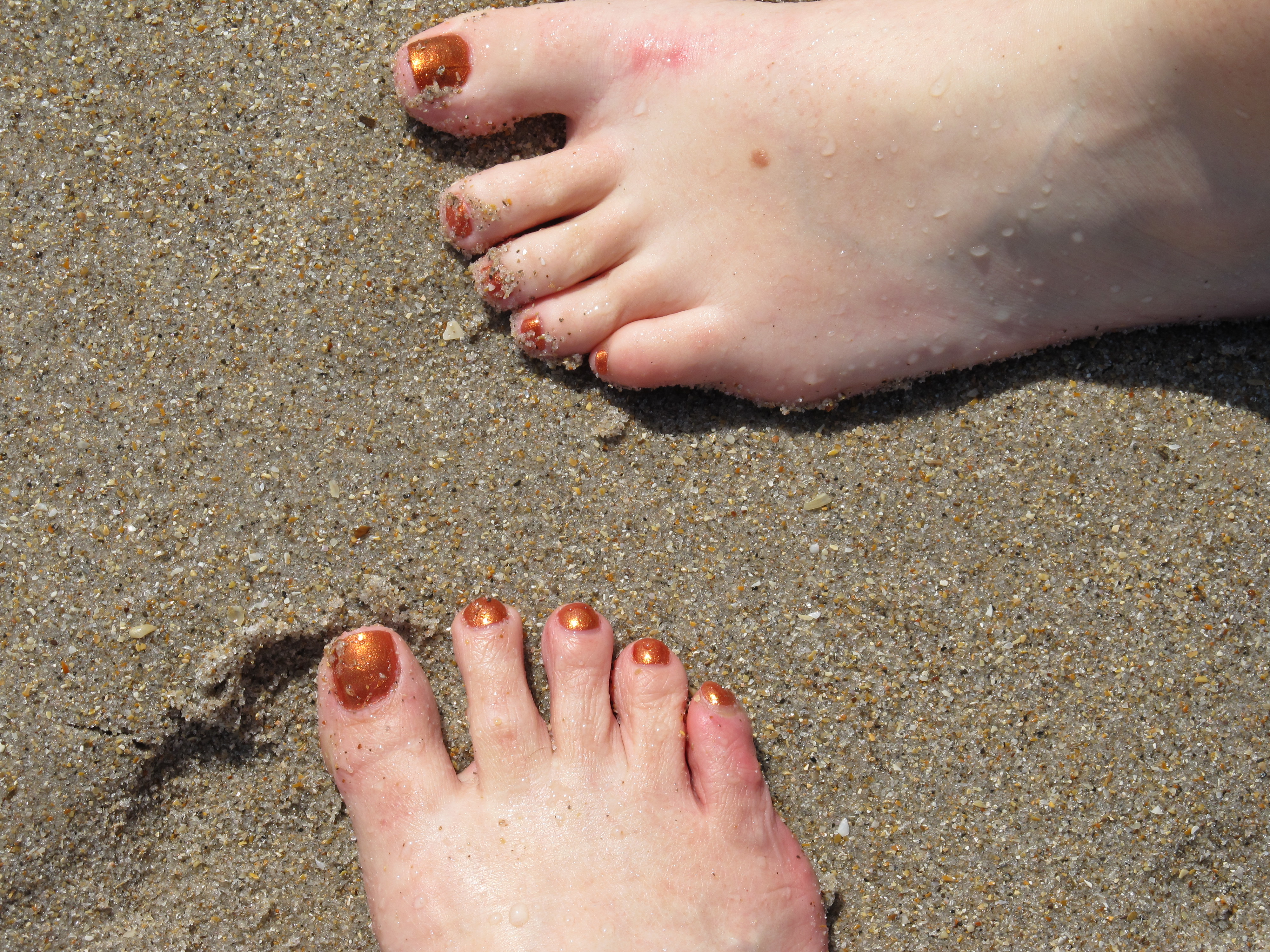
Molly and I got pedicures at different times before a trip to Florida last spring and, unplanned, selected the same polish color. Talk about connection!
“Loneliness is the first thing which God’s eye named not good.” ― John Milton
On Monday afternoon, I forced myself to bundle up and head out into the late afternoon sunshine for a walk. This long, brutal winter is taking its toll on so many of us. I confess to feeling isolated, compounded by a low-level anxiety sitting squarely on my solar-plexus. Getting outside despite the ice and cold helps. As does good old-fashioned self-talk. So, as I walked, I was thinking over the changes that I’ve made in my life in the past year. So much happiness and light on one hand, so much difficulty and anxiety on the other. I wondered, “Am I happier than I was this time last year?”
Just as I pondered the question, a young man walking toward me stepped out of the tiny footpath carved in the deep snow and ice, giving me room to pass. Our eyes met, and he said, “Good afternoon! Would you be willing to be part of a documentary film project? I have one question, and you can say as much or as little as you like to answer it.” He went on to say that he is an art student at the Minneapolis College of Art and Design working on a class project. I’m a sucker for college students, so willingly agreed to be filmed (despite my resemblance, in my winter gear, to a Minion from “Despicable Me”.) He lifted his camera, started rolling, and asked, “Would you say you are happier today than you were last year?”
I started laughing. What are the chances he would pose the very question I had been considering? Synchronicity on this scale cannot be ignored! For a brief moment, I felt the sun on my back and glanced at the cityscape in front of me and felt the magnitude of change my life has gone through in that year. I can’t recall exactly what I said, but in that moment my answer was, of course, “Yes!” (and that I had just been pondering that very question). After I finished speaking, the student stuck out his hand to shake mine and said, “My name is Boris, by the way. What an amazing coincidence! Thanks for helping me out.”
I’ve written quite a bit, lately, about these brief encounters with strangers. I’ve said that striking up conversations with people I’m not required to talk to has enriched my days in a variety of ways – and has helped me feel less alone in my new home. Meeting Boris was one of many happy exchanges. You can imagine, then, my immediate reaction to the new project from Oprah/Skype – “Just Say Hello” – was a positive one. The project proposes to battle loneliness, endemic in our modern, socially isolated culture by encouraging people to simply say hello to one another. It enlists enlists a cadre of celebrities and even has a theme song, written and performed by Rita Wilson. I 100% endorse the concept – and, as you know, I really work to practice it.
But.
Meaningful connection is what is needed to combat loneliness. It isn’t simply a matter of how many people say “hello” over the course of a day, though that can help. It is much more important that we find and connect with people who understand us, love us, upon whom we can rely. In her August 2013 article on Slate.com, Jessica Olien cites the research and concludes: “Social isolation impairs immune function and boosts inflammation, which can lead to arthritis, type II diabetes, and heart disease. Loneliness is breaking our hearts, but as a culture we rarely talk about it..” (see the article, here) We don’t talk about it, because admitting we’re lonely, no matter how many of us are, makes us feel like losers. In my experience, we tend to hide the things we think make us look bad – which, when the issue is loneliness, means that we tend to shut ourselves off and self-isolate even further.
My fear is that the “Just Say Hello” campaign will turn out to be just another one of those touchy-feely-celebrities-making-themselves-look-approachable campaigns that will dissipate into nothingness. And reading the #justsayhello on Twitter didn’t exactly allay my fears – 140 characters is way more than double what it takes most people to say “Hello, Oprah” (even the ones begging her to follow them back, plz!). In my humble opinion, we have more than enough sound-byte inspiration and motivational memes. What we don’t have is enough people making it past that first 140 characters of interaction into the realm of real relationship. And I’m not dissing Twitter here (or other social media, for that matter) – I know a number of people who have developed friendships IRL from Twitter interactions. My own life has taught me, though, just how hard that shift from “Hello stranger” to “Hello friend” can be – how much more work, time, shared experiences it takes.
Over this past week, I’ve followed Oprah Magazine’s on-line efforts with the “Just Say Hello” campaign, and I’ve been heartened to see that they are taking it further. There have been stories about how that first howdy has led to lasting friendships, stories attempting to de-stigmatize loneliness by sharing statistics and causes, stories encouraging people to reach out. The focus is often on how you may not know what your “hello” means to someone else, though. On how you can help someone else who is lonely. I don’t take issue with that – I simply want to add to it:
My name is Jenion, and I am lonely. Even though sometimes I feel like a loser right now (and I HATE admitting that and would prefer to pretend I’m fine) I know it will change, that I won’t always feel this way. The power to change that resides within me – and I can be proactive in bringing it about. First, instead of curling into myself and isolating, I need to make extra effort to stay connected to loved ones both near and far. Rather than hiding my loneliness, I need to expose it so that those who WILL support and love me CAN. Second, I need to keep saying hello. Right now, most of the people I see in a given day are strangers. None of them will become friends if I remain silent when we meet. Third, I need to stop being ashamed of my loneliness. Given my current life circumstances, it’s pretty normal to feel this way.
If, like me, YOU are lonely, I encourage you to do the same. Being lonely does not have to be chronic or debilitating. If it makes it easier to reach out, focus on helping someone else – in the end, the life you save may be your own. By all means, just say hello. But whenever possible, take it one step further. Don’t let it stop at hello, take it one step beyond hello into the realm of true connection.
“The world is so empty if one thinks only of mountains, rivers & cities; but to know someone who thinks & feels with us, & who, though distant, is close to us in spirit, this makes the earth for us an inhabited garden.”
― Johann Wolfgang von Goethe
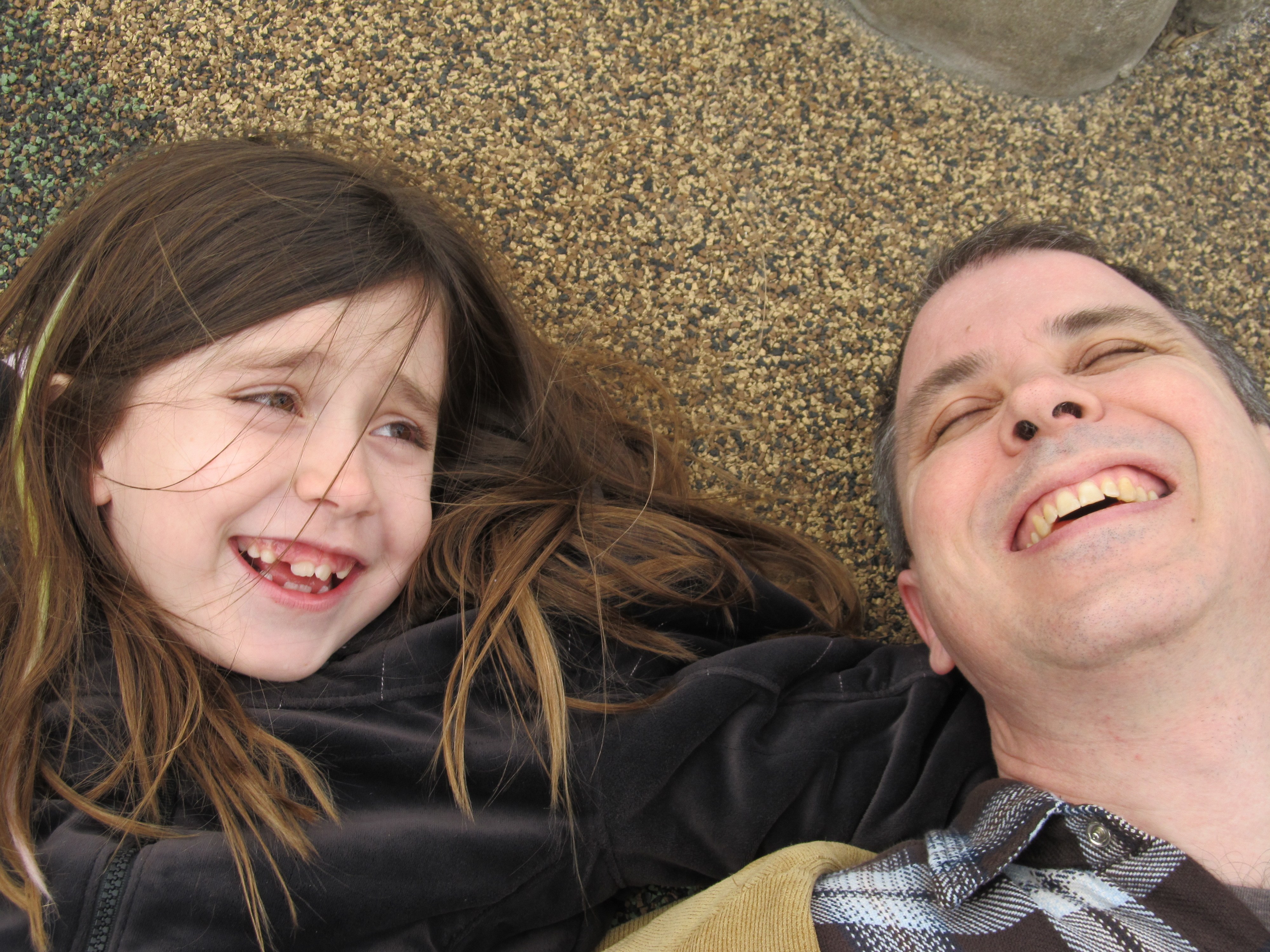
Matt and Zoe Rose, part of my “world garden”, being silly at the park!
Sorry, I cropped it to cut out my toes. Winter has not been kind to my tootsies!
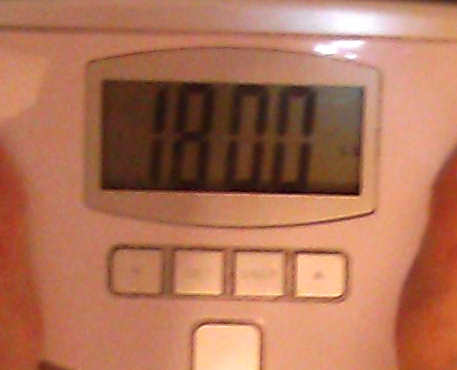
Many of you have commented that I haven’t been posting my weight weekly. My feeling has been that I will continue to do my best to live a healthy life – including a clean diet and exercise. I am still concerned with managing my weight, and will post periodically – to keep myself honest AND to update you on my progress! As of today, I am within 20 pounds of my goals weight. I’m beginning to think it might be possible to get there – however, I am concerned with body composition, too. I need to work on building muscle and decreasing body fat. If I make progress there, I’ll let you know 🙂
Some days it’s clear So I can see it: What to be and how to be it But some days I wonder And some days I doubt it Today I’m hopeful I can knock it off tonight This sleepwalking through my life
–Lyrics from Kevin Devine’s “Sleepwalking Through My Life
Not too long ago, my friend Kathe and I were having coffee. We’ve met for coffee often enough, and at such a variety of locations, I don’t really remember those details. What I remember is the conversation coming around to the years in our lives that each of us consider “lost” in some ways. And Kathe said, with quiet fierceness, “I feel like I don’t want to waste a minute of the time I have left. I know people – a 20 year old who got pneumonia and is still not out of the woods after a double lung transplant, a woman dying of metastatic cancer (she named several others facing major life issues). These are people I know, not just know of. I’m not waiting for anyone else to approve, I’m going to go for what I want. I don’t want to regret how I spent my time.”
A few years ago, I made some changes in my life that led to the feeling of having awakened from a dream. Those “lost years” were truly gone, having been spent in a haze and rush of doing without any real sense of purpose. When I woke up, I felt that same sense of urgency as Kathe – this life is too precious and too short to waste any more of it sleepwalking. Since then, I’ve made a pretty good effort at living mindfully, at consciously choosing. I’ve actively said “Yes” or “No” based on a picture of my life being about more than getting through it.
Then this winter happened.
This winter has been a difficult one for many; the weather extremes have made it so. I am far from alone in feeling that meeting the daily challenges presented have required a much larger portion of my energy than usual – a few minutes on Facebook convinces me of that. And it isn’t that I stopped making choices or living as consciously as possible. It’s that it has became harder to maintain a center or core of certainty. Harder to maintain a vision of where I hope to go, how I hope to impact this world. Some days, I feel like I’m on the right track, I’m acting in ways that are moving me forward. Other days, I simply feel lost.
On Tuesday, like much of the midwest, Minneapolis experienced a truly beautiful, warm day. I decided to head outside, and walked several miles through the downtown, over to the North Loop. Along the way, I reveled in the sunshine, stopping to take photos and observe the city and its people. I stopped at a little shop I know of that carries awesome postcards. I went to a combo bike/coffee shop I’d heard of but never frequented. I stopped for a few groceries at Whole Foods market. Then I began the trek home.
Those of you who are friends with me on Facebook already know the story of what happened next:
I was standing on the sidewalk (about two feet back from the curb), waiting for the crossing light, when a woman came up beside me. She said, “Here in Minneapolis we don’t know what’s coming, but we try to make the best of it, right? My only hope these days is in God.” I nodded and smiled, having nothing to add. Then she said, “This light is really long, think I’ll go the other way. Good luck,” and she walked off. Not 15 seconds later, a bus cut the corner too close to the curb and splashed through a pond of melted snow and slush, completely drenching me from head to toe, like in the movies.
I freely admit that the incident was funny. I wish it had been seen by someone I know so we could laugh together about it. Or, better yet, captured on video so I could share it with you. Once I got over the initial sputtering indignity of it, I resumed my walk home. However, my mood was completely changed. Instead of the carefree, “in the moment” feeling of my meandering walk downtown, the way home became contemplative. First, I wondered about the woman who spoke to me. Was there a special message intended for me in her comment about not knowing the future, but trying to make the best of things? Was the drenching intended to wake me up? Have I been living too much in the moment, and not enough in the world of making the future happen? Have I spent the winter sleepwalking after all?
I didn’t come up with any answers on the long, wet walk home. And as I’ve wrestled with the idea of whether I’ve been “sleepwalking” through life too much this winter, I did an internet search and came across a site that said, “The nature of things is that sleeping implies waking: anything that sleeps wakes up.” I found that thought to be a comforting one. Like so much in life, perhaps there is a cyclical nature to sleeping/waking in terms of conscious living.
So, for now, I’ve decided to be as awake as I know how to be. Some days that will be easier than others. Some days, I will just enjoy “being” in the bright sunshine of the moment, others I will experience the cold drenching of a wake-up call. Mary Oliver writes “As for life,I’m humbled, I’m without words sufficient to say how it has been hard as flint, and soft as a spring pond, both of these, and over and over…” Isn’t that the truth?
Yes, I know it’s Tuesday and not Thursday, but I’m sharing a brief post tonight in order to share my excitement!
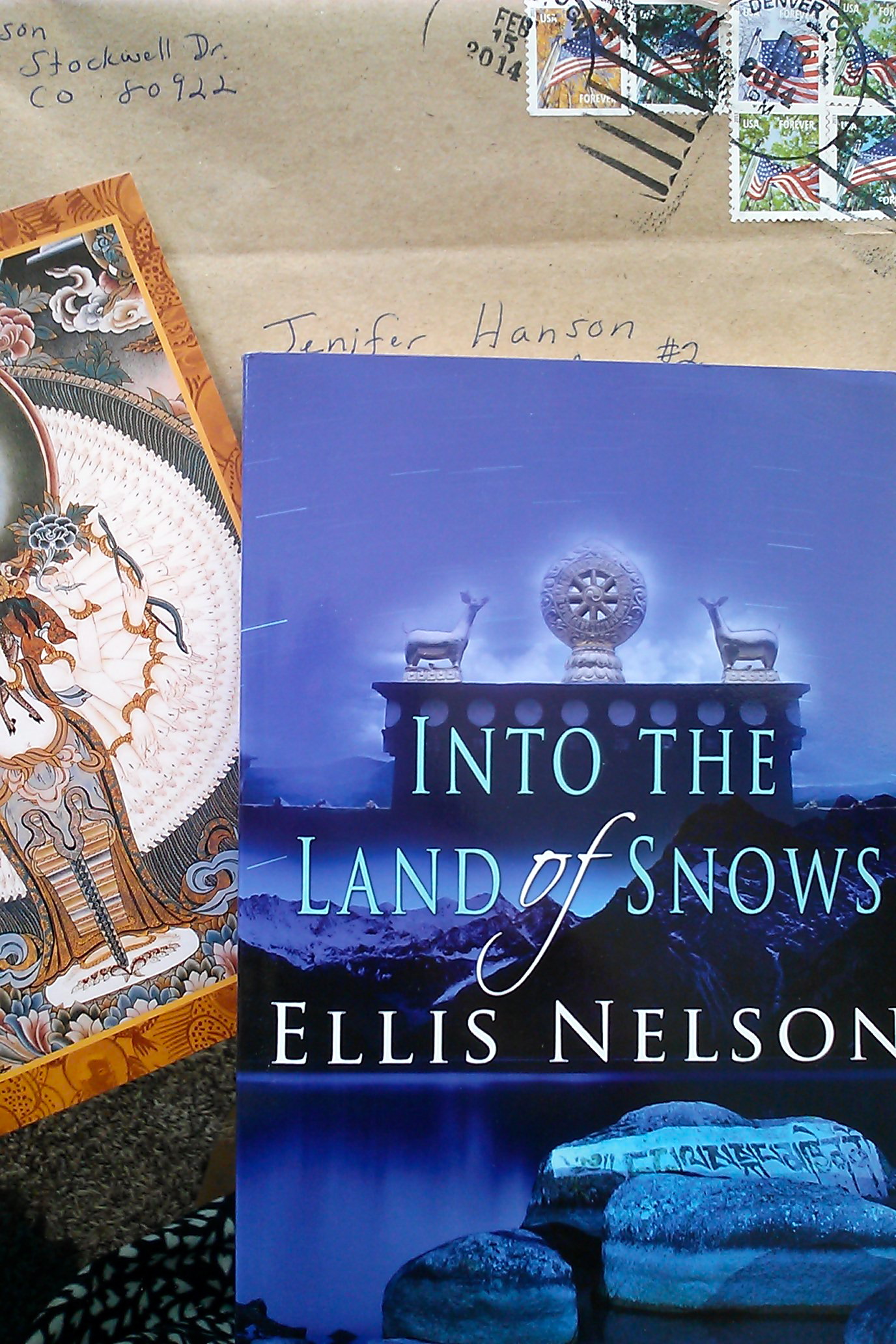
I rarely win things, but a few weeks ago I entered a giveaway contest on ellisnelson.com, a wordpress blog I follow. And I won!
I have been intrigued by and wanting to read Ellis’ YA novel, “Into the Land of Snows” ever since I read her synopsis of the story (please take a gander at it on her blog). And, as of today, I am able to do so – courtesy of the author herself!
If you go to Ellis’ blog to read the book synopsis, please take a look around – I’ve enjoyed every post I’ve read. And here’s to happy reading for all of us! Thanks, Ellis!
Remember when you were a kid and required to give valentines to everyone in your class, even kids you didn’t like? That was never particularly hard for me because I always felt sorry for kids I didn’t like. If I didn’t like them, no one did, right? They deserved my pity, obviously. Besides, the first person I remember seriously disliking was in sixth grade, the last year we handed out valentines in the classroom. I disliked her because she was mean to me and publicly named me a loser. But I survived placing a valentine in the decorated box on her desk just fine.
I also didn’t mind that the pile of valentines I brought home each year were given to me under duress. I was pretty sure that, left to consult their own feelings, most of my classmates would choose to bestow their valentines elsewhere. On the whole, I thought it was better to feel included – even if it was a sham.
All these years later, I am thinking about the lessons inherent in those classroom valentines. I know there are people who likely disagree with such practices, thinking children shouldn’t be taught to expect a world in which everything is fair and everyone gets the same number of valentines as everyone else: all grownups know this to be patently untrue. Better that we don’t set children up for later disillusionment.
However, that perspective only takes into account what it means to be on the receiving end. The greater lessons reside within the giving part of the transaction. And they are lessons, I believe, it would be good for us to regularly revisit as adults.
1. Kindness, generosity, empathy, and compassion are easy to bestow upon people we already love. Stretching ourselves to share these qualities beyond our own small circle is much harder – yet it is what best allows us to express these qualities. It is also what allows us to expand our capacity to bring them to a wider world so very much in need of them. It is important for each of us to pay attention to the things that activate these impulses in our hearts: things we see in our neighborhoods, hear on the news, observe in the lives around us. Then take some action, big or small . In The Great Work of Your Life, Stephen Cope writes, “Each of us feels some aspect of the world’s suffering acutely. And we must pay attention. We must act. This little corner of the world is ours to transform. This little corner of the world is ours to save.” The point is to act,to respond from your generosity or compassion – not to wait until you figure out an action that is guaranteed to change the world. That you bring light into someone else’s darkness is enough.
2. Be willing to speak of love, and open your heart to it, even when the situation involves people you don’t care for or don’t really know. Even, as in the case of my 6th grade nemesis, when the situation involves anger and hurt.
Just over a week ago, a young bicyclist named Marcus Nalls was struck and killed by a drunk driver down the street from my house. (The driver has been charged with vehicular homicide). Marcus had just moved to Minneapolis in January, transferring from Atlanta for his job. Very few people in this city knew him. But on Saturday, the cycling community held a memorial ride for him. Over 200 cyclists rode most of the route that Marcus would have ridden heading home from work the night he was killed. We rode in silence on the city streets. We dismounted and walked our bikes past the ghost bike memorial that has been placed at the site of his death. His coworkers wept unabashedly as we filed past, as did many of us. Were we angry? Absolutely. But I believe this memorial ride touched us all so deeply because we agreed to make it about solidarity and community, not about anger. We embraced Marcus as part of us, even though we hadn’t had the chance to know him – and we allowed ourselves to publicly mourn the lost opportunity of that. In the months to come, as the man who killed Marcus is brought to trial, my hope is that we will continue to place community and love at the center of our response, working toward increased safety for all.
3. Just as we were required to give everyone a valentine, regardless of our feelings about them, we must learn to feel gratitude for what life brings us – regardless. You might ask why – as I often do – should we be grateful for the bad or crappy or even the boring and mundane? The easy answer is that to be alive is to experience these things as well as the good, happy, peak moments. Bottom line: being alive is better than the alternative.
There is a certain complexity concealed within that “bottom line”, however. Life is a process of becoming, of refining our gifts and discovering meaning and purpose. A process of becoming the person we were created to be. We know the milestone markers for development in babies, toddlers, children. But in adults, these milestones are unique to the individual because they take place on an interior emotional and psychological level. When we reject or disown aspects of our experience, we disown pieces of the self we are meant to be. Am I happy, for example, to be a 52 year old woman who has never once had a “significant other” on Valentine’s Day? Not really. Is that fact an intrinsic part of the woman I have become? Absolutely. And I refuse to reject that part of myself, even though embracing it means embracing the sadness and loneliness I sometimes feel because of it. Embracing that part of me activates my compassion in many ways – both toward myself and toward others. For that, I am truly, deeply, grateful.
It has been a lot of years since I last decorated a box for my classmates to stuff with their valentines. Valentines Days have come and gone, each one different, each one finding me different. This year I have a plan – get up and live my life keeping in mind the lessons above. And one more lesson, a simple, eloquent one from one of my favorite poets, Mary Oliver:
“Instructions for living a life. Pay attention. Be astonished. Tell about it.”
At Icehouse, listening to Louis and the Hunt and Fair Oaks
The very first thing Mike sent me when he learned I had decided to come to Minneapolis was a link to The Basillica Block Party’s volunteer sign-up page. He assured me that the annual Block Party was not-to-be-missed, but tickets were spendy – volunteer and you may get to hear some of the bands for free. Without knowing what we were getting ourselves into, we agreed to sell raffle tickets the first weekend I was officially a Minneapolitan. What an awesome decision that was – we had free-reign of the event, got to hear all the bands, and while selling raffle tickets met and talked to hundreds of people (mostly) in a festive mood.
And so it began.
******************************
I met Mike’s dad, Rex Beck, when I was in college. We hit it off right away, which made me feel special – right up until I discovered that Rex hits it off with everyone. His family even has a name for it, “Rex Beck Syndrome”: the capacity to strike up a conversation (and likely a friendship) with literally anyone, anywhere – and the propensity to do so.
I didn’t notice it so much back then, but the Rex Beck Syndrome has a genetic component. At least two of Mike’s siblings show telltale signs of having inherited it. But of the five of them, Mike is the one who most readily shows markers of the full-blown syndrome. He makes friends with tourists in the downtown Target parking-garage elevator. He never leaves a party or reception without new Facebook friends. Once, we noticed a woman putting up an autumn display in her yard. Two hours later, as we drove by again and she was still working, Mike stopped the car in the middle of the street and rolled down his window to tell her, “Nice job! It looks fantastic!” When he caught me staring at him with a surprised grin, he said, “What? She spent all afternoon working on it – the least I could do was make her feel like it was worth it!”
******************************
On a cold Sunday night we drove around the block a couple of times before finding a parking space in the Cedar-Riverside neighborhood. I was tired, having already been on my feet for an eight hour shift that began at 5:30 a.m. that day. We walked quickly past several establishments with an international flavor on our way to what appeared, from the outside, to be a generic dive bar. Once past the bouncer, wristbands and handstamps in place, we entered an electrified atmosphere. The opening set by the band MisterWives was already in progress and blowing the crowd at The Triple Rock Social Club away. Standing room only. I looked sideways at Mike, completely engrossed in the music and barely able to contain his excitement to see the headlining band for the night (American Authors). With an internal shrug of the shoulders, I steeled myself and approached the rather intimidating bouncer – who just happened to have an extra chair beside him. I explained why my feet hurt, and he nodded knowingly and let me take the chair, telling me to enjoy the show as I walked away.
We saw three bands that night, each on the cusp of big career happenings. (Just this week, American Authors announced their headlining tour. MisterWives’ EP, which came out a couple of weeks after the show, was at the top of the iTunes chart within days.) Happily seated, surrounded by people completely absorbed in the musical performances, I forgot my tiredness and chair-danced my way through the evening.
******************************
I am, most naturally and deeply, an introvert. There was a time in my life when the very idea of speaking first to a stranger was overwhelming. When Mike and I reconnected a few years ago, I noticed his ease in speaking to strangers, and marveled at it. Since moving here, I’ve had many opportunities to observe it. And, as in many things, being with an expert has allowed me to try it out myself – the expert (in this case Mike) acting as a set of social training wheels. If I got myself in too deep or too awkwardly, he could step in and smooth away the uncomfortable. In this way, I soon found myself striking up conversations with wait staff, with other pedestrians at a red light, with the people at the next table. As my comfort level grew, I began talking to strangers when Mike wasn’t around. It was a matter of great pride when an old friend told me Mike was rubbing off on me. She said, “You talk to people you don’t have to now.”
******************************
The Cactus Blossoms at First Avenue
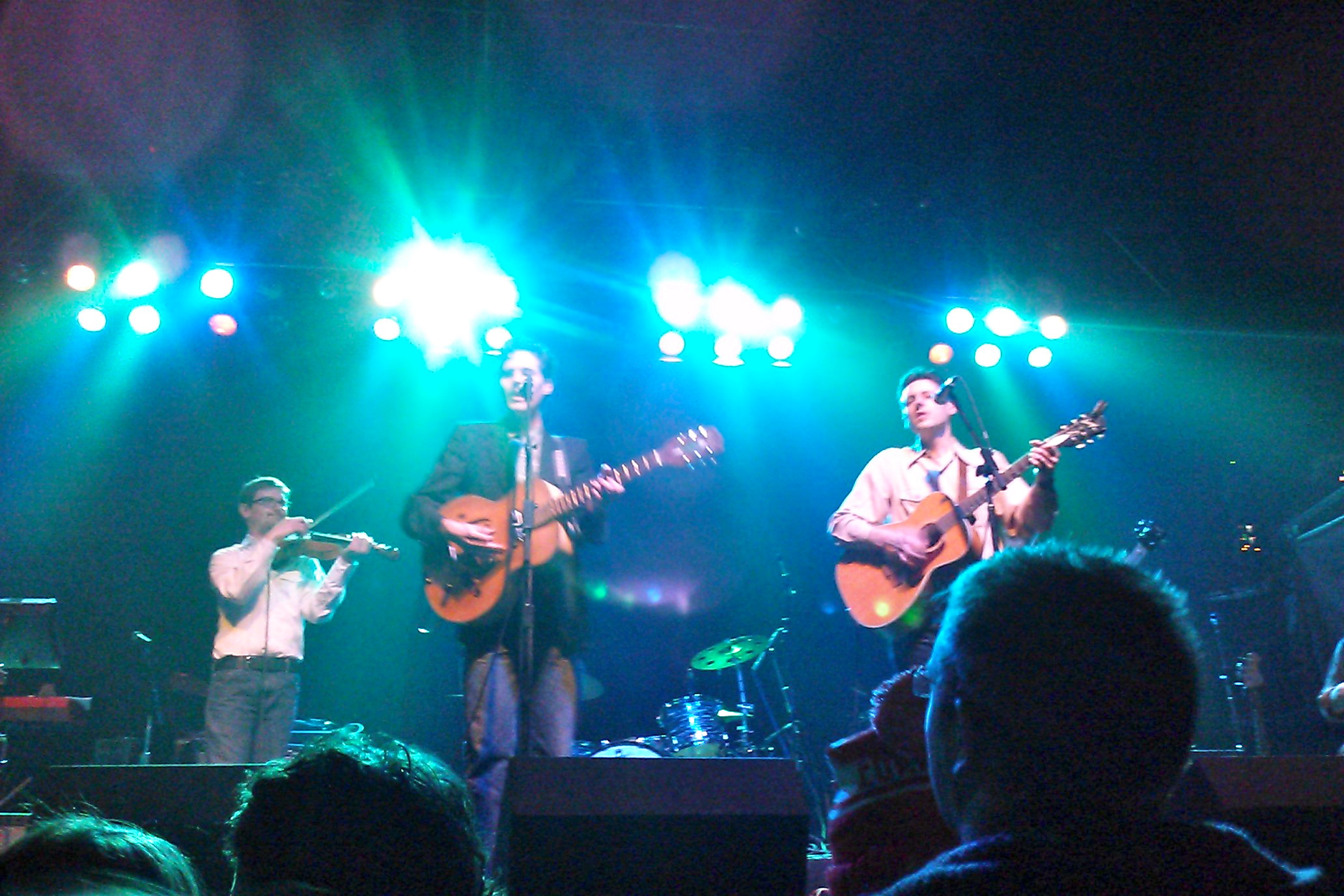
My “Minneapolis Music Scene” education, initiated at the Block Party, has not only continued but accelerated during this winter season. It has taken me to Roy Wilkins Auditorium to see Envy Corps, The Neighbourhood, and Imagine Dragons. But it has also seen me at Old Chicago in Eagan for the Friday night set (in bad lighting with horrible acoustics) of a young musician just starting his solo career. One Saturday evening began with a flamenco guitarist over dinner and ended with a CD release party for Fair Oaks, a band whose leader lives just up the street (though we didn’t know it until Mike introduced himself to the band). My education has included tickets to a Studio C live recording session with Walk Off the Earth. Most recently, it led to a two-night music binge at the granddaddy of all Minneapolis music venues: First Avenue, Prince’s main stage as well as performance venue for many musical legends over the years.
The thing is, I am neither a musician nor that much of a fan-girl. But I have always loved live music, and I’ve been loving the “educational” experience. Mike is both a musician and a self-described indie band junkie, so his excitement about the music scene and his enthusiasm for supporting young talent is contagious – it is fun to be around people who are jazzed and fully enlisted. More than that, I love being in a space where smart, talented, creative people are putting themselves and their work out there for public consumption and response. While I definitely appreciate and enjoy the more savvy performers we see (Caroline Smith, Grace Potter, Matchbox Twenty), some of my favorite moments occur when listening to or interacting with the less well-known, less polished, but no less passionate performers at the beginning of their careers (Jamison Murphy, He Who Never, Fair Oaks). Music performance offers such immediate consumer feedback – either the crowd is feeling you or it isn’t! When it works, the exchange of energy between musicians and their audience is powerful and heady. As someone aspiring to put myself out there, whether creatively, in a job search, or as the newbie in a new city, I get the courage that takes.
On our second night at First Avenue (it was a two-night birthday party for local radio station The Current), I found myself jostling for a better standing position when I noticed that the extremely tall man who had just pushed in front of me, partially blocking my view, was scribbling in a notebook. As you might expect from a Beck protege, I leaned forward with an opening salvo of, “You’re taking notes at a rock concert?”
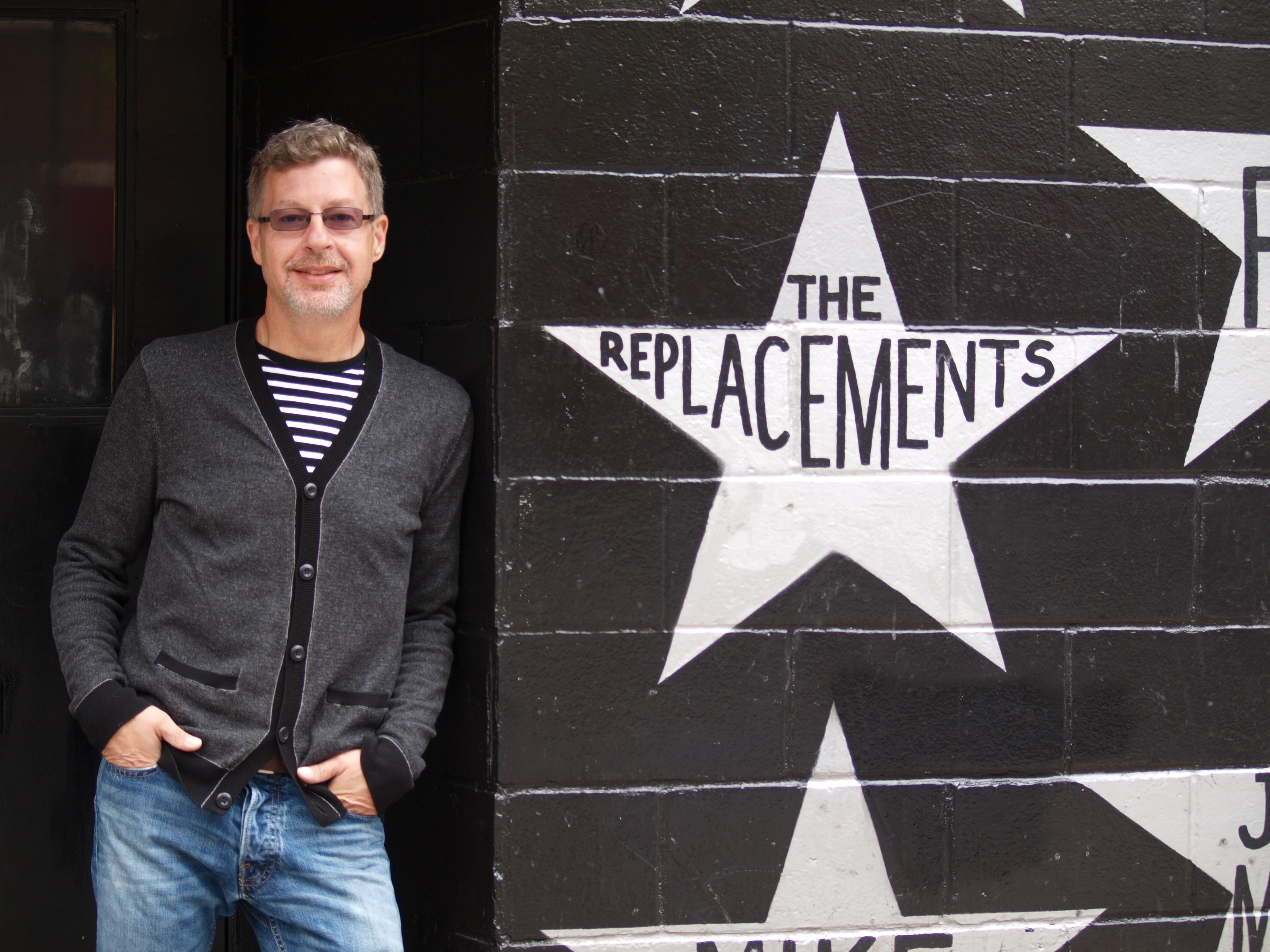
Mike, outside First Avenue, next to the stars of musicians/bands who’ve played there (the stars cover the outside of the building)
******************************
Yesterday, I sat in The Boiler Room, sipping a piping hot Americano. I had just initiated conversations with Michael, the owner, and with Linwood Hart, the artist whose work is on display there. I had sent a message online to someone I’ve admired from a distance, just to tell her that. I felt expansive, open to the world around me in a way that once would have felt frightening.
My thoughts, and the rightness of this feeling, suggested a confluence of sorts between my fledgling Rex Beck Syndrome and my Minneapolis music education. Mike thinks he’s been introducing me to the music scene, helping me to understand his love for it and spreading the contagion. And he has been – my enthusiasm is my own, not just a reflection of his. At the same time, it has been an education in how to feel a sense of agency – to be a swimmer in the ocean of people that is this city rather than a bit of flotsam carried about by random ebbs and flows. I’m still an introvert, but I am no longer confusing that with my irrational fear of putting myself forward. It turns out that people like – actually prefer – to connect. It turns out that I prefer to do so.
I’m thrilled that I have acquired at least a mild case of Rex Beck Syndrome – and I hope to pass it on! Speak up, my friends, don’t hold back so much of your enthusiasm and curiosity. There are a lot of people out there, aching to connect in ways big and small. Be the agent of that connection – be a swimmer not a floater!
As for my music scene education, I intend to continue that as well – Friday we’re checking out two new bands, then its two Jeremy Messersmith shows in two very different venues. Below is a list of bands/musicians I’ve seen whom I believe are definitely worth checking out and supporting. You can find most of them online – and if you like them, send them some love by way of purchase and/or social media!
Envy Corps. MisterWives. The Royal Concept. Jamison Murphy. He Who Never. Fair Oaks. Walk Off the Earth. Actual Wolf. Lizzo. Cactus Blossoms. Heiruspecs. Caroline Smith.
It was late evening on a bitterly cold Sunday. Mike and I had gone to the gym, and were returning home. As we passed the Simpson Church homeless shelter, we were waved down by several men standing on the corner. I wasn’t sure what was going on, as Mike slowed to a stop and pressed the button to open the drivers side window. It was dark, I was cold, and I wasn’t sure it was a good idea to stop so I asked Mike to please move on. But he didn’t.
One of the men approached closer to the car, his hands held in the air, open palms toward Mike. He asked for directions to the overflow shelter downtown. His language, his posture, the way he held his hands were all meant to reassure us that he intended no harm and I realized that we weren’t being scammed or victimized. These men were simply in need of a warm place to spend the night; a little assistance. Suddenly, I was grateful Mike had been driving, instead of me.
Life is full of these moments – the ones where a seemingly small choice is required of us. Sometimes, the moment seems insignificant to the degree that we don’t even realize there’s a choice being made. Smile or not at the slow grocery checker? A word of caution to the person behind you to take care, the sidewalk is slick just there. Offer to take a photo so the happy group of strangers can all be in it. Other times, the moment calls for something more significant – an investment of time or cash, an emotional commitment, an inconvenience to ourselves. In these moments, we not only know we’re making a choice, we know the choice is bigger than the moment. Still, the choice is ours.
It has, famously and truthfully, been said that “it takes a village to raise a child”. The need to be part of a caring and generous village doesn’t end at childhood, though. Successfully navigating this life – whether you are five or fifty – takes a village. We don’t discuss this much. We live in a culture that prefers to believe the myth that hard workers will be successful – and people who need help are weak, or lazy, or just trying to get something for nothing. And if things have mostly gone well for us, we begin to think that we are self-sufficient and will always be able to rely on our own resources (internal and external) to handle whatever comes our way.
In my life, there have been enough examples to teach me otherwise. One Christmas when I was a teen, my father’s wallet – which contained the holiday bonus he had just cashed – was stolen at the dentist’s office. Imagine the feeling of that loss, with six children at home awaiting the usual hoopla. But the next day at work, the cash was magically (and anonymously) “returned”. Or years later, when my beloved brother-in-law entered an experimental cancer treatment program and my sister needed to stay in the hospital with him – in Houston, a city they didn’t know, with two young boys. Their friend, Angela, travelled from Ohio and cared for the boys in an apartment sponsored by a local church. The treatment took six months, and Angela stayed for the duration. Or when my good friends (who would prefer to remain nameless) loaned thousands of dollars to other friends to start their dream business – then turned around a couple of years later and did the same for a sibling. It wasn’t that they had extra cash just lying around. It was that they were willing to accept small hardships themselves in order to help people they loved build their dreams.
Still, with these examples (an many more), I somehow came away seeing only one side: when I am able to help others I should do so. And I’ve tried to keep that in mind in both big and small ways as I’ve lived my life. I completely missed, however, the flip side of that lesson: that there would be times of real need in my own life. And in those moments, I would have to both rely on others to care and to actually ask for help. In missing this side of the lesson, I grew to believe in my own myth – that I was a helper, not a needer. A giver, not a taker. An offerer, not an asker.
This winter is teaching me otherwise. I have needed emotional support, logistical help, financial assistance, rides, a welcoming place to spend Christmas – the list is long. Friends have given me cash (both anonymously and directly), paid for nights or lunches out, given up garage parking so my car wouldn’t die in the extended seriously negative temps. If I hold on to our cultural myths, this neediness will crush my self-esteem – a by-product those who have helped me would never want. Instead, I’m learning to let go of the myth, to develop a proper humility (i.e. “the quality or state of not thinking you are better than other people : the quality or state of being humble” per Mirriam Webster). And with that humility comes deep gratitude.
You see, in a village, the streets go both ways. The neighbor who offers help today is the neighbor in need of help tomorrow. There is a flow of energy back and forth. It does us no service to tell ourselves otherwise. I can’t say it has been an enjoyable lesson or shift in perspective. But I can say, even though I am still in the midst of it, that it has been necessary. Life is about growing, learning and evolving. Sometimes, moving forward is neither easy nor painless. Yet move forward we must if we value making the most of this precious life we’ve been given. In moving to a big city, I’ve discovered my citizenship in a village – a village of which I am proud, and grateful, to be part.
“It was the best of times, it was the worst of times, it was the age of wisdom, it was the age of foolishness, it was the epoch of belief, it was the epoch of incredulity, it was the season of Light, it was the season of Darkness, it was the spring of hope, it was the winter of despair…” (Charles Dickens, A Tale of Two Cities)
As an English major, a lover of literature, and a fan of Charles Dickens, the line quoted above has long been familiar to me. It is one of a handful of first lines of classic literature (including the openers to Pride and Prejudice and Anna Karenina) often cited as superlative examples of how to draw a reader in from the first word. While Dickens’ line is far from short, it is wise – capturing the idea that every age in human history can, and likely will, be described in this manner.
Not to worry, I haven’t suddenly started blogging literary criticism. I have been thinking of this line, not in the context of the larger world and global forces, but in the context of my own life right now. In some ways, this is truly the best of times: I am discovering new people, places and passions. I am realizing the depth of love and friendship in my life, which is both humbling and energizing. However, in other ways, this is also the worst of times: I feel worried and anxious about money and finding sustaining work, and I find it difficult to maintain a sense of self-worth in the face of constant flat rejection of my skills and experience.
This ping-ponging from up to down and back is wreaking havoc with my resiliency. Furthermore, it makes it difficult to keep focus on the present – to remember that this moment is the one I have to pay attention to. The more I worry about tomorrow, next week, next month, the more I fritter away today in distraction. Keeping focus, both on this moment and on remembering why I am here in the first place, takes mental discipline and emotional commitment. Some days, I find these hard to muster. Other days, well, those are the “best of times” and it is easier.
Last night, I met Kathe at the end of a long day for each of us. We were both tired, and the atmosphere of the coffee shop where we met was less than inspiring (crowded, cold, dingy lighting). As we talked, Kathe told me about the many people in her life struggling in real, consequential, “life or death” ways. She said, “These are people I actually know, not people I know of.” She went on to say that she feels a sense of urgency to live each day as fully as possible, because it has been brought home to her lately that we each have a finite number of them. It was an excellent reminder – that very urgency was a significant part of what led me here in the first place.
So, today is here. It’s an extremely cold morning again – schools cancelled for cold all over the state. But the sun is shining, and I’m alive and aware that this day is a precious one. It may seem like we’re smack dab in the middle of the winter of despair…but I think I’ll declare it day one of my personal “spring of hope” and take my cue from that.
a full blown dark bird
has flown well past being
an outsider or a misfit
and no longer needs to be
part of a group or wear
a label or needs to be
understood
i am
we are
our own person
born in the clean space
of the desert powerful beings in our truth
choosing our own path
living our own lives
often loving
places and people
others dont care for or understand
we are simply
dark birds
(poem by artist, Kelly Moore)
4:00 a.m. I am lying awake in the dark of my room, listening to the wind outside howl. Its mournful sounds are anemically echoed in the high whine and hiss issuing from the radiator at the head of my bed. The alarm will go off in twenty minutes, and I face a choice: spend the next few minutes mostly asleep or mostly worrying about things I can’t change at 4:00 a.m. I choose sleep.
It seems like a small choice. But our days are filled with these small choices. Added together their sum equals this thing we call “my life”.
One spring a few years back, I visited Pecos National Historic Park in New Mexico with my parents. I felt some sort of magic there, emanating perhaps from the confluence of history and landscape. I wanted a moment to just soak it in, so I let my parents walk on ahead. The wind was strong, and as I stood still on the trail, I felt it blowing against me with force. I watched as a raven flew toward me. It drew even with my eyes, just a foot or so in front of me, and hovered there, riding the air current and making eye contact with me. After a minute, the raven opened its wings and flew off in a graceful arc. The momentary spell was broken. As I rejoined my parents, my dad asked, “What did that blackbird have to say? It looked like he was giving you a message.”
Perhaps it was more a lesson than a message, one that I needed the distance of time to learn. As it hovered in front of me, the raven’s wings were not moving. They were simply holding steady, allowing the wind to do the work. It wasn’t that the bird did nothing. Rather, the bird did the very thing we struggle against so often in our lives: it trusted the flow.
How simple, yet how incredibly difficult, is that? Still, the lesson is clear and can be found in many spiritual traditions as well as in self-help and pop psychology books. The language varies, of course, but the message is the same: stop worrying and learn to trust.
Matthew 6:25 “Therefore I tell you, do not worry about your life, what you will eat or drink; or about your body, what you will wear. Is not life more than food, and the body more than clothes? 26 Look at the birds of the air; they do not sow or reap or store away in barns, and yet your heavenly Father feeds them. Are you not much more valuable than they? 27 Can any one of you by worrying add a single hour to your life?
Buddha: Do not dwell in the past, do not dream of the future, concentrate the mind on the present moment.
Lao Tzu: Life is a series of natural and spontaneous changes. Don’t resist them – that only creates sorrow. Let reality be reality. Let things flow naturally forward in whatever way they like.
The wind has, if anything, picked up force in the hours since I first heard it blustering. I can hear bits of detritus being blown against the windows: broken twigs, a few dead leaves that somehow escaped being buried in the snow. As I think about these forlorn items, I realize that there is a difference between being a twig buffeted willy-nilly by the wind and the raven. The twig exerts no will, while the raven wills itself into the flow.
In a little while, I will venture out of the protection of my apartment and into the gale-force winds. I will gird myself for the experience in a huge down parka. As I face the day ahead, I will attempt to will myself into the flow and then relax there, rather than be thrown about without volition like the twig. Another small choice, adding to the sum of “my life”.
As you are reading this, the weather phenomenon none of us had heard of before has, hopefully, begun to spin its way out of the Twin Cities. However, the Arctic (or Polar) Vortex has been nothing if not instructive. Scratch that. First off, it has been damn cold. THEN it has been instructive. Now that I am a resident of the state that laughs at cold weather – while also being the first to cancel school statewide in anticipation of the Vortex – I have been doing my best to soak in the lessons. Foremost, I’ve learned that there is no substitute for maintaining good humor and positive perspective at these extreme times. Here are a few other things I’ve learned, filtered through my (mostly intact? bizarre? macabre?) sense of humor:
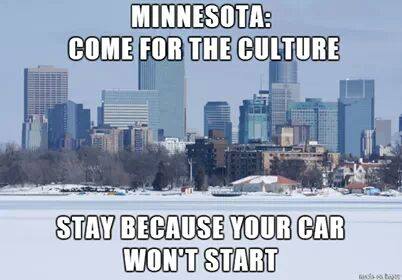
Never shut off your car. Or really any vehicle, when the temperatures are dropping to -30 degrees. I understand even jet batteries die when it gets that cold. My car, which was driven and got good and warm at 10:00 p.m. on Sunday night was dead as a doornail by 7:00 a.m. on Monday. My co-worker’s car started right up, though. Her trick? Wake her husband to start and run the engine for 10-15 minutes every two hours overnight. Her solution will never work for me, though. First, I have no husband to force into the unenviable role of starter-bitch. Second, I love my neighborhood, but I am not that comfortable venturing out alone at 3 a.m. to sit in my vehicle. Third, I actually sleep at night. A friend posted this meme, which says it all, on my Facebook page:
There is no bad weather, only bad clothing. I had never heard this phrase before but it, apparently, is the state motto. Kinda catchy. And I almost – though not quite – believe it. In fact, I’ll buy it right down to about -5, at which point I believe bad weather officially exists. I have successfully managed, by combining layers of inner- and outer- wear, plastic bags, and rubber electrician glove liners, to be outside at those temps for short spurts of activity – without feeling like my toes and other assorted appendages were about to fall off. I can even ride a bike around the block within acceptable levels of discomfort.
I have been told that clothing (and boots) specifically designed to protect against even more frigid temperatures exist. However, they might as well be mythical as far as I am concerned. I don’t have a house on which to take out a second mortgage to finance such attire. Or an elf queen of Lothlorien to gift me any.
plastic bags go over wool socks, under boots
Beware the “cascade effect“. On Saturday night, the heat went out in my apartment. As did the electricity in all of my outlets except for the kitchen. I wasn’t home at the time, but when I returned, let’s just say it was a dark and very cold night. And that’s when I became familiar with the cascade effect, which, put simply is this: as soon as the first thing goes wrong in extreme weather conditions, prepare yourself for the next several to hit in rapid succession. No heat, no electric, no vehicle, AAA only taking calls for stranded motorists in dangerous situations, no mythical cold-gear so you can walk the 7.4 miles to work (or try to figure out the bus routes for the first time). Eventually, my landlord brought me space heaters, which blew all the circuits again. My friend and native Minnesotan, Kathe, predicted these things. I ought to have listened. Forewarned = fore-armed.
Responding to the “cascade effect”. IMPORTANT NOTE: it is actually warm in bed!
If you can afford it, invest in ski goggles. It doesn’t matter if you never intend to hit the slopes. If you wear glasses, it is impossible to cover your face AND see out of them at the same time. In temps low enough to freeze exposed skin in seconds, this presents a conundrum. Yesterday, the temps rose to 0 and I went for a walk in the beautiful sunshine, glasses in my coat pocket. There were icicles, formed by condensation from my breath, dangling from my eyelashes and bangs when I finally came back inside. The delicate skin around my eyes is chapped and red (I toned it down with green eye shadow). Amazingly, if it keeps me warm I don’t mind being seen wandering the city looking roughly like a yeti about to rob a bank (there are others of this species about town – we nod when we meet on the sidewalk). Goggles would just add a little extra touch to the ensemble. Yeti bling, if you will.
Try to have friends. Preferably kind ones. All joking aside, friends are vital to living through extreme weather. They offer practical advice (“Try to stay warm!”), actual assistance (rides to and from work), and emotional support (“Just checking in to make sure you haven’t frozen yet!”). It takes a lot of energy to put on three pairs of pants, two shirts, and extra socks every time you go out to retrieve the mail. Not all of us feel equal to that on our own. Friends are definitely my favorite survival gear.




 Jenion