Jumping the Tracks

“The enormous lake stretched flat and smooth and white all the way to the edge of the gray sky. Wagon tracks went away across it, so far that you could not see where they went; they ended in nothing at all.” — Laura Ingalls Wilder
OLYMPUS DIGITAL CAMERA

No one tells you, when you’re young, that there are choices you make that set you on a road from which there will be no deviation. Or at least from which you will not know or feel you can deviate. A woman who counts the days (in years) until her kids graduate so she can quit the job she hates. A man who has created two lives, his public one and his private one, who always feels divided within himself. Another who randomly got a job in a lucrative field and has never been able to walk away. Me, working my ass off in a job that was fulfilling but also usurping, leaving almost no space for me in my own life.

Sometimes, I resisted change out of love – love for the mission and mercy of the institution I worked at, love for the students whose lives I was privileged to participate in, love for my colleagues whose hearts and souls were so amazing. Sometimes, I resisted change out of fear – of failing, of being too much or not enough of the “right” things. Whether out of fear or love, resistance kept me on the track I was on, moving forward as far as my eyes could see into a future that held more of the same. Resistance, when we give in to it, is  an insidious form of self-betrayal.

Resistance is self-betrayal because it manifests in these ways: it causes us to be silent when we need to speak; it  justifies dishonesty about our true selves; it effectively hoards our gifts and talents when they exist to be shared. Marianne Williamson has, famously, said “Our deepest fear is not that we are inadequate. Our deepest fear is that we are powerful beyond measure. It is our light, not our darkness that most frightens us.” So we hide, we make ourselves small. Not to prevent us, in my opinion, from outshining others, but to prevent us from being seen when our true shining selves are revealed. What we love and what we fear cause resistance because they both carry the price of vulnerability.

So, what is it like to jump the tracks? I wondered for a very long time. Years of agonizing soul searching. Years of excuses. Years of making my friends listen to all of that soul searching and excuse-making. (Obviously, I have the most incredibly supportive friends!) And in all that time, I didn’t do any real planning. Any real preparing. I felt incapacitated until the thought of remaining on the tracks, the resistance, became more prominent and painful than either the fear or the love keeping me there – and I just jumped.

Here’s what it is like: it is like being a new soul again.

I cannot contain my curiosity. There is so much to see and read and learn, so much content and innovation, so many ideas. I read and explore on-line until I can’t see anymore.

Then I go outside and explore my city. I knew I didn’t care for the city I lived in and called home for almost two decades. I didn’t realize how stifling I found it. I don’t mean to dis Cedar Rapids – it is objectively a great place. It just wasn’t for me. This city makes me feel expansive: the diversity of people, of neighborhoods, of opportunities.

I am in love with creating. When I unpacked my boxes, I discovered fifteen unopened artist’s sketchbooks – which definitely says something about what my heart knew I should be doing (not necessarily drawing, but creating). I’ve been busy taking photographs, writing, creating recipes from delicious food. Here’s the thing about allowing your creative self the freedom to breathe after years of pushing it down inside – you’re a newbie and you suck (not so much with the recipes, they’re tasty. But with the writing…oy!) Even sucking feels pretty good right now because I am writing.

I have two primary fears: not finding a job, and conversely, taking one out of necessity that recreates the “tracked” lifestyle. Out of fear, and a whole new set of loves, I still betray myself via resistance – I hold back, I worry about acceptance rather than experience, I allow discomfort with the unknown to stop me. I am also discovering that the world in general prefers when we are on the tracks. It makes more sense to people, they know how to define us when we’re on a specific track in life. There is a subtle pressure to get back on, to resume that endless trip toward a gray horizon.

I probably could have jumped the tracks sooner. I could have chosen a different means or method of doing so. I could even, probably, be doing this trackless exploration differently right now. Perhaps in the future I’ll look back and think, “Wow, that was a dumb way to do it!” The only thing I know for sure right now is that I can breathe more deeply than I have in years. That each day seems to be so brimming with possibilities it is often difficult to choose from among them. But I’ve always been a hard worker, it’s in my DNA. So I am gradually buckling down to the work of self-discipline – which is vastly different when the things I am being disciplined about feed my soul and don’t just earn a satisfactory performance review and a heap more work.

It is a strange thing to realize that I have had these choices all along. No matter what I was told, or what I grew up believing. No matter what pressures I felt internally or externally. It is strange to know that I will continue to make some choices out of fear or love or resistance that may not be the best choices for me. It is especially strange to realize that I took comfort from the very tracks that steered my life away from being the life, and me becoming the person, that was meant to be. When you jump the tracks, that false comfort is denied to you. You have to find your own stride in the trackless wilderness.

And that seems a fitting way to describe where I am today: I jumped the tracks, and now I’m finding my own stride. I can’t quite see the features of the horizon, but it isn’t gray. And my tracks won’t end up going nowhere at all – they’re heading somewhere of my own creation.
OLYMPUS DIGITAL CAMERA

My Day In Inspirational Sites and Life hacks

If I ever set out to write a memoir, one of the things that will be abundantly clear is that I have spent an inordinate amount of my time trying to reconcile seeming opposites and contradictions in my life and my personality. They say that geography is destiny, so I blame it on growing up in Dubuque, Iowa, a town that (at least in the 60’s) was rife with dichotomies. North End/South End; Flats/Bluffs; Irish/German; Catholics/Everyone else.

One of the ways this tension of opposites is playing out in my life right now is my aversion to inspirational and “life hacking” websites, twitter feeds, memes on Facebook, etc. And, conversely, my attraction to the very same.

The aversion stems from a couple of things. Even if they’re too treacly to bear or potently not true, they proliferate. Also, they suggest (in 25 words or less) that you can fix your life by applying one easy concept. Life is not that simple. Right now, I am in the “struggling to create a life” phase of major life change. Every day for me is both easy and incredibly hard. It is complicated. My emotions are up and down more frequently and with more dizzying speed than any roller coaster. I alternate between complete silence and frenzied interaction. When we are living through times like this in our lives, we see over-simplifications and light-airy platitudes as the bullpucky they are. On Twitter, I am following @AdamsLisa, a woman living with metastatic breast cancer. She rails against the use of breast cancer pink awareness by many businesses as a marketing campaign. They’re all about survivors of the disease, not about people living with it. When she calls them on it, they basically say they’re focusing on uplifting messages. So much for the realities.

The attraction to inspirational messages stems from the desire to manage my emotions, marshall my positive energy and motivation to keep moving forward – as opposed to standing still when that appears to be my only option. I know that how I think about my life, my time, my days makes all the difference to whether I sleep at night, satisfied that I’ve been doing the “work” of my life – or whether I am in my arm chair at 3 a.m. panicked and crying.

I’ve waded through a lot of online stuff, and I’ve found a few things that are good go-to sources for self-management. And by trial-and-error, I’ve discovered a few life hacks of my own that give me some direction when I start to feel directionless.

On-line:

  • Every morning, nestled in my email, is the daily post from “Marc and Angel Hack Life”. I never go a day without reading it. Most of their posts are lists. They can be repetitive, but there are a couple of things that set them apart from similar sites, in my mind. First, many of their lists are questions, and good ones, to ask yourself. Second, they have a way of addressing the complexity of life choices while also suggesting we make things too complicated. An occasional swift kick to the booty doesn’t hurt either.
  • Once a week, I get “The Great Discontent”, an on-line magazine that interviews one artist, designer, photographer, etc. each week. The interviews are not short sound bytes. They cover both the difficulties/failures and successes these creatives have faced. Invariably, I read something that either energizes me or makes me rethink an attitude that has been holding me back.
  • On Facebook, I follow SRF Creative Studio, to see artist Stephanie Failmetzger’s posts chronicling the progress of her art, one piece at a time. Her work is beautiful, demanding, and squeezed into her life amidst raising a family and a job. Talk about reminding others that we can probably fit more into our days! I also follow some local cycling organizations, which keeps me abreast of local happenings for an activity that I love and ways I can participate in keeping the momentum going as the city works on being bicycle and walking friendly. Finally, I follow Active.com even though they post a lot that doesn’t apply to me. Their posts on cycling, general fitness, and nutrition are short, interesting, and a reminder I need.
  • On Twitter, I have learned to follow lots of people – and to unfollow them if their tweets are mainly repetitive chatter. Recently, due to recommendations from several sources (most notably my cousin, the artist Stephanie Failmetzger) I have been following Maria Popova @brainpicker. Brainpicker describes itself as “A discovery engine for meaningful knowledge, fueled by cross-disciplinary curiosity” and is curated by Popova. There is quite a bit of repetition in tweets, but the information is interesting and, yes, inspiring. Another person I follow is Ian Lawton @ilawton, whose site “soul seeds: seed the change” has had some truly insightful posts. Be warned, though, he tweets incessantly and continually feeds to the same articles. I have wavered at to whether I would keep following, but every time I actually click on the link, I find a post or reflection that triggers a thoughtful response. I’ve kept one or two higher education folks on my twitter feed, the best of which for my money is Eric Stoller @EricStoller. His tweets are a blend of personal and professional, and when he shares content I almost always find it valuable.

My personal “life hacks”:

  • First, I don’t know if these really qualify as “life hacks” so much as activities I’ve discovered that help me feel like I’m working on my life, even though I am not actually employed yet. In order to make myself get out of the apartment and interact with the world, I instituted an Instagram project in which I take a daily picture of something I see here in Minneapolis. This accomplishes two things: gets me out and learning my way around the city AND forces me to pay attention to my surroundings while I’m out. I created some rules for the project in order to provide a sense of discipline for myself. I must take the photo with my phone (so no staying home because I don’t feel like packing up the camera equipment) and the photo I post must, unless humanly impossible, be taken the same day it is posted. If you want to find me on Instagram I’m jhnsn728.
  • As my friend, Sue, puts it, I now “speak to people I don’t have to”. This particular life-hack I picked up from my friend Mike, who has always done it. I’ve discovered that you learn so many things this way! To illustrate, the other day I was walking through a nearby neighborhood and stopped at an inviting little grocery store just to check it out. I struck up a conversation with the young man behind the counter, Maxwell Singletary, because the store t-shirt design was very distinctive. Turns out, Maxwell had drawn the illustration, and also had for sale ($1 each) xeroxed copies of two comic books he drew, both versions of “The Metamorphosis”. Well worth my $2, and worth the effort of speaking to someone I didn’t have to!
  • Volunteering for events, also a life hack I picked up from Mike, has been an awesome way to get to know more about both my new city and the people living here. In the case of the Basilica Block Party, I gained access to an event I could never have afforded to attend. But perhaps the best of these experiences has been the Open Streets Minneapolis events, where I volunteered to be a roving photographer. Having a camera, and the job of documenting the events, opens so many people up and gives me the opportunity to practice photography, a creative outlet that I love. The fact that Mike has loaned me a better camera than I can afford to own, with multiple lenses, has been amazing. These events bring out hundreds of people and businesses into their neighborhoods to have fun and interact. I have met some truly interesting folks – activists, nonprofit reps, local artists.
  • Learning how to cook nutritious, fresh, and local on a budget. Partly from necessity, partly because I love the challenge of making delicious yet healthy food. I have a few recipes I will be sharing in the next weeks on my recipes page here on jenion (which I have been ignoring shamefully). Some recipes have come verbatim from another source, which will of course be cited. But I’ve ventured into creating a few of my own, as well.  Hopefully, you’ll try some of them yourselves!
  • Finally, one of the things I’ve always said I wanted to do was write more. Well, the only way to do this is to write. So I have two hacks for this one. The first is that I have several notebooks of varying sizes and one goes with me on every outing about the city or to a local coffee shop. I jot down ideas, thoughts, fragments of stories. Second, I’ve begun using a device to focus my regular writing practice. I use a random word generator online, then write something – a reflection, a memory, a story – triggered by that word. I got this idea from two sources. The first was a journal I created a few years ago in which I did basically this same thing, though it was used more as a tool for uncovering personal issues than as a creative outlet. The second source is a great site on WordPress called WordBowl. I haven’t started publishing/posting any of these random word stories, but if/when I do, I’ll let you know. Also, if you have a word you’d like to suggest to me, I’ll take those in the comments section! If I actually write a piece based on your word, I will share it with you even if I’m not publishing to the blog or my Tumblr site (so include your email if I don’t have it!)

And there you have it, my inspirational go-tos and life hacks. As I said at the beginning of this post, I am always attempting to reconcile opposites within my personality and my thinking. I’m guessing that my quest for a unified self will be a life-long endeavor. I’d be very interested in knowing if you have recommendations for sites or hacks that work for you – please feel free to share in the comments!

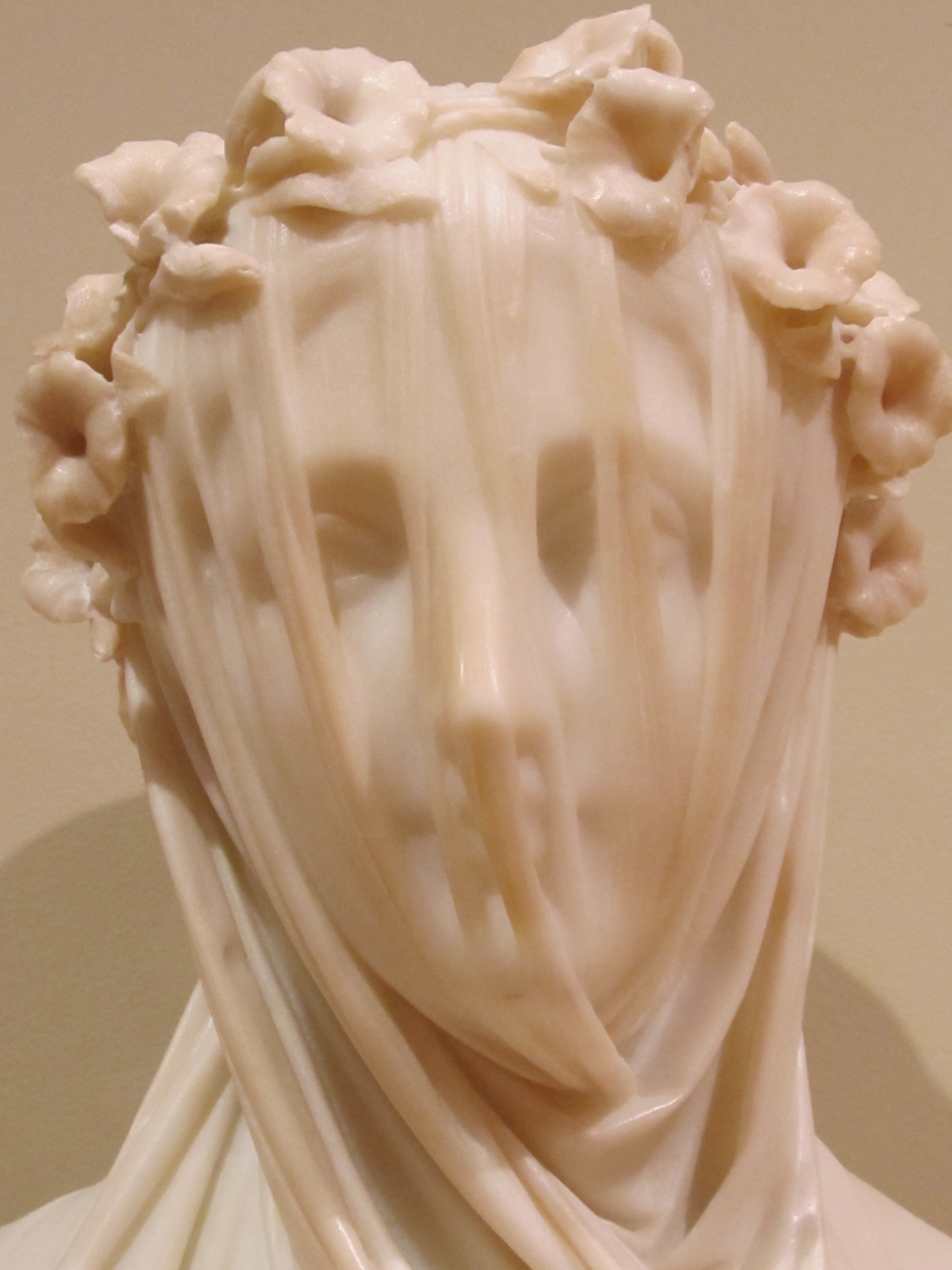
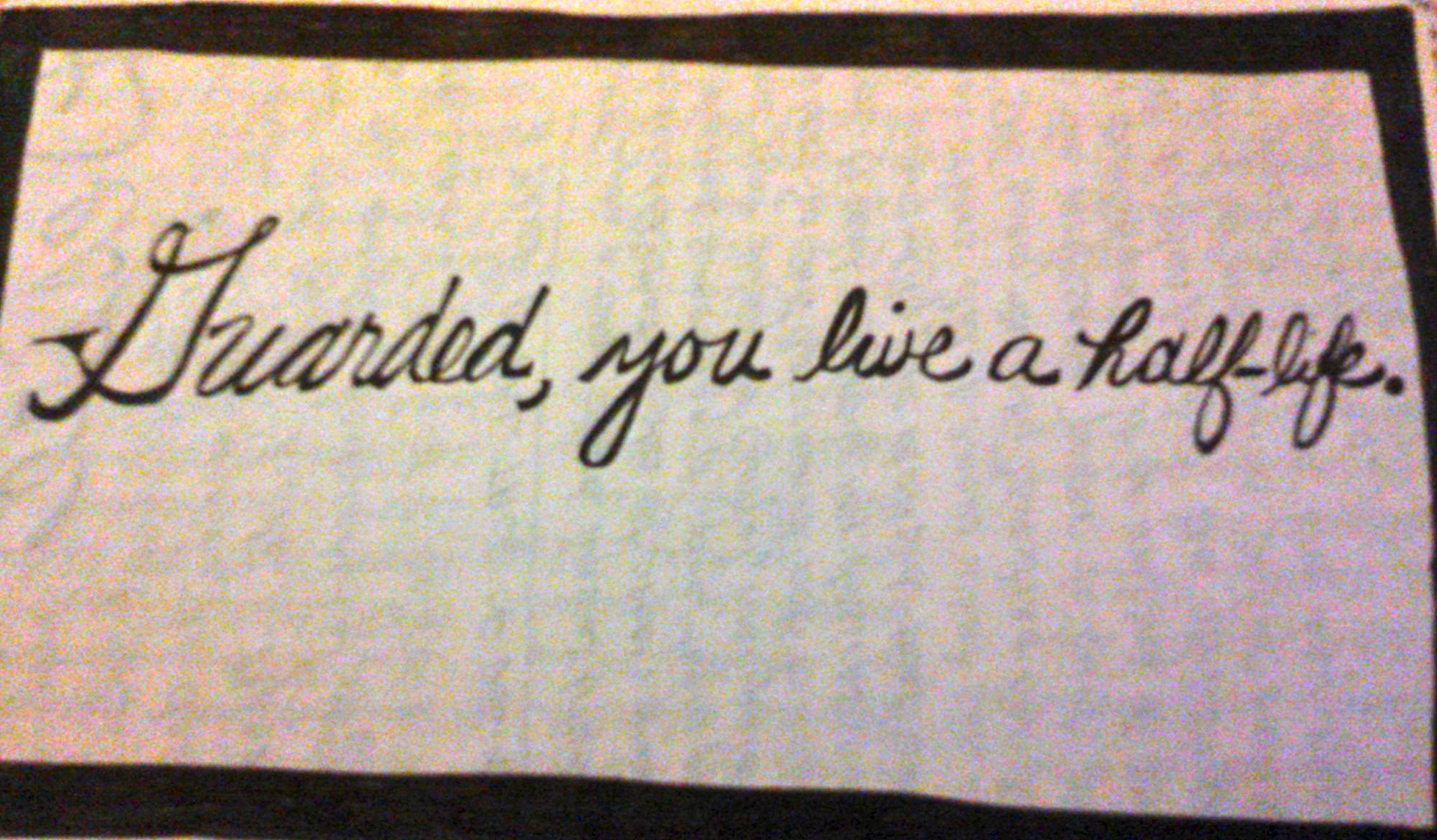
Un-guard!

IMG_0165
 
I stumbled yet again. In the murky half-light just before dawn, I had only been able to see a few feet in any direction. Now that day was fully upon me, I could make out dry, furrowed and rocky terrain stretching to every horizon. I saw no distinguishing features, just the promise of further punishment on my bare feet and the continued threat that they would see me. I clutched the vessel to my body, attempting to shield it from both the sun (lest its radiance betray my location) and from splintering on the unforgiving landscape. When I glanced behind me, I did not see them, but I could feel their pursuit.
 
My one protection was the long cloak I clutched about me, woven of thread which so closely matched the featureless plain that is served as a form of camouflage. Because my hands were not free to assist me in remaining upright, I often stumbled. And the length of the cloak caused me to step on it with regularity, tripping myself when the stony ground did not…I know not how long I toiled to carry the vessel. Time became meaningless on that journey.
 
Eventually, however, I saw a small something on the horizon, which turned out to be a simple square building, open on two sides. I approached it warily, fearful of what or whom I might encounter, but desperate for rest and water. I entered what could only be described as a temple. The room, open to the land on two sides, contained a simple pedestal in the center, on which nothing resided.
 
“Welcome. We have been waiting for you.” I turned toward the voice, to see a man and a woman, each garbed in simple white robes.
 
“Please,” said the woman. “We have prepared a place for your burden. Don’t you wish to rest? It will be safe here.” She indicated the empty pedestal, and gestured toward the vessel I carried.
 
It seemed like forever since I had been wishing to set the heavy vessel down. But now that it came to it, I was loathe to do so. It was my burden, entrusted to me. Yet, these two looked at me with compassion. They made no move to take the vessel from me, simply waited patiently for me to choose.
 
Carefully, I unwrapped the vase from the folds of my torn and weathered cloak and placed it on the pedestal. At first, it appeared a small and unlovely thing. And then a shaft of sunlight found it, and everything changed. It lit up the room with its brilliance, a myriad of colors in its ingeniously worked glass. I was overcome by its beauty.
 
“But it shines so!” I cried. “They will find it and destroy it!”
 
“I promise you,” replied the man, “its light is meant to be seen. For this it was created.”

        #########################################################################################

When I woke from the dream recounted above, I couldn’t shake it. The haunting quality of it, the visceral emotional impact of it. Most especially, I couldn’t shake the truth of the dream.

I say truth because I knew immediately upon waking what the dream intended me to learn: that the vessel I had so carefully protected and shielded from the eyes of others was my self. The vulnerable, beautiful, shy, powerful, loving, shining self that I was born to be. That I had worked so hard to protect from hurt. That with my misguided efforts and protective coping mechanisms I had hidden not only from the world, but also from me.

There is a quote, often attributed to George Eliot, which says, “It is never too late to become what you might have been.” I love that quote, but it is about what we do with our lives. What my dream showed me was a slightly different truth:

It is never too late to be who you ARE.

You have journeyed in silence, fear, and discomfort long enough.

Come out of hiding. Let your true self be in the light, instead of shrouded in secrecy and webs of self-preservation.

Will everyone love the true self you reveal? No. Will their rejection, if and when it comes, hurt? Probably. But not as much as the self-rejection implied by staying hidden. By keeping yourself small and unobtrusive. By pretending that you are not who and what you are.

This last bit I didn’t learn from the dream. I learned from practicing the lessons of the dream: by opening myself to vulnerability; by painstakingly making the conscious choice to stand in my own center when outside forces (often people I love) buffet me; by allowing a moment to pass so I can respond from my truth instead of knee-jerk react. I learned by trusting others. And I learned by trusting myself.

Have I learned these lessons perfectly? No way! Each day has its own set of conundrums, of tests and trials. That said, letting my true self live in the light of day has been significantly more fulfilling than keeping myself hidden. Shame and Guilt, who were my frequent companions, have mostly disappeared. They don’t thrive in the light.  They have been replaced by Acceptance and Grace – companions who encourage me to grow into my best self. And my self, who I am, is a gift to the world.

If you recognize yourself in my dream, or know in your heart that you have been guarding your true self from the light, I encourage you to take the steps necessary to let the you that is unique and beautiful and essential come out. Take tiny steps forward, if you must. But don’t deprive the world any longer of the gift that is you. It is never too late to be who you are – who you are shines, and is worthy of love.

From my journal, after waking from the dream.

Night Joyriding

Today’s post was written jointly by Mike Beck and me. Since my arrival in Minneapolis in early July, one of our favorite activities together is cycling at night throughout the city. While we both enjoy nighttime riding, we came to it from different places, and our experiences are our own – hence the format of the post. In the end, we hope you’ll be encouraged to get out on your bikes – especially after dark!  
          –Jenion
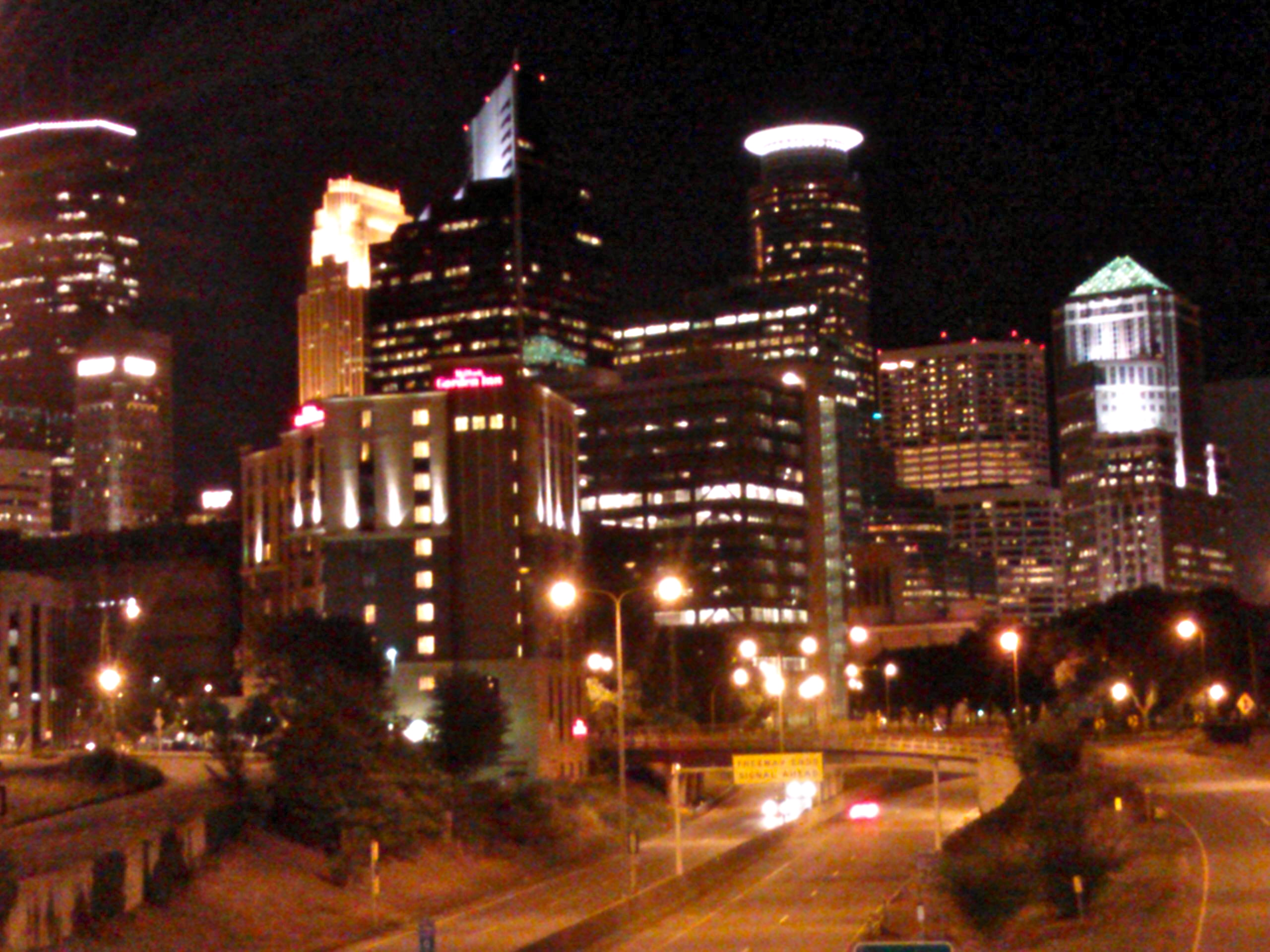
Minneapolis By Night, photo by Mike

M: I love riding my bike – I always have.  When I was a boy on the farm in Iowa, my siblings and I escaped into made-up worlds on our bikes.  As a father of young boys, meandering on suburban trails with the tots was always pleasurable.  Now, biking is more than just fun; it’s a way to get outside, be active, and a key component in my quest for a healthier lifestyle.   But, with a full-time job, and other activities that often book weekend days, the ONLY time I have to ride is in the evenings.  And it’s still fun, especially when I have someone to ride with.

J: Biking has been such a significant part of my life these past several years that I considered a bike-friendly culture one of the “must haves” for any city I finally chose to settle in when I left Cedar Rapids. By all accounts, Minneapolis fit the bill. When I arrived here, I couldn’t wait to explore the bike trails and greenways I had read and heard so much about. And I looked forward to doing so with Mike – we had talked about cycling for years, but living in different states made it impractical for us to ever actually ride together.

M: Introducing Jeni to her new city has been one of the things I enjoyed most this summer.  I have lived in Minneapolis since 1993, and I know the town quite well.

J: That’s an understatement, by the way!

M: But, as I was saying before I was interrupted, biking in Minneapolis is relatively new to me.  I started riding my bike last fall, after a long hiatus, and I usually stayed close to home.  But now that Jeni lives here, we want to ride as often as possible.  As I mentioned, the only time in my busy schedule is late evenings.  This posed a difficulty though:  Jeni was adamant that if we were going to ride in the evening, we were going to stay put on designated bike lanes and trails.

J: I had my reasons for insisting. If any of you have ever lived in a city that is unfriendly to bicyclists, you’ll understand my reluctance. I had been shouted at, honked at, and had motorists purposely swerve toward me only to pull away, laughing, at the last moment – all as I crowded as far into the gutter or alongside parked cars as I could. Other times, motorists were just so unused to cyclists that near-misses occurred. In that environment, why would one EVER get on the street – especially at night when visibility is even further reduced?! It was a sign of trust that I allowed Mike to talk me into it.

M: We live on Franklin Avenue, a busy street morning, noon and night.  For us to get to a designated bike lane, we have to maneuver off our own street first.  Fine.  We can do that!  Just a few blocks west we can catch a dedicated bike lane on Blaisdell Avenue.  That will take us to the Midtown Greenway, a bike “freeway” that connects to just about every trail in South Minneapolis.  From there, we can connect to the Chain of Lakes where the trail is not only exclusively for bikes, but also one way.  Thus began our foray into night bike rides!  We could get a short ride in just by circling Lake Calhoun, or if we had enough time, we could also ride around Lake Harriet and Lake of the Isles.  This was quickly our routine, and safe and easy for my reluctant partner to navigate.  Plus, it gave us a few opportunities to “practice” street riding.  We had to obey traffic rules on Blaisdell, lest we get taken out by a right-turning vehicle.  We had to leave the comfort of our dedicated lane so as to make a proper left-hand turn onto 29th Street to get on the Greenway.  As beautiful as the lakes route was to ride, though, it quickly became as boring as it was routine.  But I was patient, and that patience paid off!   Imagine my excitement the night Jeni said “Let’s head downtown instead of to the Greenway.”

J:  I won’t lie: that first ride in the dark, guided only by the spot of light offered by my headlamp, was scary. But it was also strangely exhilarating. Like all new experiences, it took a while to develop a comfort level with riding after dark. The night city has a very different look and feel than the day-lit one. On our second circumnavigation of Lake Calhoun, Mike nearly collided with a silver fox, its coat irridescent in the moonlight reflecting off the water, as it streaked past. Where, during the day, you smell suntan lotion and picnic lunches, at night the exotic scents of flowers and rich soil are noticeable. It wasn’t long before I was hooked. And I wanted to experience much more of the city than just the chain of lakes, as wonderful and beautiful as they are. We began to take different routes about the city, revisiting spots we had both seen before, but not at night or by bike. One wild Friday night we headed to the newly opened Dinkytown Greenway and, with road construction and detours, ended up in unexpected neighborhoods. We didn’t have a map, but somehow a bike lane or part of a trail always opened in front of us. In one incident of serendipity, we were in what I would describe as a “sketchy” neighborhood and we hadn’t a clue what to do next. We found a sign for the Greenway, but when we followed it we discovered the trail gated and locked securely. Suddenly, I saw a  woman emerge from a weedy lot about a block ahead of us. I felt certain we would find a path there – what woman walks alone in a random weedy lot at 10:30 p.m. on a Friday night in the city? Sure enough, it was a paved trail, and it took us over the interstate and back downtown…

M: … where we navigated traffic departing the Metrodome after the first pre-season Vikings game.  The streets were clogged with drunk suburbanites, most of whom didn’t have a clue what a bike lane was.  (That’s the first time I heard Jeni actually yell at a motorist!)  Our dedicated lane wasn’t remotely passable, so we zigzagged through the traffic jam and found a cross street out of that mess…and straight towards the Guthrie Theater where the evening’s show had just ended.  Now our nemeses were taxi cabs picking up theater-goers dressed in tuxedos and evening gowns.  Dodging that mess, we headed into the heart of downtown, where out-of-towners apparently assume people riding bicycles on a Friday evening must know their way around.  We were stopped and asked directions several times.

J: And, of course, Mike always knew how to direct them!

M: Anyway, that evening sealed the deal for Jeni.  She had now grown fond of our night bike rides, and had taken it off the trails and into the streets!

J: Ok, so that makes it sound like I went from a Nervous Nelly to an Adrenaline Junkie in one crazy night! The truth is, I had learned some important things about riding in this city. First, with the exception of the out-of-towners, assorted cab drivers and pizza delivery persons, motorists here both understand the laws of sharing the road and they respectfully adhere to them. Second, you develop “eyes” for night riding – essentially, you develop a comfort-level with using the combination of your headlight and ambient light available from the city. Third, most of our night rides end with a stop at our neighborhood Spyhouse Coffee. I love the arc of these rides – the excitement of choosing a new path, riding and spontaneously adjusting as we go, then – whether we’re refreshed or sweating buckets – a coffee and chat before the last blocks home.

M: For me, night riding is about getting outside after a long day at work.  It’s doing something active, and it’s sharing time with a friend.  It’s an opportunity to bond with our city, from a perspective we don’t see from our cars.  And it’s being part of a unique, vibrant community.  We are never alone on our night rides.  Minneapolis cyclists are loyal and dedicated kinfolk and it’s not uncommon to share a greeting or a brief conversation with fellow riders when our paths cross.

J:  Agreed. But some nights, riding is for the pure experience and adventure of it; a celebration of the spirit of biking. It makes me feel the way I did in junior high when I raced my sunshine-yellow ten-speed all over the small town of Hastings just because it was fun, and I could. In adult life, those reasons are rarely considered sufficient for activity – which makes me wonder: why not? We night joyride – because it’s fun and we can. You should join us sometime!

A night ride must: Spyhouse coffee before heading home, photo by Mike

Thursday, September 19, 2013

Image 4

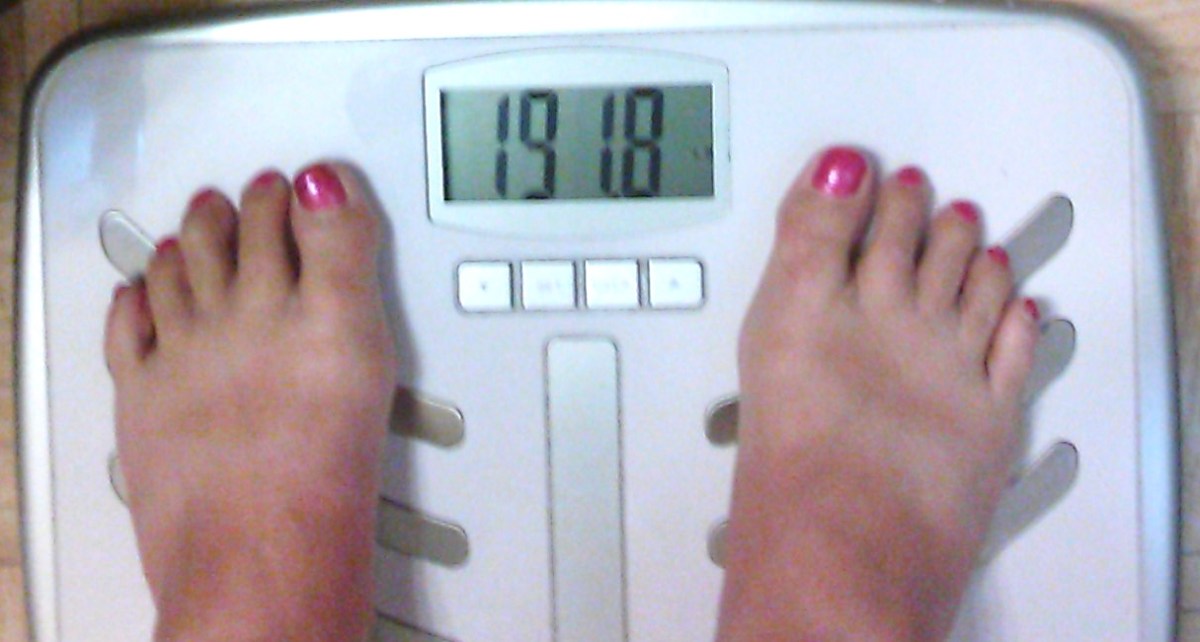
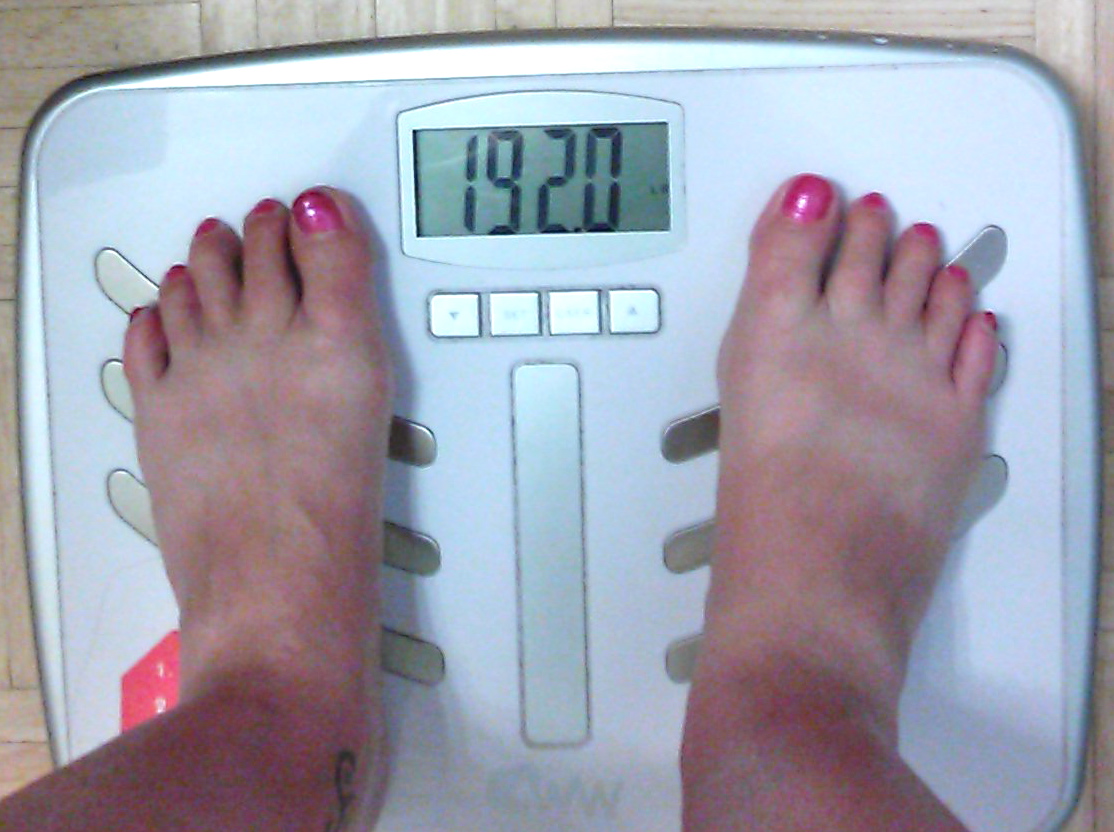
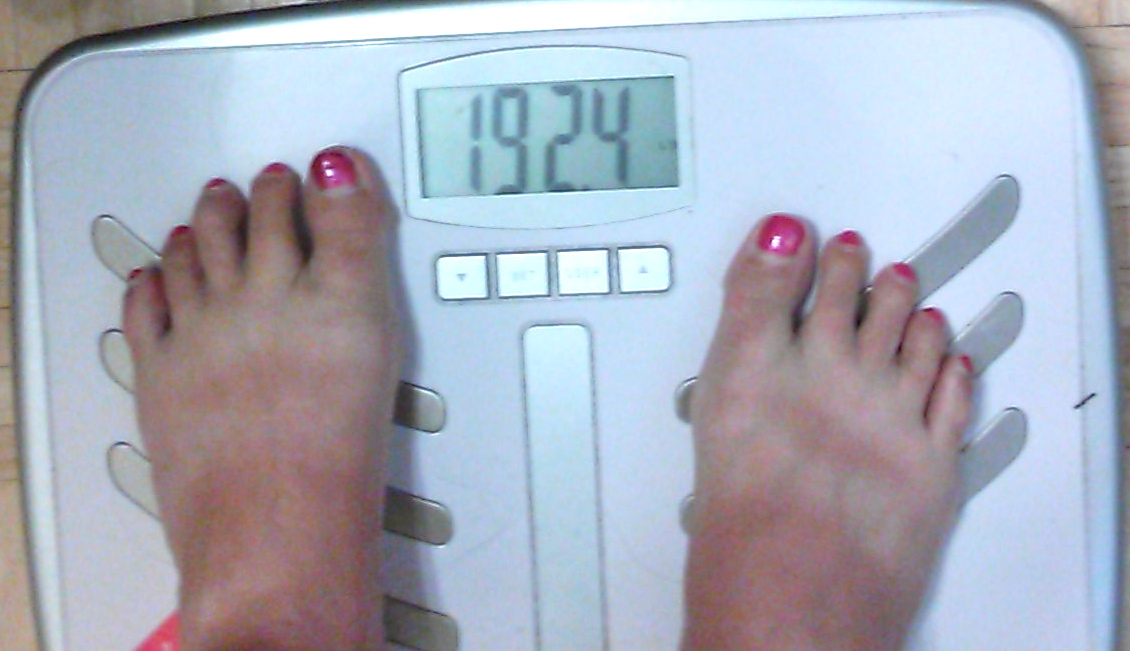
Why do I keep doing this? I’m not a masochist nor do I have a strong need for exhibitionism. So, cross those reasons out! I do it for several reasons. The two most important:

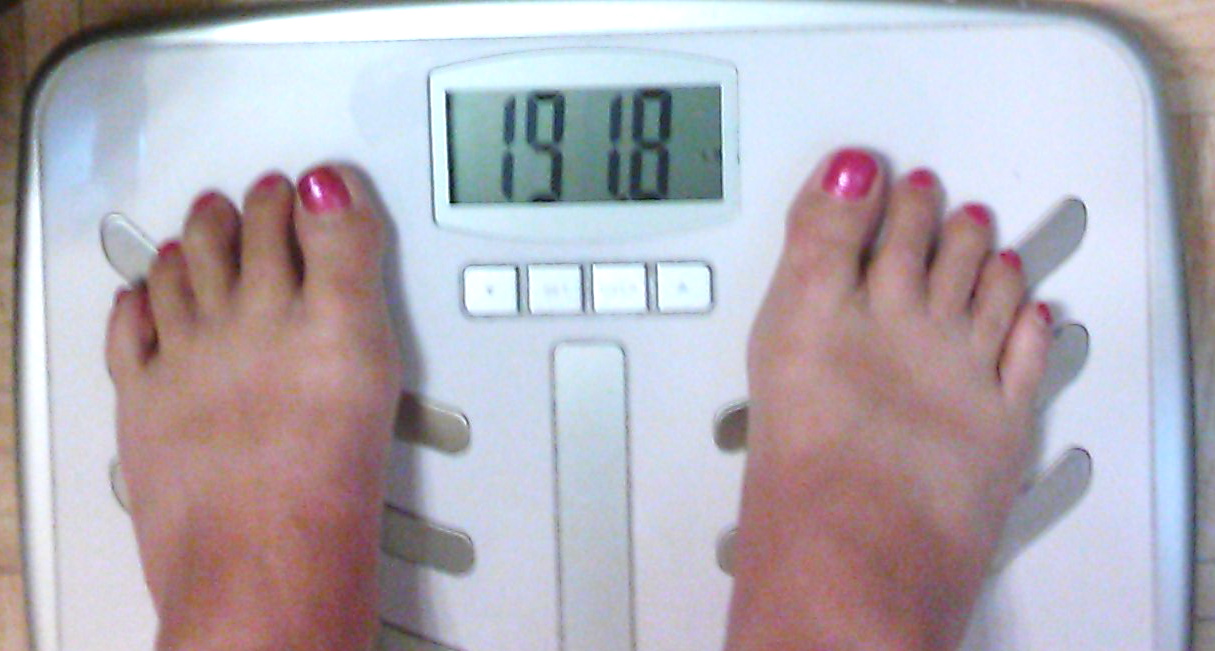
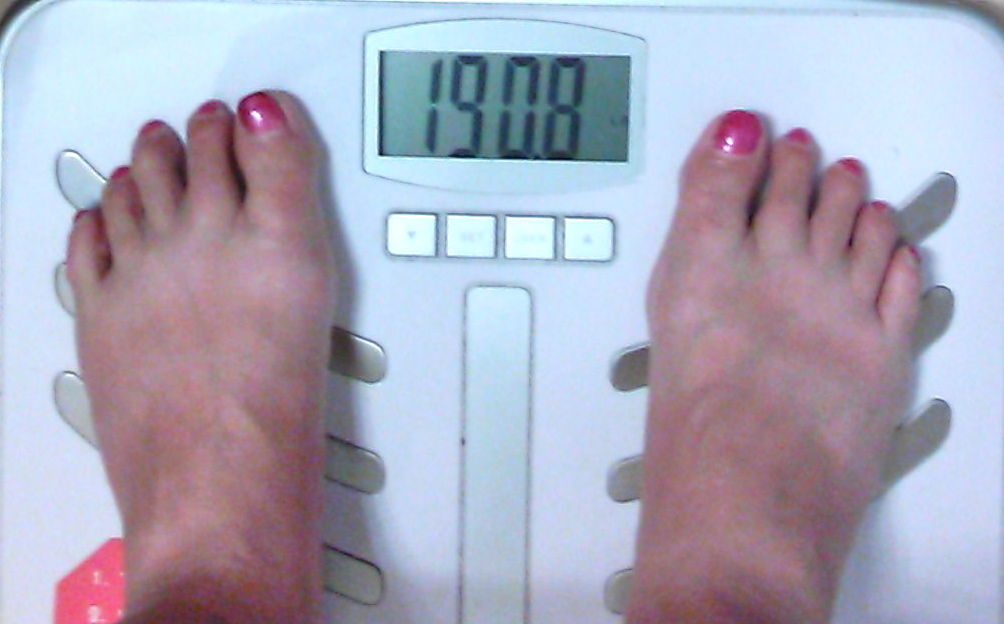
First, I do it for me. It is a way to keep my head in the game, so to speak. I want to continue living my life to the fullest – and the surest way to sink back into somnolence is to stop paying attention. I know I am ok no matter what the scale says.  That said, when I am experiencing forward momentum or maintaining I can be sure that I am making good and conscious choices.  But when there is backsliding, I know it is time to put my attention back on my daily choices.

Second, I do it for those who struggle with their own weight or eating issues. There is no need for shame, no need for secrets. Self-acceptance isn’t an easy path for many of us, and it can be a long as well as difficult trek. But it is a path worth taking if we want to fully realize the people we are meant to be. I want that for all of us.

The Case for Uncertainty

Image

When Reverend Robert H. Schuller posed the now famous question: “What would you do if you knew you could not fail?”, I wonder if he had any thought of its ongoing impact – of how often it would be presented, posted (reposted), asked as a motivational tool. I get what he was going for, but the truth is, I’m kinda tired of this question.

I’m tired of it because I think it is the wrong question.

Let’s face it – for most of us, the truthful answer when asked “What would you do if you knew you couldn’t fail” would be, “What I did yesterday. What I am doing today. What I plan to do tomorrow.” We build our lives around daily routines that are composed of things we can’t fail at: eating, sleeping, working, laundry. On the micro/daily level we don’t fail at these. At the macro/lifelong level, we may question whether or to what degree we were successful at these things – but mostly we muddle through without labeling ourselves as failures. We feel secure in our “fail safe” routines, as if our lives are manageable, predictable.

Besides, we can all point out, in fact are hyper-aware of, the times we do or have failed. We deal with failure to the best of our ability and move on – what else can we do? There’s even a kind of trendy “failure is good” meme out there right now, encouraging people to take risks, reminding us of how many times Michael Jordan missed a basket or how many rejection letters J.K. Rowling got before someone agreed to publish the Harry Potter books. The message is that failure is a necessary risk if we hope to succeed at anything worthy in life. I don’t take issue or argue with this point.

However, last winter I read Brene Brown’s book, The Gifts of Imperfection, in which she alters Rev. Schuller’s famous question. Brown suggests that we ask ourselves, instead, “What is worth doing, even if I risk failure?” This raises the stakes by introducing the concept of uncertainty. Not “I can’t fail” but “I might fail”. I would argue that the most important word here isn’t fail, though that’s the word that captures our attention and most of our immediate fear. The word to pay attention to here is might.

What is glossed over or skipped entirely in most pep talks for daring greatly is that uncomfortable period during which we must live with uncertainty. If we want to create real change in ourselves, our lives or the world, we will have to get comfortable with uncertainty. “Real change only comes from encountering what is unfamiliar, what is new and unknown”, say authors Fred Mandell and Kathleen Jordan. “We can copy ourselves over and over again, every day. Or we can step into the unknown.” (from Becoming a Life Change Artist: 7 Creative Skills to Reinvent Yourself at Any Stage of Life).

Stepping into the unknown is uncomfortable. Un-easy. Underappreciated. I remember a conversation with a senior colleague, a woman the same age as me, in which I was told, “You still dream of accomplishing something new and different with your life? I’m not sure I do.” When I actually resigned my job of nineteen years, with no detailed plan for what came next, that same colleague called me courageous. At the time, I felt courageous – because I felt certain. Certain that leaving was the right decision. And,  though I am less likely to apply the “courageous” appellation now, I continue to feel that certainty.

But certainty is old news, or at least isn’t my uppermost experience these days. For months now I have been living with and in uncertainty. Living contentedly with the daily unknown of “What’s next?” comes neither easily nor naturally to me. Here’s what I think I’ve learned so far, the tentative case I am building for the importance of uncertainty:

  • Living in uncertainty, for any length of time, requires the development of trust. Trust that there is a higher purpose or good to be unearthed in my life, and trust in my ability to recognize it when it begins to unfold.
  • Expertise is a hard shield of certainty that can be used to protect us from the openness required of beginnings. Stepping out of my role as expert, no longer having a “professional pigeon-hole” in which to dwell and shedding certainty about what I know opens my mind to new thoughts about the world and the role(s) I wish to play in it.
  • Lacking certainty about tomorrow puts attention more squarely on today. Living in the present moment takes practice, and I wasn’t ever very good at it.  Now, though, it is abundantly clear when I stray out of the present – anxiety and fear serve as barometers that immediately register my movement into past recriminations or future fears.
  • In a similar vein, living with daily ambiguity forces me to be vulnerable – something I, for one, have always avoided. In the present I feel my emotions (is it ok to say I have a love/hate relationship with feelings?). But I also have the time to examine them and tease out the jumbled threads to understand them, something I could never do when time was always in short supply.
  • Uncertainty allows for play. Trying new things on for size. Engaging in exploration that can’t happen when every step is already mapped out. It allows us to give up, for at least some portion of time, the need to succeed and instead to focus on process rather than results. Carla Needleman, in The Work of Craft, says: “…the desire to succeed is the progenitor of real failure and…this attitude is a far more pervasive force than we realize…The craving for results in objects, or in opinions, the need to name, the need to ‘know’, which means to end the discomfort of not knowing, is the seemingly innocuous backdrop against which all our activities take place. I don’t know how to feel about the pot (she’s talking ceramics here) because I don’t know how to feel about myself. The pot and I then make a closed circle in which no new knowledge can enter precisely because it hasn’t been asked for.”

Uncertainty may not be comfortable, but it is certainly fertile – if we allow it to be so. Recently, a friend shared a blog post by a woman who quit an unfulfilling job in a community she didn’t care for, moved to Colorado, and took the better part of a year finding the right situation for herself. She characterized herself, during that year, as being “uninteresting”. Her conclusion was that all she did was worry about money and finding a job. This focus prevented her from engaging in interesting activities.  I read her post as a cautionary tale – after all, our stories are similar. What I am beginning to grasp, if imperfectly, is that the gifts of uncertainty are sometimes difficult to mine, but in the end are worth any extra digging or effort on my part. Whether there is an eventual outcome which can be labelled as a success or as a failure, I want the hallmark of this time to be growth. The treasures being unearthed are knowledge, efficacy, compassion, gratitude – of and toward both myself and this amazing world I am part of.

I’ll close my case for uncertainty with one more elegant argument, which I stumbled across online earlier this week:

“If you take away uncertainty, you take away motivation…There’s no magic to getting where we already know we can get.”
           — Pete Athans, alpinist, from National Geographic, “Famous Failures”
 
Image 1
 

Unfolding: Rilke, a paper crane, and me

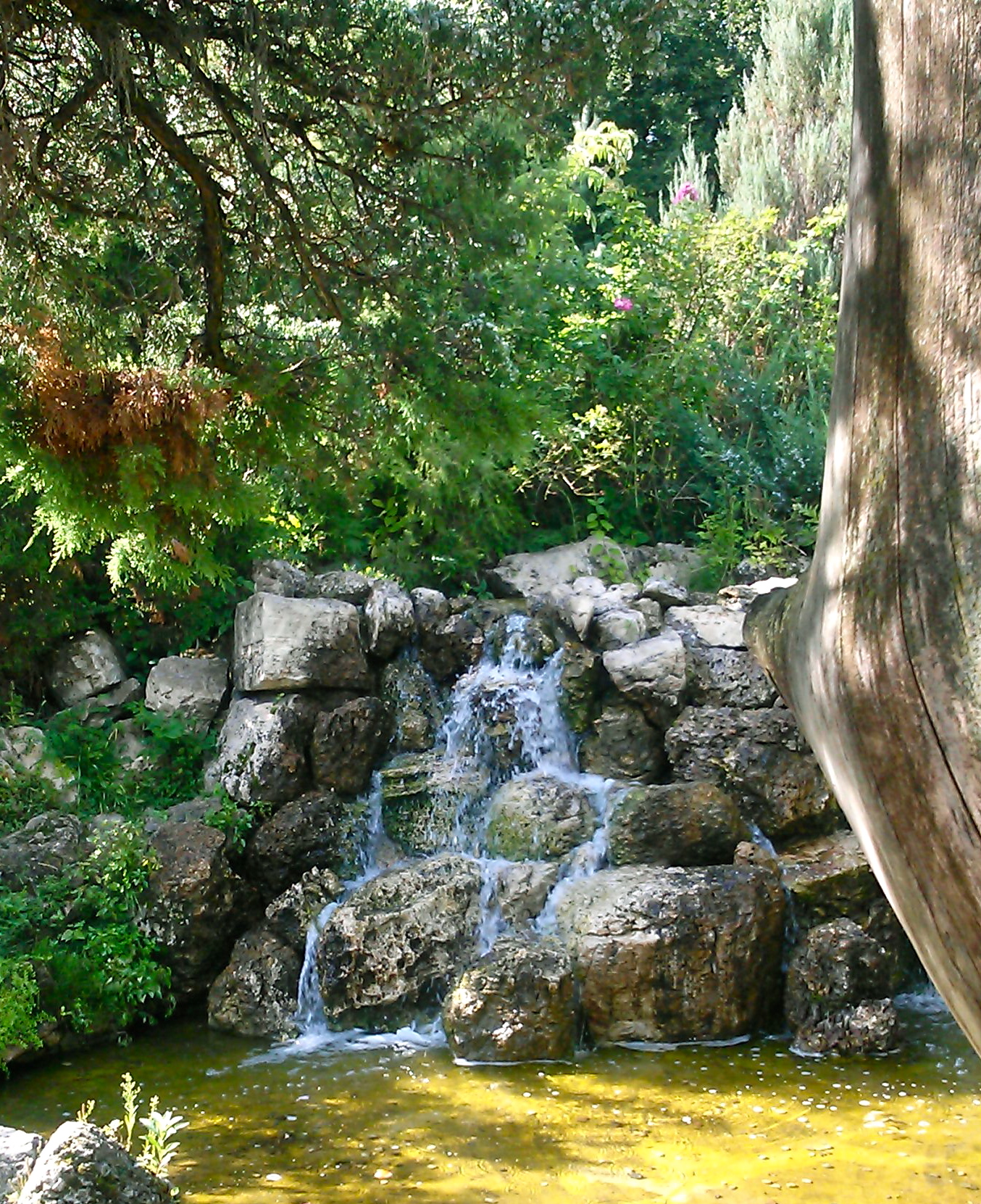
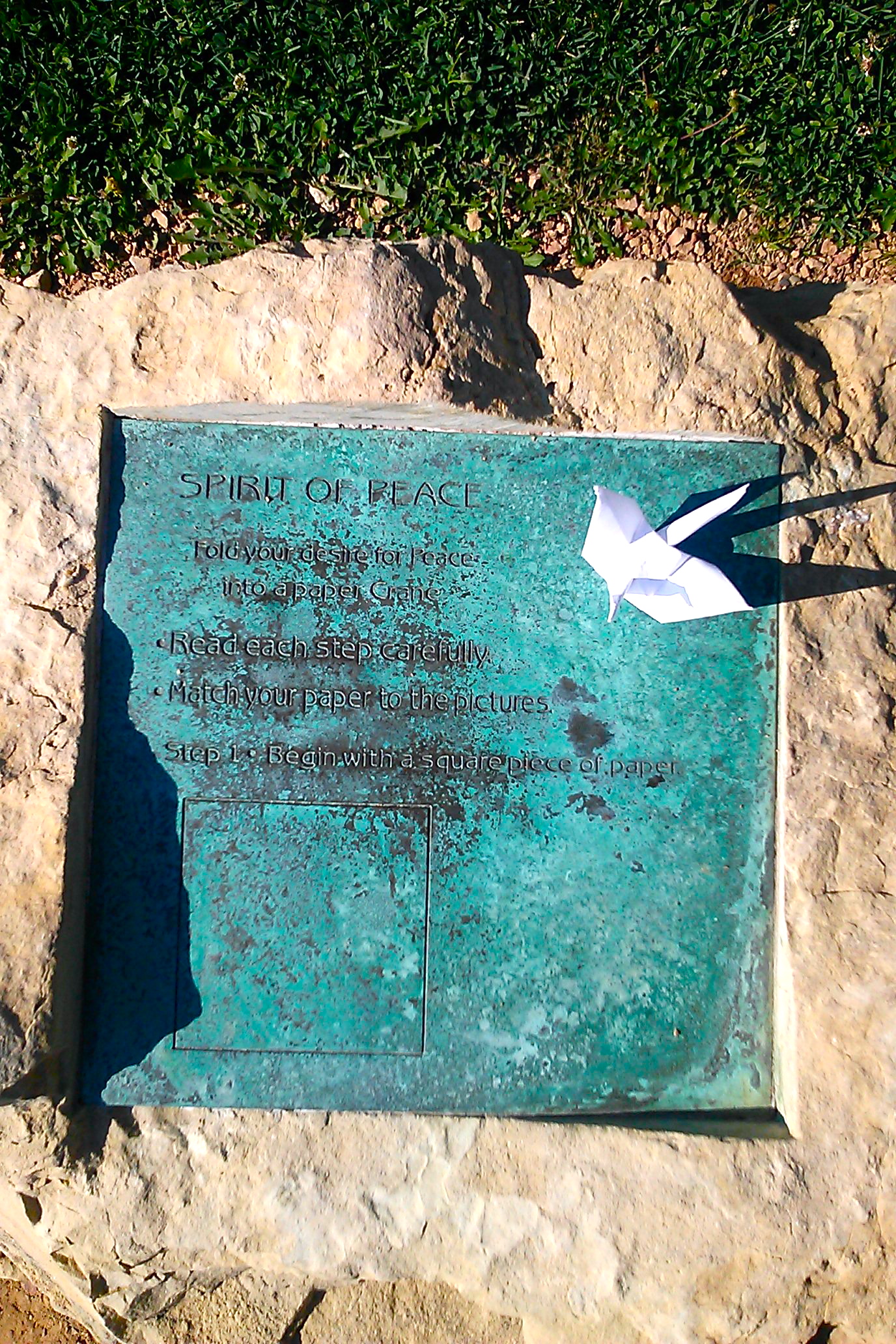
Image 2I don’t know the official name of the garden. I had seen it from my bike as I rode past. It looked like a quiet place to sit and think, across the street from its showier cousin, the Rose Garden. It wasn’t until after I had admired the little waterfall that I thought to notice the copper statue of a stylized crane, green patina-ed from the weather, or the boulders surrounding it. Each boulder contains a plaque, also weathered, with instructions for folding an origami crane. The first plaque begins, “Spirit of Peace: Fold Your Desire for Peace into a Paper Crane…”

I had come to the garden to contemplate a poem which came to me through circuitous routes, and which I knew upon my first cursory reading would require quiet and space. Here it is:

“I Want to Unfold” by Ranier Maria Rilke
 
I’m too alone in the world, yet not alone enough
to make each hour holy.
I’m to small in the world, yet not small enough
to be simply in your presence, like a thing —
just as it is.
I want to know my own will
and to move with it.
And I want, in the hushed moments
when the nameless draws near,
to be among the wise ones —
or alone.
I want to mirror your immensity.
I want never to be too weak or too old
to bear the heavy, lurching image of you.
I want to unfold.
Let no place in me hold itself closed,
for where I am closed, I am false.
I want to stay clear in your sight.
 

In the art of origami, a simple square of paper is folded in such a manner as to be transformed into something else, something other than itself. These days, I feel tightly folded, holding myself erect with the artificial strength of reinforcement from bent and pleated layers. I may appear to have wings, like the crane. But that is an illusion: I am earthbound, folded tightly in upon myself as a protection from all my self-doubt and fear.

I want to know my own will, and to move with it. That was, after all, the whole point of the changes which led me here. I felt I had a firm idea of it in April and May, but as the summer passed it slipped more and more from my grasp. August and it seemed to disappear altogether. My days are peaceful on the exterior, but inside they are a turmoil. I have folded my desire for peace, let alone to know my own will, so deep I can’t quite get my fingers on it.

I want to unfold. Let no place in me hold itself closed, for where I am closed, I am false. Closed equals hidden, equals secret. Why choose folded, to remain closed? Fear, shame, guilt. Fear of my own inadequacies; shame that after all of the grace and the love I am still much afraid; guilt for the ways (large and small) that I know I am failing the gift of this time.

Unfolding. Unfolding equals exposing, unearthing, truth-telling. Exposing my vulnerabilities (the snivelling coward that lurks in my heart); unearthing through careful toil my hopes and dreams; telling the truth about my uncertainties and shortcomings, but also my talents and courage (which share space with that coward).

I want to unfold. Because, unfolded, I am myself: a plain square of paper, open to the sunlight. Able to breathe because I am no longer tightly crimped. My pride wants me to “be among the wise ones — or alone”, but truthfully, I am content to be alone and small enough for this world. It’s only on my bad days I think, “Any smaller or more alone, and I would disappear.”

As I sat in the Peace Garden, contemplating the Rilke poem through the oddly curved lens of my current life-in-limbo, I wasn’t thinking about the Divine, or Rilke’s obvious desire for deeper connection and relationship with God. I wan’t thinking of peace. I was thinking about the falseness of being closed – of pretending to be less needy or more sure than I am. Of the artiface, not the art, of origami.

Image 4

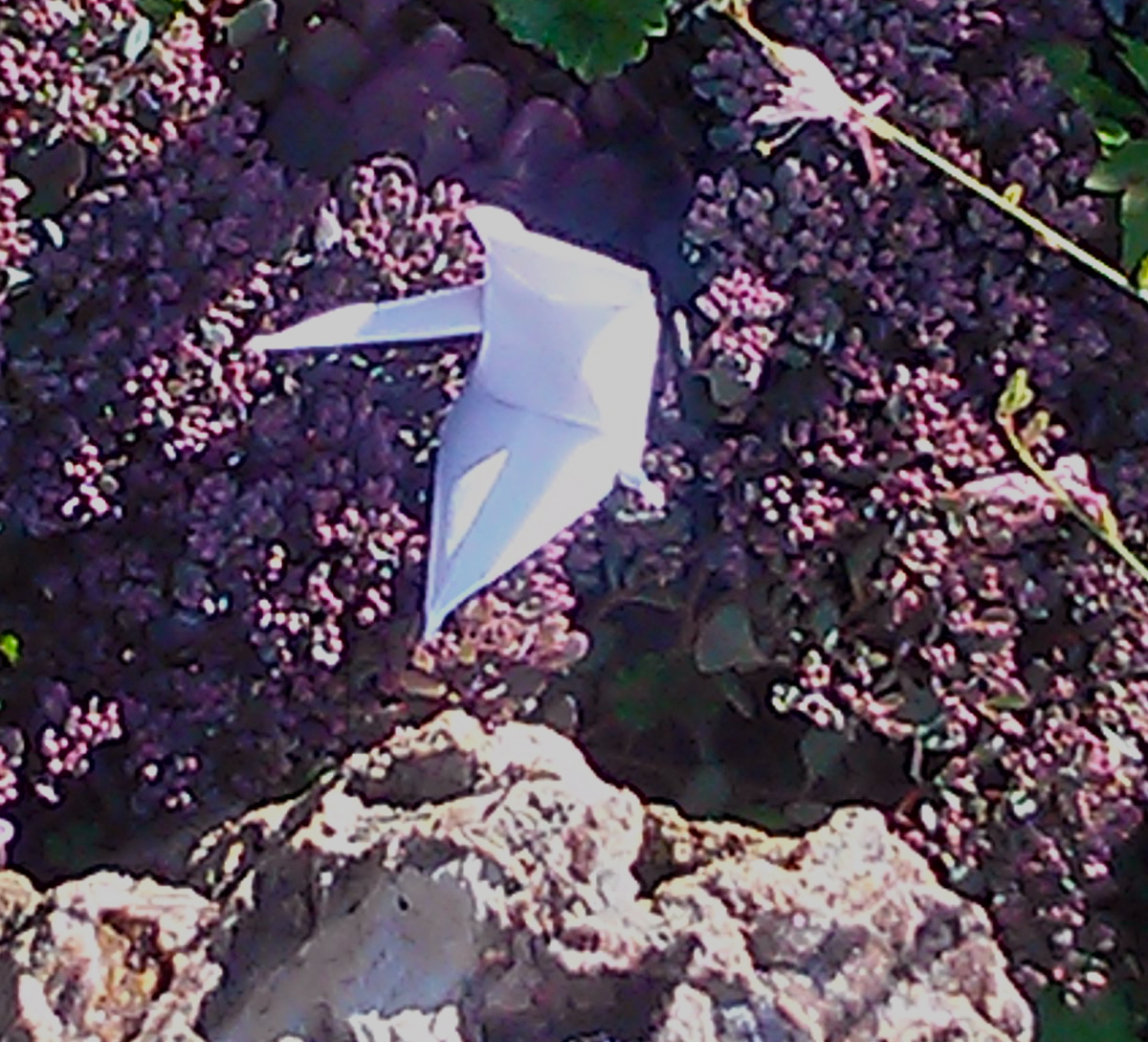
And then I saw it: one tiny white paper crane among the plantings. Fragile and pure, untouched by the dirt it rested upon. One wish, not the famous one-thousand, for peace. One tiny, fledgeling hope for something better. And I laughed, realizing that while a person should take care to remain unfolded, it is fine for paper. The paper crane was made more by folding, while I was less. Yet both of us yearn for peace – the peace that comes with understanding and compassion.

That peace must find a beginning in my own heart.

Image 3