Recognizing the “Will to Meaning”

I hesitate to mention it here, but I haven’t felt really well for several weeks now. It’s nothing serious, just one of those things that leaves you feeling tired and weak. And after a while, tired and weak leads to depressed – not clinically, but definitely down. I hesitate to mention it because there are people reading this post who are dealing with lasting, serious or chronic health conditions and I feel like a heel for complaining.

The reason I decided to bring up my respiratory infection is not, however, to have a wider audience for my complaints. I started crying for no good reason during a meeting today. I have spent the past two evenings at home feeling cotton-headed, and emotionally isolated. And all of this is the result of a not particularly debilitating condition. What if I felt this way all the time? How would I cope with that? These questions have led me to think about my role in working with young people – especially those who struggle with depression, anxiety, suicidal ideation.

Some of you have heard me say that today’s students appear to have fewer coping skills and less resilience than the students I worked with when I entered my career twenty plus years ago. For some, this leads to an inability to take “normal” bumps in the road of life in stride (breakups, failed tests, etc.). For some, the life events they are attempting to take in are shockingly horrific. And this includes mental illness and personality disorders. A sobering truth: although college students commit suicide at a slightly lower rate than their age-mates who are not in school, suicide remains one of the leading causes of death among college students. This is a truth of which I am currently hyper-aware.

What can I do? My job is to do my utmost to keep them safe, to provide a safety net of concern, awareness and response when a student in crisis is brought to my attention. But what else am I to do as an adult who has successfully maneuvered through late adolescence and early adulthood? What are we all called to do to assist others who are struggling?

I try to stay away from making sweeping generalizations about our culture and how the “Jersey Shore” mentality is harming us all. But I do think the paucity of character and values in popular culture is detrimental to young people. And the influence of popular culture is multiplied by a vaccuum in their daily lives created by the disappearance of adults who are prepared to help them find meaning and purpose in life. Because we’re not talking with them about meaning and purpose. We’re talking with them about how to maximize their earning potential. We’re talking to them about filling their resume with activities that will help them stand out in a sluggish job market. They’re listening to their parents trying to figure out how to get above water financially, and they’re turning to vacuous tanned talking heads to escape their anxiety.

I’m not suggesting that we stop attempting to help our young people prepare for careers. I am suggesting, however, that we need to do a better job of recognizing the need for young people to feel that their activities, their work – their very lives – have meaning. That their lives have a purpose beyond that of basic survival and/or material comfort. And as sometimes happens when I am ruminating on such ideas, a perfect resource appears which can explain my jumbled thoughts better than I can. Yesterday, I saw the short film clip, below, over at The Better Man Project (a personal motivation blog I follow). I strongly encourage you to watch it – four minutes with the great Viktor Frankl, whose book Man’s Search for Meaning remains one of the most influential in my life. As always, Frankl speaks with eloquence and humor, and what he says is as true for today’s students as it was for the young people listening to his lecture in 1972. If we fail to recognize the “will to meaning” within an individual, we fail that individual. And the cost of that failure is very high – lives are, literally, at stake.
Flashback Friday – Ireland


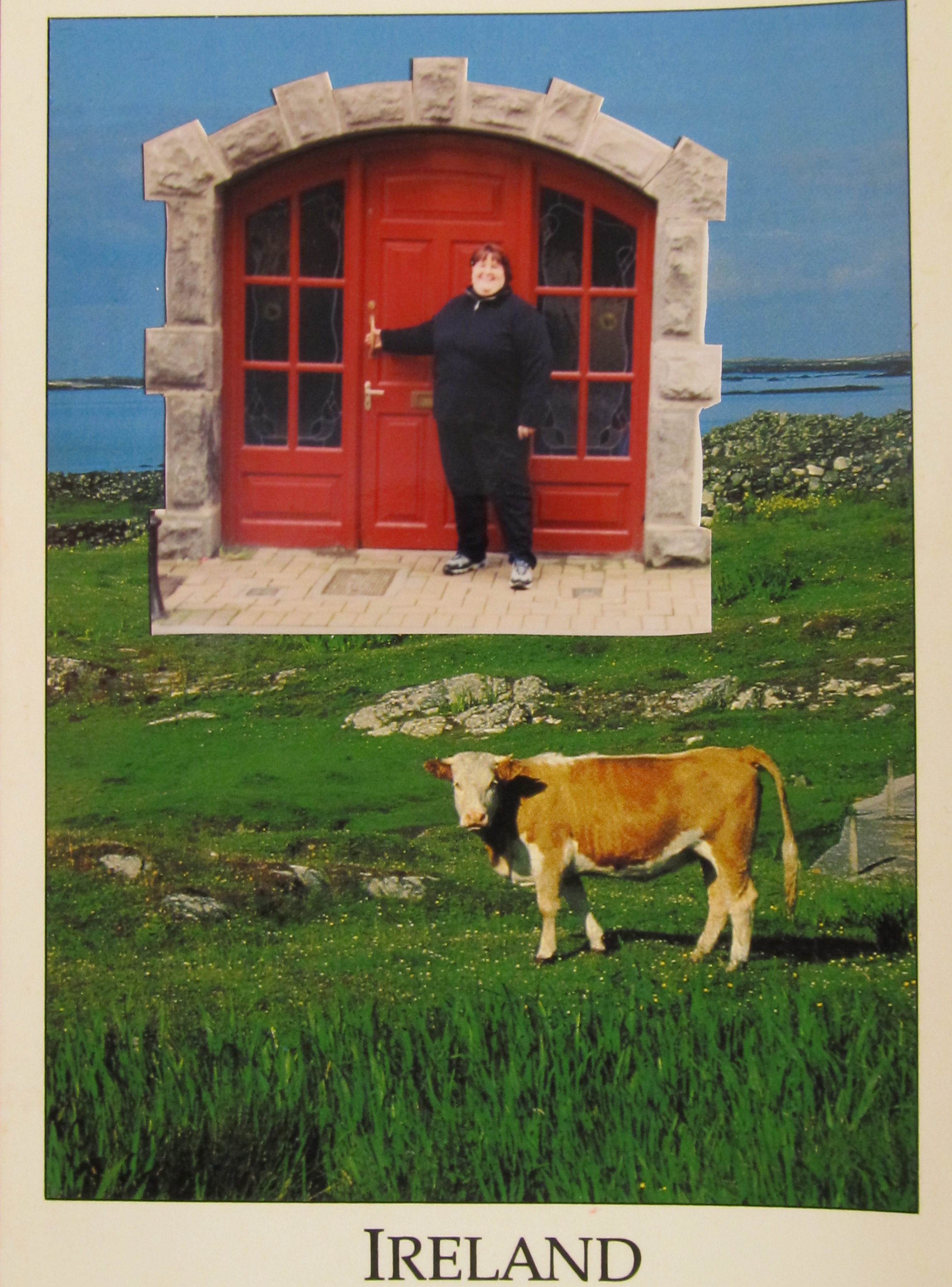
This photo is actually a page from the journal I kept while travelling in Ireland, March 2004. There is no way to describe the effect of the trip – of Ireland – on me, other than to say it changed my worldview. In browsing through my journal, I came upon two quotes (neither of them mine), which really speak to my feelings about that trip:

“In Ireland, the inevitable never happens and the unexpected constantly occurs” – Sir John Pentland Mahaffy

“An rud is annamh is iontach” or “That which is wonderful is seldom” — Irish proverb

Spring Cleaning

I hate to begin with a complaint. But this winter was truly underwhelming, as winters go. Not much snow, hardly any truly cold temps, no frightening winter storms. While I never wish for weather that brings harm to people, I do kind of rely on winter’s weather-induced reminder of my own smallness within this large universe. It forces allows me to spend winter days reflectively, journaling and reading and planning. A mild winter creates too much opportunity for activity, thus, I haven’t had the fallow time I generally need in my calendar year. And now, it’s almost time to spring forward, as if I’m not too exhausted to embody such an active verb!

As you may recall from previous posts, I have been working with a life coach. Our past couple of sessions have focused on the ideas of less and more. Specifically, what do I want less of in my life, and what do I want more of. How do I create the right balance of less/more in order to live my best life?

Some of what I want is, more or less, straightforward – for example, less clutter. Turns out, the way to less clutter is paved with less stuff. Sounds simple enough, but the stuff I cleared out of my bedroom is still riding around in plastic bags in the trunk of my car, waiting for me to pull into the Goodwill dropoff lane. Moving the stuff isn’t enough, apparently. It needs to actually go bye-bye for me to feel the benefit of less. Right now, it is just another bunch of junk in my trunk.

As I think about this more/less idea, the metaphor of spring cleaning seems apt. The idea of a true spring cleaning is not simply the removal of dirt, dust, detritus collected over the winter months of being shut in. It is also about creating an inner space that is fresh and clean, reflecting the shining sun and moderate temperatures outdoors, opening up room for growth.

So, here’s my spring cleaning list for 2012:

  • Less from Von Maur. More from Target and Walmart.
  • More walking, less treadmill.
  • Less from Michael’s. More from my craft room stash.
  • More doing, less meaning-to-do.
  • Less falling asleep in my recliner, more established bedtime routine.
  • More miles on my bike, less wishing I was riding.
  • More creativity, more adventure, more community
  • Less debt, less restlessness, less internal pressure.

I’m planning on a great spring, leading into another wonderful summer. More AND less!

********************************************************************************************

A couple of you have asked: Yes! I WAS and AM serious about my invitation for guest bloggers. If you have a personal story about your own growth journey (humorous, serious, strange or beautiful) and you’d like a place to share it, please contact me!

Repository of Memory

I sometimes astound my friends with stories about my childhood – their surprise generally surrounds either the fact that my five siblings and I never killed anyone or the concept that I was allowed to go places without my parents. Yes, friends, I am that old – I grew up in a time when no one was worried about children being snatched.

We lived, back then, in a house on a bluff, overlooking the Mississippi River and the flat valley it had carved into the landscape. The downtown, and many places of significance in my childhood, were located in those flats. Most forays both within and outside of my neighborhood involved negotiating either steep streets or flights of endless stairs carved into the bluffside.

Two blocks from my house, at a point where the street turned a corner and opened into a spectacular view of the city and river below, there stood a curious handrail. In the street itself, surrounding a hole in the pavement. As one approached closer to the hole, stairs could be seen, disappearing under a graceful arch of carved limestone blocks. At the bottom of those stairs, a walker was forced to navigate about half a block of very steep sidewalk, often broken and littered with glass, before reaching flat land. Positioned exactly there, an immense and imposing edifice became one of the happiest locations of my childhood.

The Carnegie-Stout Public Library. (click to see an old postcard of the edifice)

I can remember my mom coaching me the first time I was allowed to go to the library by myself. I was never very confident doing things on my own, so it is a measure of my desire that I was unwilling to wait for a parent or siblings to make the trip. Down through the hole in the street I went, taking my time on the stairs and the steep sidewalk (if I remember correctly, mom was watching from the street above, and I wanted to prove my maturity by not running and, inevitably, falling.)

I always chose the grand main entrance, though the side door led directly to my final destination. However, I loved those broad stairs, colonnades, and the stone lions guarding the massive wood doors. Inside, the reading rooms flanking the main hall, beckoned. One had comfy, overstuffed leather furniture, the other library tables with reading lamps. But I was afraid of the serious old men in these rooms, perusing their big city newpapers, so I generally passed through quickly. I always visited the adult literature section, not because I wanted to check out the books, but because of the winding iron staircase leading to the glass-floored loft in that section. I loved the surprise of the glass floor, the tall black stacks full of books, the iron railings which allowed a view of the open main floor and its lofty ceilings from a higher vantage point.

The second floor was not officially off-limits, but it was filled with offices and meeting rooms. Adults I didn’t know always asked if they could help me, and I got the impression from their tones that children weren’t completely welcome on that level. Typically, I scampered back down the marble stairs fairly quickly. Straight down to the basement where, as far as I was concerned, the real magic happened: the children’s room.

The room was bright, if shabby, and full of stories waiting for me to discover them. The librarians knew me, and knew what would interest me: at first, stories about pixies and fairies; then chapter books about families like “The Five Little Peppers”. Eventually, books and authors I could sink my teeth into. Frances Hodgson Burnett (A Little Princess, The Secret Garden, Little Lord Fauntleroy). The Boxcar Children. Nancy Drew. Any- and every- thing ever written by Louisa May Alcott.

As a child, I had many fancies about my world: our yard, our neighborhood, our town. This helped to make the world feel intimate and comfortable. As I grew older, I realized that the world was huge and not particularly cozy. Its vastness began to frighten me. When I discovered reading, particularly novels, I found that there was another, equally vast, world inside my own imagination. In this vastness, whether the setting was familiar or alien, I was always safe – if sometimes challenged to be more or think more deeply and broadly than before.

Sometime after I left home, the library built and addition and moved all the public spaces into it, closing off the original grand library (turning it into offices and storage rooms). I was incensed by this. Recently, though, the library underwent a renovation. I had an opportunity to visit, and was pleased to see that, in the renovation, someone had cared enough to upgrade while paying homage to the original detail. It isn’t the same, but it evokes similar feeling. The children’s room, in its traditional space in the basement, is bright and interactive. Perhaps today’s children will find magic there, just as I once did. I hope so.

****************************************************************

Friends: I would like to invite any of you who may be interested to submit a guest post to Jenion. Guest posts are a great way to test the blogging waters (for those who’ve wanted to blog but are unsure of the commitment) or, if you already have a blog, to share something that doesn’t fit your own blog’s theme. Here at Jenion, its all about aha moments, personal transformation and/or growth, weight loss, emotional development. Honesty and humor are both welcome! If you have a story along these lines you’d like to share, please email or write a reply to this post and we’ll “talk”!

Flashback Friday – Twins!

In an interesting casting choice, my nephew Tim and I played twins just in from the rice paddy in a family dinner mystery one Christmas. I don’t know if there is a name for the type of twins we were – identical doesn’t quite work!

Goodbye, Yellow Brick Road

Today, I want to look at the past. Not the generic past – my past.

When I was a kid, I loved the Wizard of Oz. In those days, it truly was a special occasion when it aired on television, and I watched every second – even the scary parts with the flying monkeys. Over the years, I’ve seen the story used as a metaphor for a variety of things from women’s empowerment to college graduation advice. So I’ve decided today to use it as a metaphor for my life.

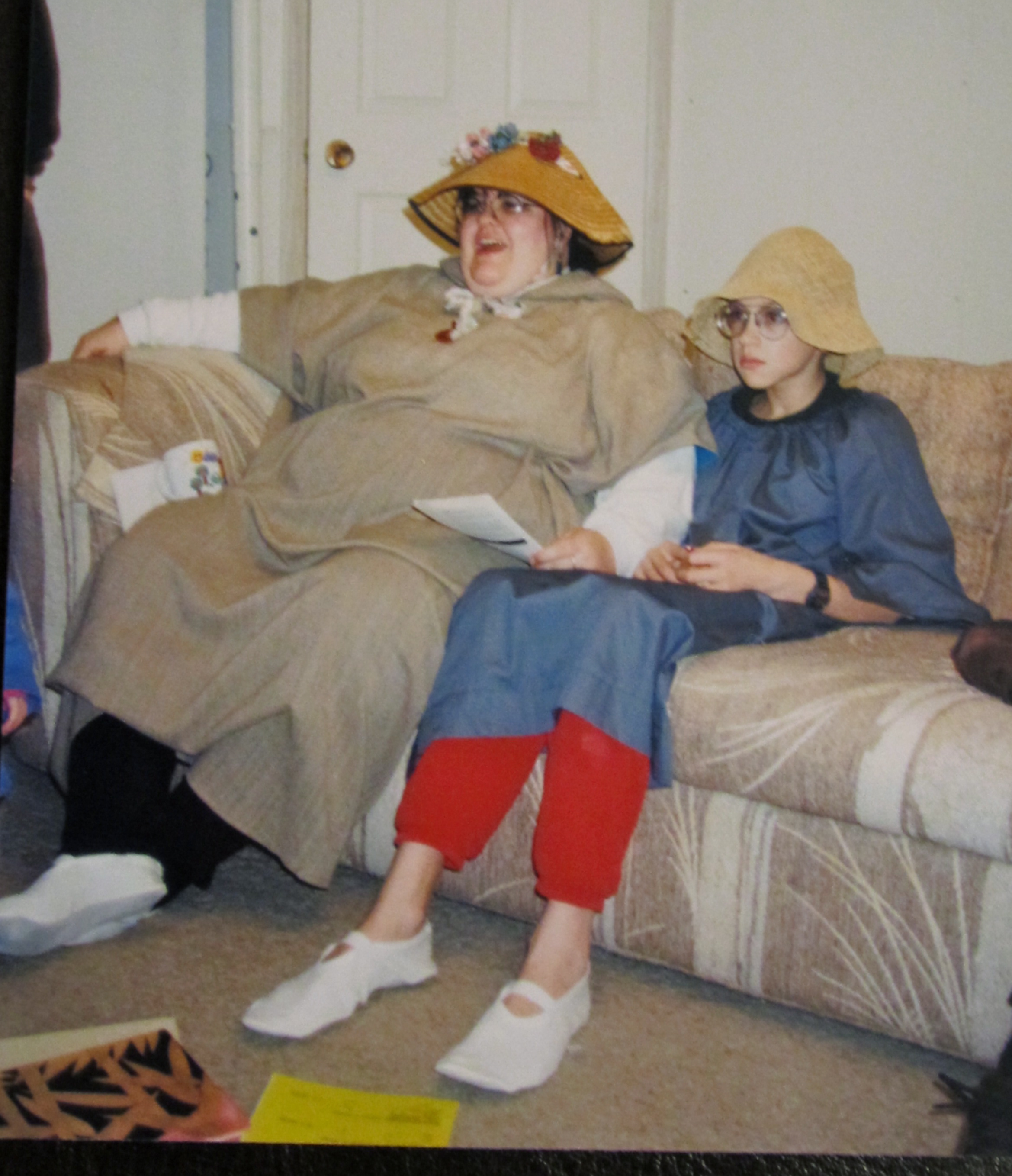
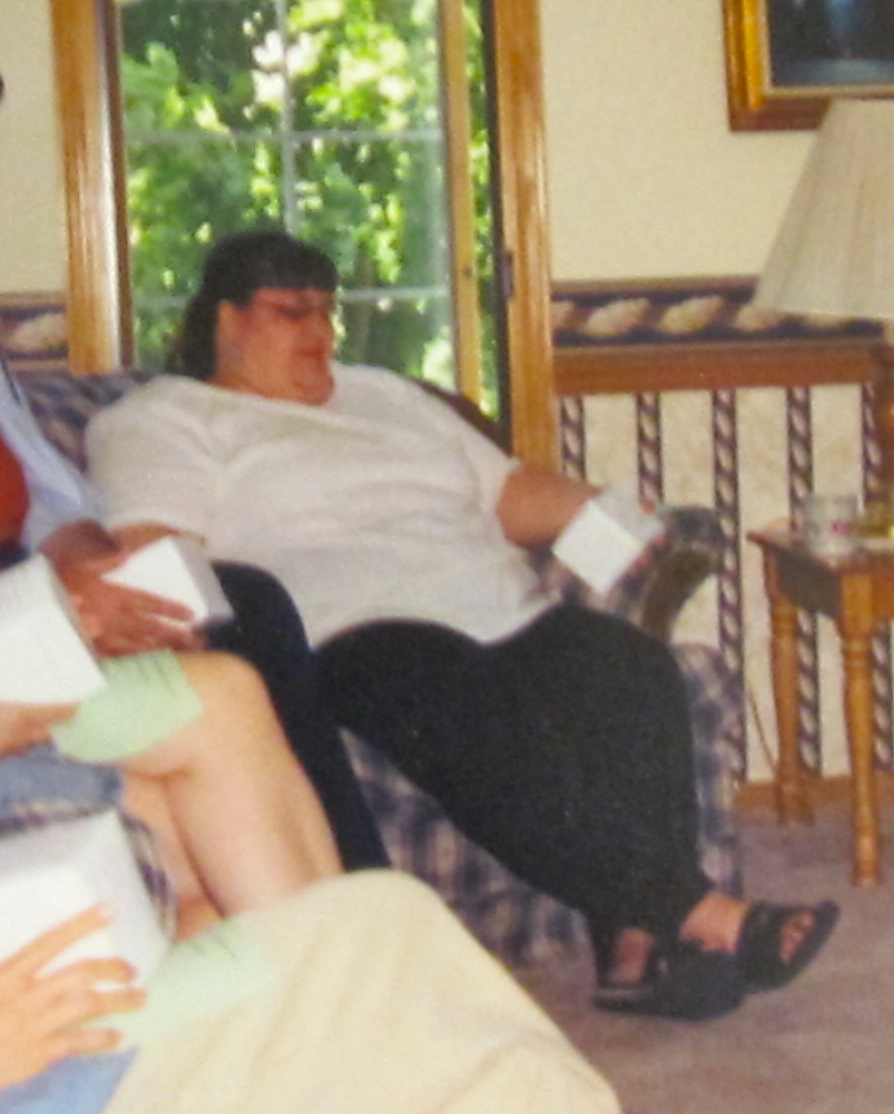
Since the inception of Jenion, I have tried to write honestly about my life – “the good, the bad, the ugly pizza binges”. What I haven’t done is spend much time or blog space talking about the realities I experienced when I tipped the scales at 350+ pounds. In part, I haven’t wanted to hang on to a past self that has (literally) disappeared. But part of the reason I haven’t spoken too directly about my life as a morbidly obese person was my own ambivalence about my worth as a human being during that time period. It is hard to admit, even now, the embarrassments, indignities and huge burden of self-loathing – coupled with the disgust of total strangers – which comprised my daily life for twenty years or so. In many ways, I embodied Dorothy’s companions from the Wizard of Oz.

Like the Scarecrow, I felt stupid, and acted that way. I chose faulty logic over clear understanding so that I wasn’t required to change. Moreover, other people acted, sometimes, as if I was incapable of normal thoughts and emotions. It was a symbiotic relationship: they treated me rudely, with cruelty at times, dismissively at others – and I believed they were right to do so.  But I always had the brains to figure things out, if I chose to use them.

Like the Tin Man, I had a heart full to overflowing. I just didn’t know how to feel it or express it, so I covered it up with food, then fat. I loved. I yearned. I hoped and dreamed. I blocked those feelings and hid my heart – most of all from myself. But it was there, all along, if I only chose to feel my emotions instead of pretend they didn’t exist.

Like the Cowardly Lion, I feared everything. My own shadow was terrifying (and huge). Not to mention the things I ought to have been afraid of, like health risks and chronic pain. My fear paralyzed me from making choices, moving forward, loving wholeheartedly. But there was courage waiting, untapped, if I only decided to reach for it.

And like the Great and Terrible Oz, I was only acting a part. Hoping no one would look behind the curtain and see the creature cowering there. I didn’t realize it,  but the curtain was only fooling me. Those who loved and worried for me could see right through it. I could have pulled it back and revealed my true self anytime.

Finally, I set out on an unknown road as someone who didn’t even know herself. I wasn’t sure whether I could find the thing I was searching for, and I was terrified of bogeymen (lions, tigers, and bears are not scary to me compared with looking foolish, failing, rejection). I wore my layers of fat like Dorothy wore her Kansas naivete – for all to see, both a protection and a problem situation to work my way out of.

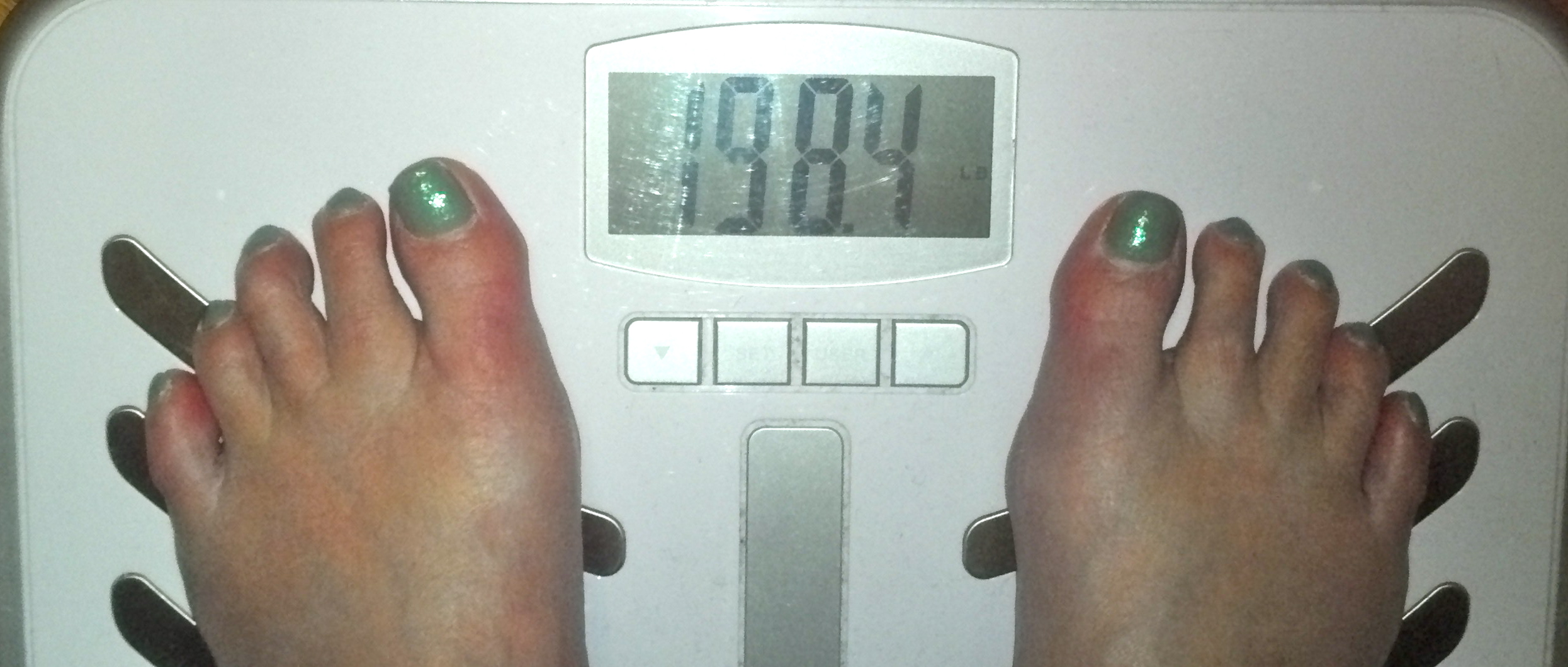
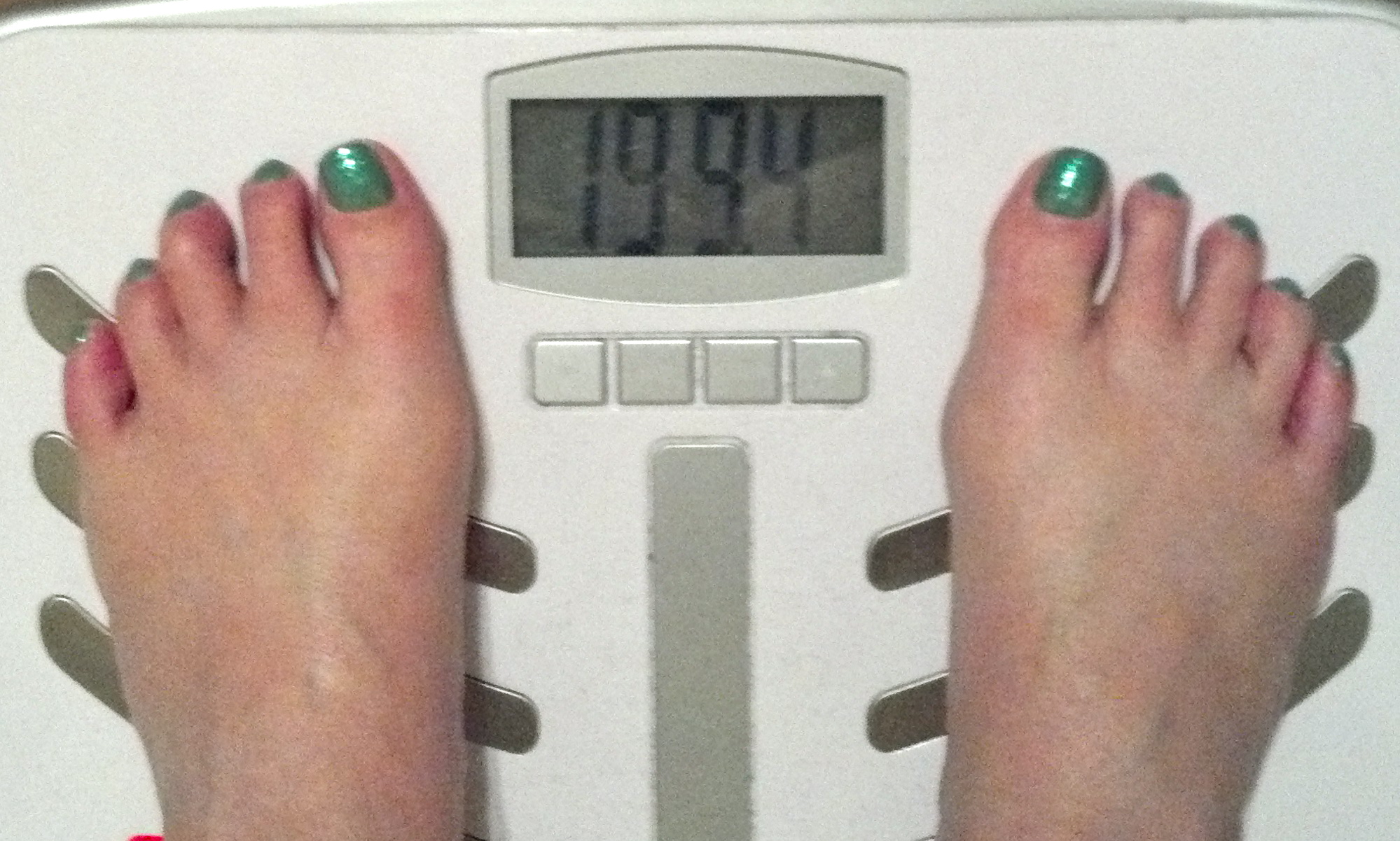
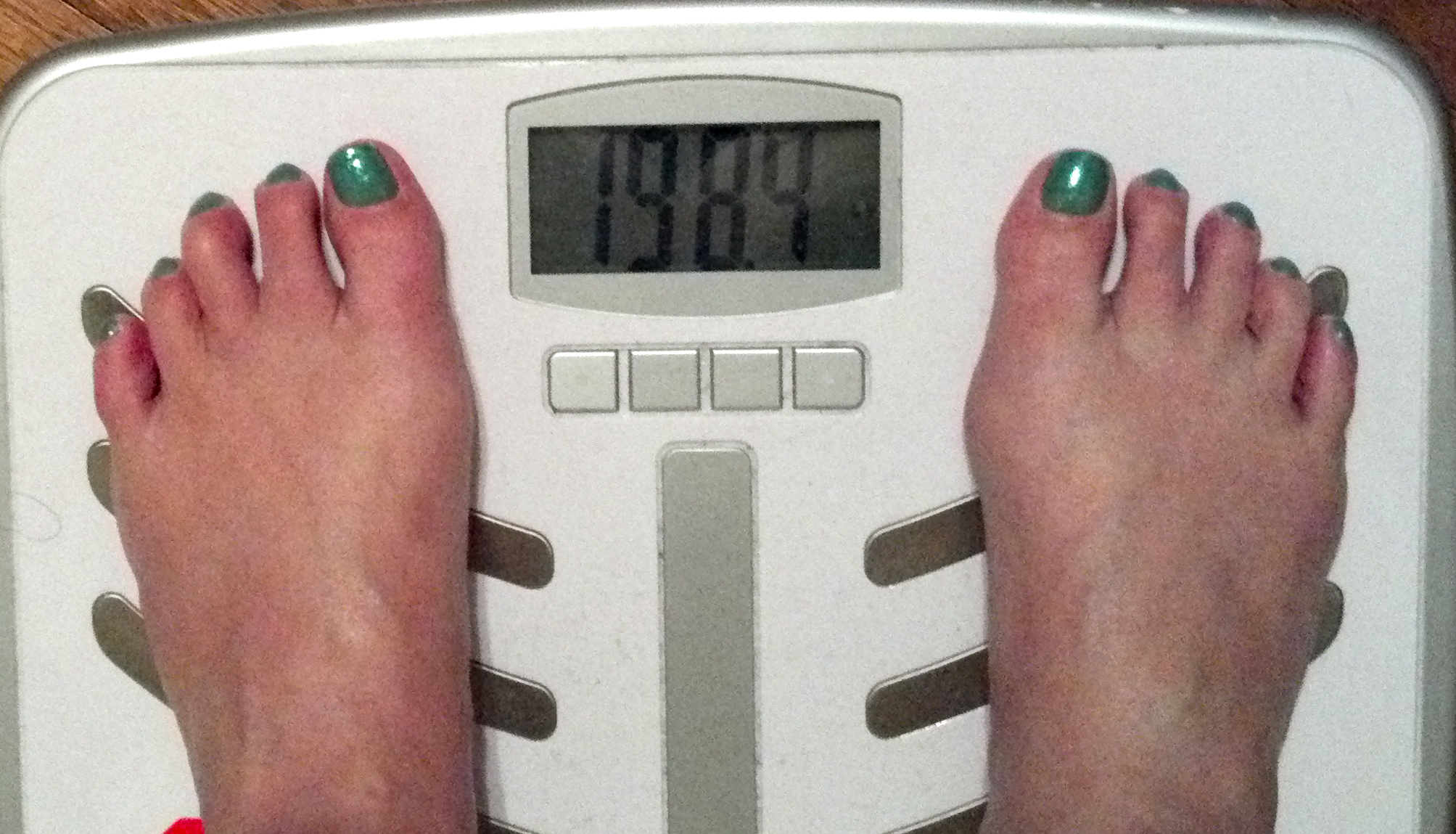
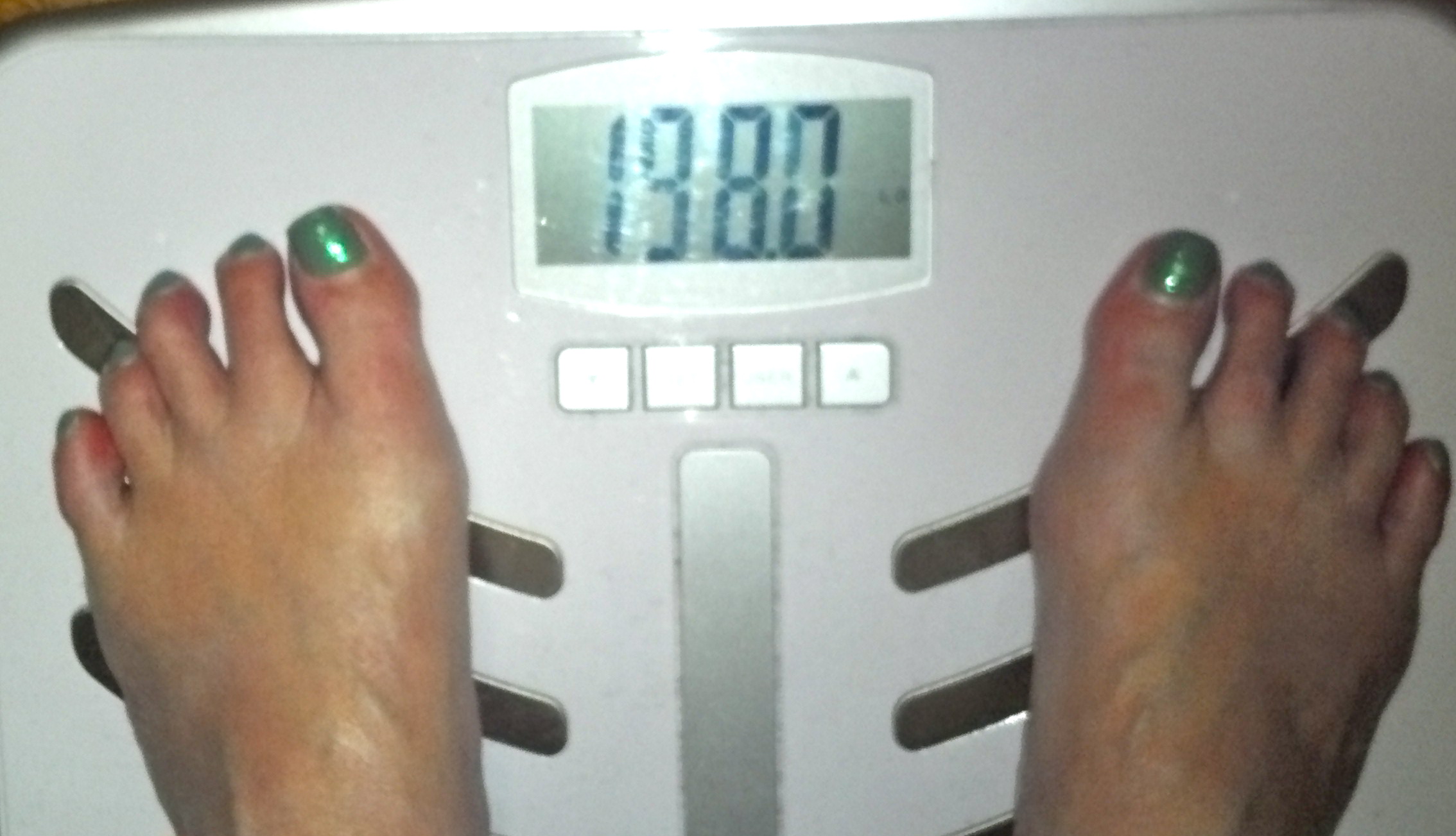
Today, for the first time, I am posting a weight with a one at the front – not a 3, not a 2.

Today, I am a much different person than the woman who hid inside that real-life fat suit. I finally realize I don’t have to revile her, hate her, deny her existence in order to become the person I want to be. I simply need to accept who and what I once was. And as I’ve watched this moment approaching it has become clear that, in order to take my life where I want, I have to say a final, loving, goodbye to that frightened fat girl. Goodbye to timid Dorothy-from-Kansas. I’m letting her go for good and all.

Standard weight charts still list me as obese. Whatever. After following the spiralling yellow brick road into “One-derland” the old thought patterns, fears, negative self-talk simply won’t do anymore. Here, I am the central character of my own life: I am Dorothy of the Ruby Slippers. I’ve had the power all along, but here is where I truly take hold of it – no more looking elsewhere for strength of mind, a stout heart, and the courage of my convictions.