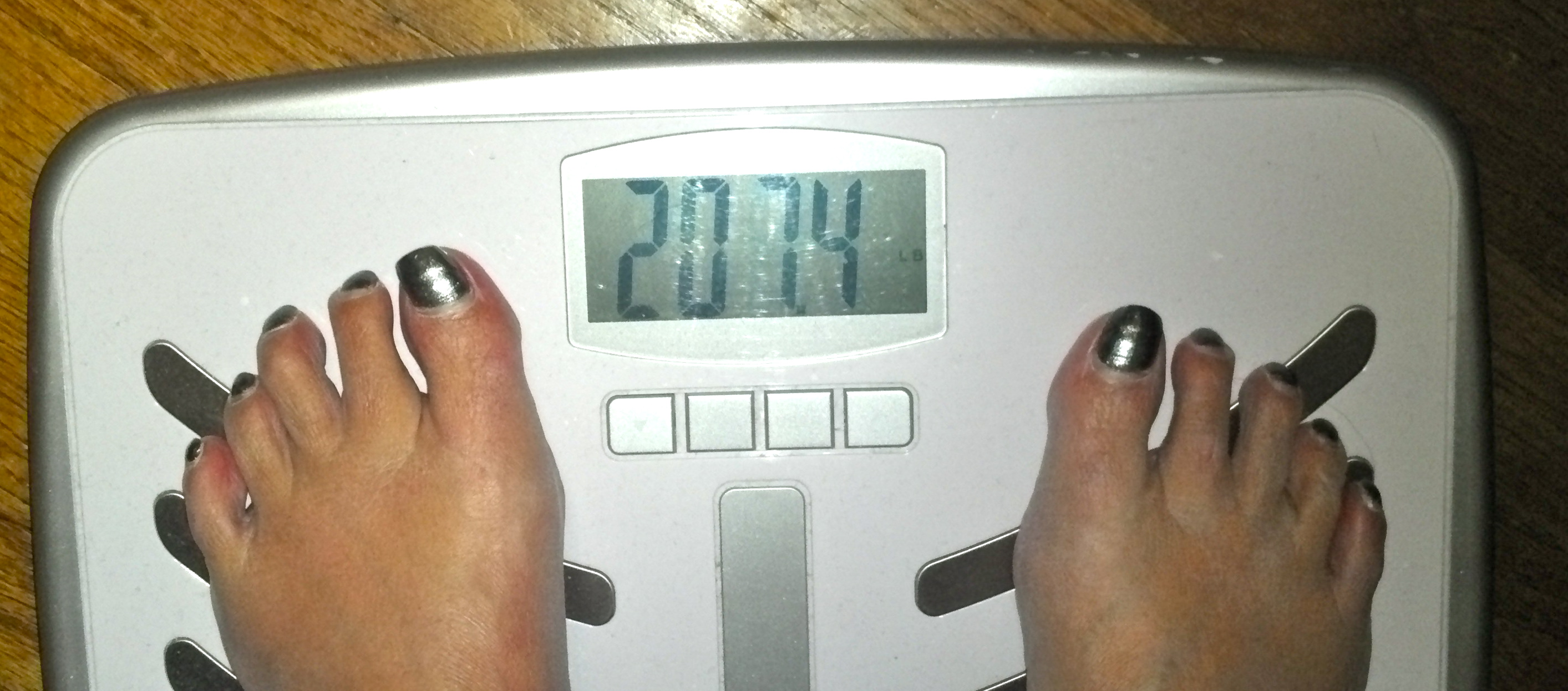
Even though I haven’t gotten to my final goal yet, I do want to brag a little about my excellent blood analysis results, received last night. My cholesterol, blood sugars, etc. are all exactly where they should be. I am pretty darn healthy – something I attribute to both diet and exercise. Weight is only one measure of overall wellness, after all. Rock on!
Nutrients vs Food
I’ve been watching food-related documentaries this month: King Corn, Fresh, and Lunch Line. Each film takes a look at different aspects of food in the US: production, environmental impacts, public policy, and the costs of our current ways of relating to food. I have been learning so much the past two years about food – both how it impacts me and how it affects the world around me. This is another of the unintended consequences of the Hunger Challenge that began this blog and my current foray into learning what my best life/best self might look like.
In Lunch Line, several of those interviewed spoke about changing the school lunch guidelines from “nutrient based” menus to “food based” menus. In case you haven’t heard these terms, current USDA policies require certain nutrients in the lunches served, rather than numbers of servings of types of foods (like 2 vegetables and a fruit, for example). This is the kind of policy which led, during the Reagan administration, to the brouhaha surrounding the consideration of ketchup as a vegetable. One self-described lunch lady said, “When was the last time you saw a food label on a peach? Real food doesn’t need labels.” I don’t begin to consider myself an expert on these issues, but this idea makes intrinsic sense to me. As some of you may know, when I first began to lose weight several years ago, I joined Weight Watchers. I cannot say enough positive things about Weight Watchers and how their approach has helped so many people make changes in their lives – me included. However, I eventually stopped going, in part due to what I consider their pushing of “fake food” – highly processed foods with artificially enhanced nutritional content – rather than a reliance on whole foods, well-prepared.
As I have been reflecting on this concept, Nutrients vs Food, it has occurred to me that the idea may be generalizable to other consumables in our lives, not just comestibles. How often do we settle for something “good enough” to fit the bill, rather than something truly soul-satisfying? Think about how regularly we opt for ease and a quick fix rather than work a little harder for the real deal. We read pulp fiction, but not literature. We hit headline news, without seeking in-depth analysis of world events. We spend more Facebook time than face-time with our friends. I have one friend who puts hot sauce on everything he eats – an easy way to flavor the food on his plate, but everything ends up tasting the same. In our drive-through, a la carte lives, perhaps it might be better to take the time to season things, to enhance and deepen the flavors, rather than cover them up with a single-note sauce to make them palatable.
Some weeks, I feel like nothing more than a hamster on a wheel, and the race I’m stuck in is both a marathon and a sprint. The illusion I sell myself is that this is how life is, there is nothing to be done except keep running and gasping for air. The truth is, I make the choices that keep me on the wheel. The truth is, I don’t change that because change is hard. Really hard, sometimes. But I don’t want my diet to be a list of nutrients to be checked off. I want it to be a menu full of delicious and nourishing food. And that is what I want for my daily life, as well. Rich, full, well-seasoned with spices – and so real and whole it doesn’t require labels to recognize component parts.
To achieve this requires attention. It requires a willingness to go for the slightly more difficult option. Not every time, but often enough that I develop a taste for the more complex selections. Eventually, the headlines (and the chick-lit and the twitter) are seen for what they really are: appetizers – quick and tasty but hardly confused with a real meal. And the meal itself – deep conversation with people I care about, art and poetry, self-reflection and a well-rounded knowledge of the world I live in – becomes nourishing and satisfying in the truest sense of those words.
“When you recover or discover something that nourishes your soul and brings joy, care enough about yourself to make room for it in your life”–Jean Shinoda Bolen
Thursday, November 3, 2011
One time, a number of years ago, I was with three friends checking out the bar scene on Rush Street in Chicago (and by a number of years, I mean I was still in my 20s). None of us was particularly overweight, though I was – as usual – self-conscious about my appearance. As we walked toward a group of four young men, one of them said, “What’s up ladies? Besides your weight.” I have never forgotten that. And each time I get on the scale and there is an uptick, I am sorry to say that those words come back to me. I have worked hard to develop a more robust self-esteem than I possessed all those years ago. In addition, I can’t really remember conversations I had yesterday. But my psyche has held on to that one cruel comment, and now I own it. Why is it so easy to grab ahold of bludgeons people use against us, and so difficult to let them fall away?
Flashback Friday
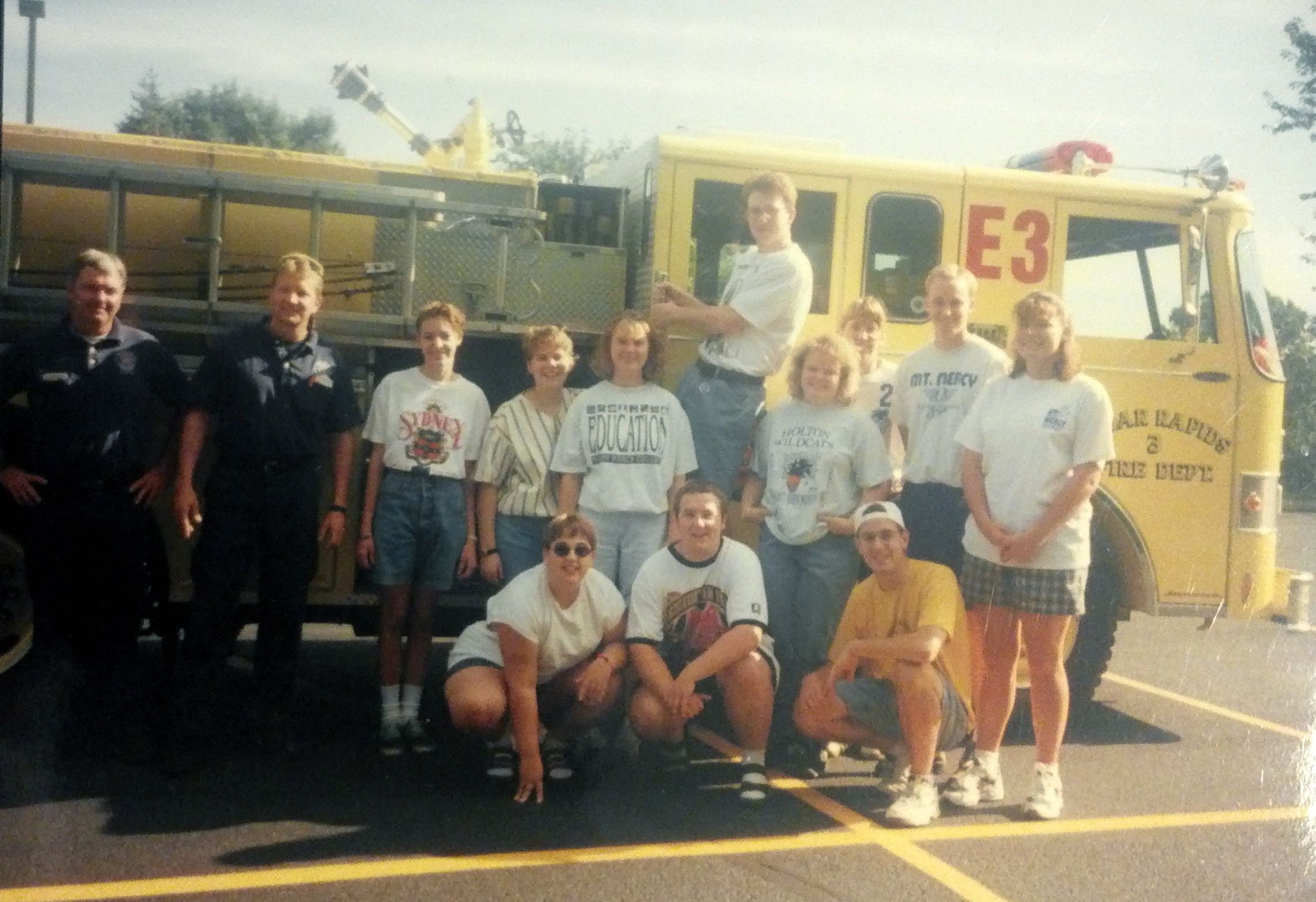
Since I posted yesterday about my early career in Residence Life, I thought I would share one of my favorite photos from that time period: my first RA staff on the day of their Fire Safety Training! In this photo: Naomi, Mike (Pookie), Ryan, Bridget, Cody, Lisa, Melissa (Monkey), Marco, Megan, Tricia, Johanna. One of the great pleasures in my life is when I get to see my former students as they are now – professionals, parents, volunteers – after fully becoming the amazing adults they were just beginning to be in college.
Other Duties as Assigned
I was 35 years old when I accepted my first position in Residence Life, and moved into an on-campus apartment. In my career, as in so many other areas of my life, I did things backwards. Most people do their live-in position(s) early in their careers – when they are young. With good reason.
My boss gave me a welcome gift on my first day: a “survival pack” containing a roll of duct tape and a channel lock wrench. And that’s when I had my first true misgivings about the job. I had been working in professional student affairs positions for ten years, advising and educating students. Nothing I learned in my graduate program in Counselor Education or in any of my previous positions suggested that duct tape and/or a wrench would be useful tools in my profession.
We were seriously understaffed, and I was responsible for a 24/7/365 operation, sometimes without any assistance (though usually overnight, weekend, and holiday coverage was split 50-50 between myself and one other staff member). While the schedule was grueling, and the responsibility sometimes crushing, I loved my job with an intense passion. There was constant stimulation (I often saw 2 a.m. in my office, hanging out tossing a baseball with students or having a Minesweeper tournament on my computer while filing paperwork). There was the regular adrenaline rush that came with beingthe responder to all types of emergencies (busted water pipes, acute alcohol intoxication, a high-speed police chase driving across the residence hall lawn). And there were the Night Guys.
Have you ever seen those movies where the items in a store or toy room come alive at night, when the humans go home? A small college campus is a little like that – it comes alive in a completely new way at night. The seasoned professionals go home, the intellectual crowd thins, whole buildings go dark. And the remaining spaces come alive with students, completely at home and indulging in a proprietary swagger they don’t show during the day. At night, I was the ranking administrator and most things came my way: behavior issues, strange questions, facilities problems. I quickly realized that it was me and a few hourly night crew – housekeeping and security – who would be expected to find a way to deal until daylight.
Most of the Night Guys were engaged in solitary work, cleaning offices and classrooms in empty buildings or making security rounds with Detex wands tracking their progress. On breaks, they were grateful for anyone to talk to. We had almost nothing in common, me and the Night Guys (Dave, Lorenzo, Carlos, Dick, Ed, Jim and others). But we talked about their lives and their job complaints, and we shared lots of pizzas. We wet-vac’d together more times than I can recall, we sheltered in the tunnels during tornado season, together we were vigilant for the safety of our students. They called if they saw an intoxicated student vomit on her way up the hill from the parking lot (then they cleaned up the mess). They were with me in the aftermath of the tornado that hit in the middle of the night, taking down dozens of old trees on the campus. Together, we checked for the safety of people and buildings, readied an empty apartment when we deemed one roof damaged and possibly unsafe.
They watched out for me. In the winter, they shoveled my car out after the plows went through. They came running when I screamed after seeing a mouse in my apartment. They said, “It was a late one last night. Why aren’t you in bed tonight?” or “They should pay you more,” or “That kid should be more respectful to you.”
I learned a lot from the Night Guys. I learned that sometimes the people who are most overlooked in a workplace are among the most committed to doing a good job. I learned that a quick, sarcastic wit isn’t the only kind of humor that can make you laugh – so can self-deprecating stories about flubbing a simple task, or someone’s terrible Sean Connery impression especially if you’re not expecting it. I discovered that it doesn’t much matter whether someone is entirely scrupulous about personal hygiene if they are kind and generous of spirit. I learned to admire someone who instinctively gets how machines (and boilers, and toilets) work. Most importantly, I learned that my master’s degree did not mean I knew more than others. It just meant I knew different things.
Over the years, my job and the campus have changed. I no longer work multiple 18-hour days in a week, and I live in a detached house, rather than in an apartment one flight up from my office. Weekdays, I head home at a decent hour, and eat a dinner I cooked, rather than another “all you care to eat” meal in the dining hall. Occasional late night crises are addressed as quickly as possible, and I don’t linger to shoot the shit with whomever happens to be around. It has literally been years, now, since I personally used a channel lock to shut off a running toilet. The Night Guys have moved on too: retired, transferred to day shifts – or continue with their work at times and in campus corners where I rarely interact with them. Mostly, I prefer it this way now, though sometimes I run into one of the Night Guys and it strikes me that I miss the old times. I know I miss the guys, but I hope I’ve held onto the valuable things they taught me.
Thursday, October 27, 2011
Flashback Friday
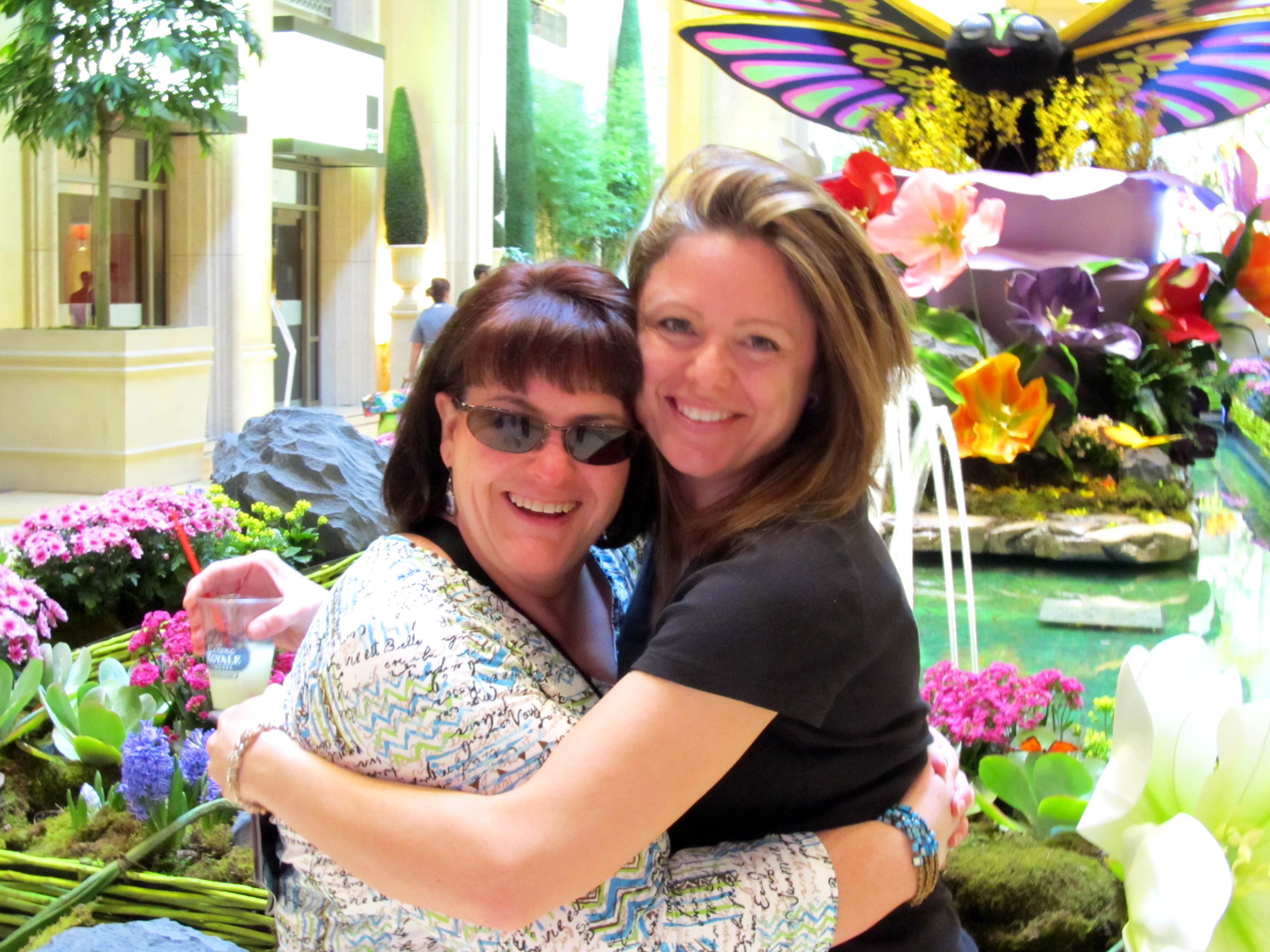
A recent flashback – March in Las Vegas with one of the “sisters of my heart”: Wendy. One of the things I love about Wendy is her determination to help others realize their goals and dreams. She grew up in an incredibly selfish environment, yet has chosen to be one of the most giving people I know. THAT is truly amazing…SHE is truly amazing!
Sisterhood: Part II
It is a chilly, blustery, very gray day in Cedar Rapids, Iowa. Early afternoon finds me in a local coffeeshop. It is a work- and school-day, so the other patrons are a different crowd than on the weekends: the few men here are solitary individuals, grabbing a quick lunch or working on their computers, while the rest of the tables are filled with pairs of women, deep in conversation. My computer allows me the luxury of eavesdropping without appearing to do so. At one table, the women are reliving last weekend’s tailgate at the Hawkeye game. In the comfy chairs by the electric fire are two older women discussing art history and their recent book tour. Another pair prays over their soup bowls, while yet another is going over an astrological natal chart. What these pairs have in common with one another is not immediately apparent. However, as I watch their interactions what I see is a certain intensity of communication – they lean toward one another, they nod, their faces are animated whether they are speaking or listening.
When I first began my recent ruminations on the idea of sisterhood, I was thinking about sisterhood from the perspective of women supporting other women in the great movements for social justice: equal rights, ending domestic violence, working to address the unfairly high percentage of women/single mothers among the ranks of the poor and hungry. I was thinking about women like Wangari Maathi, Zainab Salbi, or Catherine McAuley. And because I couldn’t think about the concept of sisterhood without considering the reality of it, in part one I wrote about my sisters and my relationships with them. In part two, I intended to speak more abstractly.
And then I started hearing from my women friends. They made it clear that in part two, they expected to read about themselves. To them, it naturally followed that once I spoke about my biological sisters, I would write about the “sisters of my heart”. How can I, whose life has been immeasurably enriched by these women, deny them? So I will attempt, on this autumn afternoon, to write about the women who have become my sisters through shared conversation, shared philosophies, shared history and experience. But how do I begin this task?
The women friends who have taken up residence in my heart range in age from their 70s to 11 months. They are professionals, mothers, athletes, writers, beautiful children, wives, straight and lesbian. They have challenged my intellect (through education, book clubs, their writing, provocative conversation). They have nurtured my heart (seeing past my flaws, allowing me to see theirs, holding me when I have cried and celebrating when I have laughed). We have shared an energy that became synergy, and talked until we’ve entered the true definition of dialog. I can’t name you all by name, but you may recognize yourself if you’ve ever: eaten an entire pan of brownies with me; helped me learn to craft something beautiful in words or other material; invited me into your family when mine was far away; or (God love you for this) plucked stray hairs from my chin. If you’ve allowed me to mentor you, or if you’ve mentored me. If you have been there, and been there, and been there for years of being stuck – then been there cheering when I got unstuck. If you quietly continued to offer me love and support while I took you for granted.
Biology may teach us our first lessons about sisterhood, but true friendship teaches us how to spread that idea beyond our own gene-pool. Whether we are talking about our circle of friends or we’re talking about the great social movements, women reaching out to other women are powerful beyond all expectations.
(True story: the music-track playing in the coffeeshop as I write this is Bette Midler singing “Wind Beneath My Wings”).
I work with young women, and I have been dismayed by the oft-discussed concept of “mean girls”. At first, I fought the idea as a media-generated concept designed to sensationalize and sell magazines. In recent years I’ve seen this phenomenon grow among my students, and it troubles me. I wonder if it isn’t a self-fulfilling prophecy – as we talk more and more about girl-on-girl violence and bullying and present it in the news as the new norm, aren’t we teaching our daughters (and young friends) that this is how it should be? I grew up in the 1970s, when the women’s movement led to the portrayal of women’s friendships as life-saving. Either my women friends are counter-cultural holdouts from the 70s (which as a description would insult over half of them!) or there is something MORE TRUE than the mean girl phenomenon. I believe we have a moral imperative to teach this truth to the generations behind us: that women loving and supporting one another is the real phenomenon. “Mean girls” are not natural – this trend is one sign of an unhealthy culture.
Finally, as I think of the amazing women who are my sisters – in every definition and nuance of that word – I feel like a fertile delta, where the generous river has deposited its gift of rich soil. My sisters have helped to make my life truly generative. Whether I ever change the world in a big way, like a Wangari Maathi, it will be enough to know that together we have sewn the seeds of a powerful vision of strong women loving strongly – a vision that our young friends and daughters will want to emulate as they see how deeply nourishing it is.
Thursday, October 20, 2011
Flashback Friday – Brothers
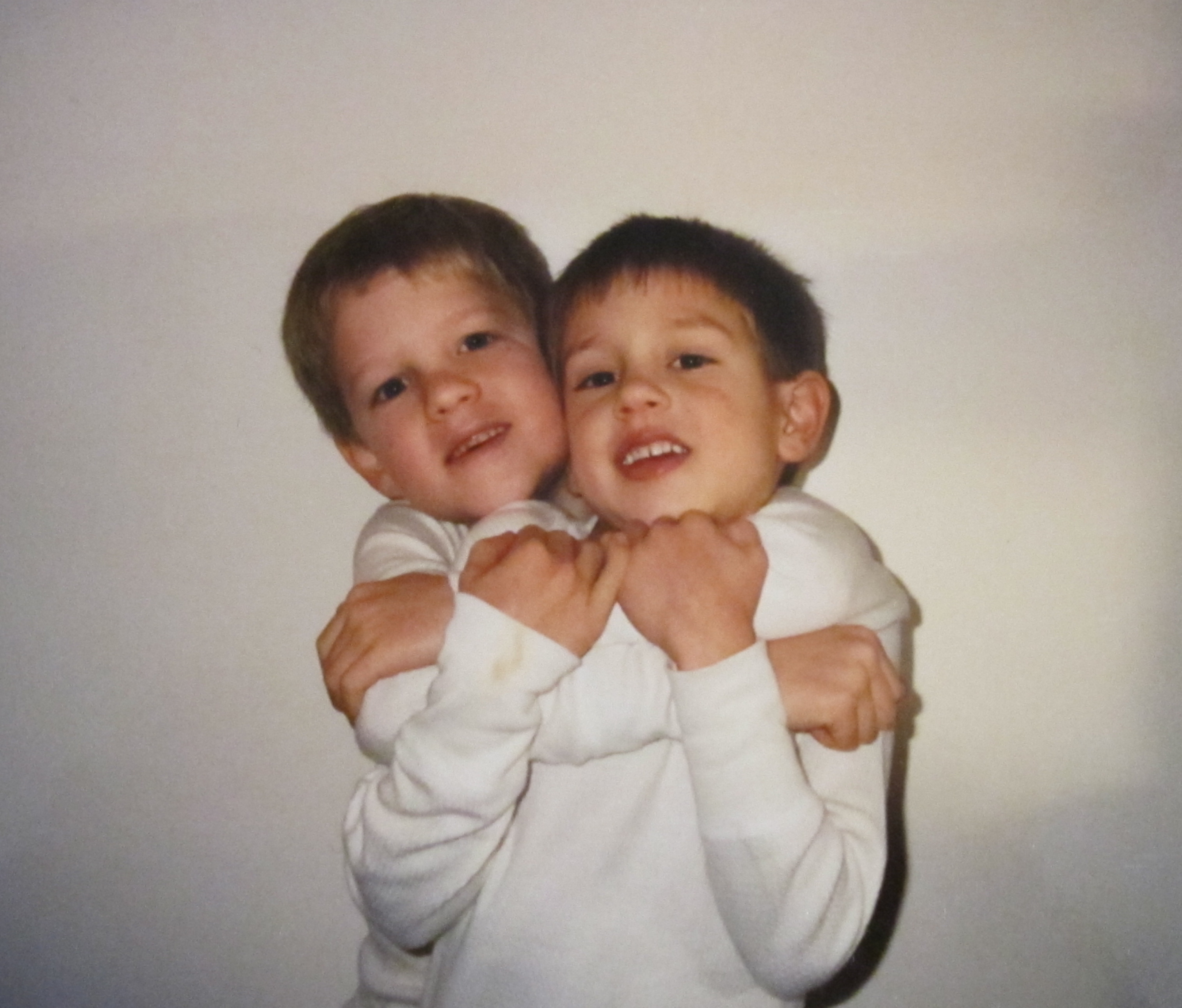
I have posted the first in a series of reflections on sisterhood. But I know that brothers, as well as sisters, can share strong connections. And the concept of brotherhood is a powerful one throughout our cultural history. So, today, I am celebrating a special brother relationship: that of my nephews, Ben and Tim Finnegan. This photo was shot one afternoon in the 1990s, in my parent’s house. Ben and Tim are both married men now. Tim, and his wife Nikki, are the proud parents of Emma Joy, who is one. And just this week, we learned that the little one Ben and his wife Elsa are expecting is also a girl – Adaline Bell.
These young men were wonderful as children, and remarkable as adults. I look forward to the joy of seeing them nurture and grow their own families.