But I’m Not Dead Yet…

” ‘If you’re not dead yet, you’re not done yet.’ This is a line my mother said to me the other day, while she was issuing a gentle warning not to fall into the trap of letting your life get smaller as you get older…No. She begs to differ. As you get older, there is no more time to be careful, and no more REASON to be careful…this is the time to seize as much life and joy and adventure and learning and novelty as you possibly can…”  — Elizabeth Gilbert
IMG_20160325_175843

A couple of years ago, having just entered my 50s, I was speaking with a colleague at work about my plans to make a change in my life and career. She said, “We’re the same age, aren’t we? And you still have this desire to change? At this point in life, I just want to make it through the days without too much thought.”

I remember, in my hubris, feeling sorry for her. After all, 50 was the new 30 – everyone was saying it. And I was feeling…not young, exactly, but an internal urgency that masqueraded as youthful energy. So I went off on my quest to change my life, and a lot of things happened.

Did you learn the tale of Icarus when you were younger? Icarus and his father, Daedalus, attempted to escape captivity on the island of Crete by flying away on wings Daedalus had constructed of feathers and beeswax. He warned his son, Icarus, not to fly too high, or the heat of the sun would melt the wax holding his wings together. But Icarus, in his pride at his father’s invention and his new ability to fly, did not heed the warning. As he flew closer and closer to the sun, the wax on his wings melted, causing the feathers to drift away. Soon, Icarus realized he was flapping his bare arms, and plunged into the sea.

This tale was used to teach us about “hubris”, to the ancient Greeks meaning excessive pride toward or defiance of the gods. These days, without the gods to blame for everything, we think of it as the arrogant, self-confident pride that comes before a fall.

When I used the term “hubris” to describe my attitude toward my colleague, I wasn’t referring to the desire and urgency I felt to change my life. I was referring to my boastful attitude that I would never feel as uninspired as I thought she was; I would never be so complacent, so tired, so ready to lay down the reins.

A year ago this week, I started a new job in Woodbury, MN. I was in that job until the first of June – and it was the most hellish two months of my life. After two weeks in that crucible, I was hanging on by my fingernails. When my coworker, Jody, called me to quit without further notice, I told her in no uncertain terms that it was a really crappy thing to do. “I’m sorry,” she said. “My new job wants me to start right away.” The truth was, she had no new job. The following day, she killed herself. Jody’s death was not something I could truly take in at the time – there wasn’t room in the crazed hours of that life to feel anything other than exhausted.

In the year since, I have been truly graced with blessings – and I am grateful beyond the words to describe it. But I have also had difficulty shaking off the exhaustion; I find myself, at times, just wanting to get through the days without too much thought. Today, inexplicably, I am finally filled with grief over Jody’s lonely death. I understand, now, what I didn’t three years ago as I sat in my colleague’s office: sometimes, it is enough to get through the day.

Sometimes it is enough – but not forever, at least not for me. Tomorrow, or someday soon, an internal urgency will prompt me into forward motion. And if it doesn’t happen on its own I will seek it out, because I don’t believe in letting my life grow smaller as I grow older. But I’ve also learned the truth about hubris: it isn’t about flying too high, its about thinking everyone else is below you. We will all move forward in our own ways and at our own paces. I’ve been learning to be less judgmental about that, and more compassionate about the ebb and flow of people’s energy. As I extend that compassion to others, I’m also learning to let some of it flow back toward myself.

I’m not dead yet, which means I’m not done yet.


Love Locks, Stickers and Disenchantment with Words

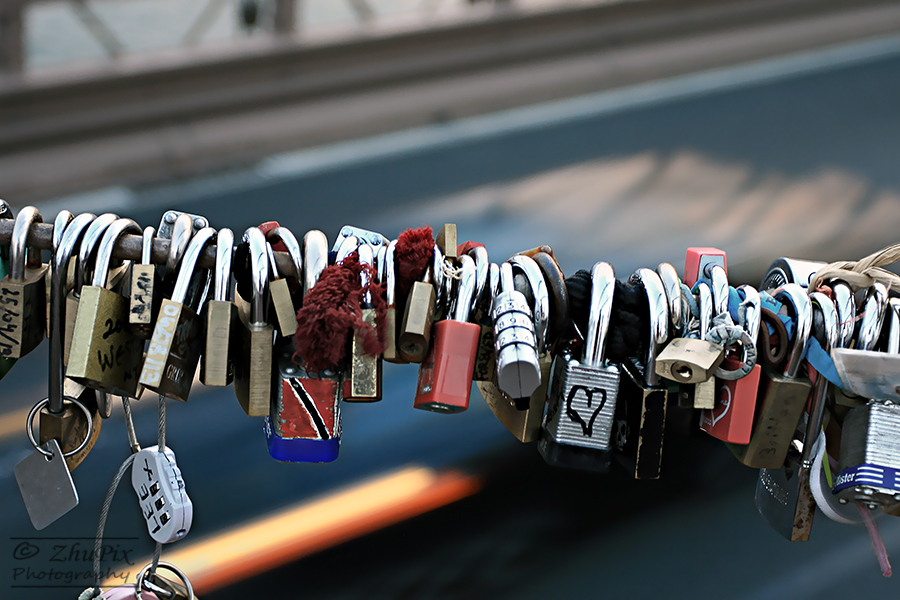
Love locks on the Brooklyn Bridge

This past weekend, my brother talked me into downloading a chat app for my phone. One of the app’s most notable features is a prolific library of downloadable stickers, many of them tiny, animated gifs of strangely whimsical cartoon figures. I have to admit, I have had a lot of fun finding and using clever stickers – a donut doing push-ups; Rodin’s “The Thinker” with an animated thought bubble that says “So?”; a cartoon gladiator giving a big thumb’s up. Until I started playing with this app, I would never have understood the attraction to a set of tiny images of a horse and frog dancing sinuously together. The idea is this: why use words when the perfect gif speaks volumes?

Also, this past weekend, I was reminded of the Love Locks phenomenon. While I have never placed one, my understanding is that people use love locks as a visual memorial – whether to a relationship or to the achievement of a personal milestone. The fact that it is a lock symbolizes permanence, the lasting nature of whatever the love lock is memorializing or testifying to.

These two phenomena are very different. The stickers are momentary ephemera, created by the thousands, used a couple of times then forgotten in the rush to find newer, more amusing or creative gifs. Love locks, on the other hand, are intended to attest to the permanence of whatever they are commemorating, be it true love, friendship, or self efficacy. It strikes me, though, that while motivated by different impulses both attempt to transcend the use of words in order to communicate emotion.

Images have always spoken powerfully to our hearts. But there seems to me to be a new weariness, even a cynicism, about words residing underneath the popularity of and preference for images these days. I see much less sharing of motivational and inspirational quotations on social media lately – perhaps understandably, as overuse of meaningful quotes and well-turned phrases clashes with the lack of both inspiration and thoughtful rhetoric in our current political and cultural discourse. Mistrusting what people say, are we placing greater faith in images? Certainly, it is easier to slap a cynical cartoon sticker on something than to find words that convey what you truly feel. But is the image more true or trustworthy?

I’m not opposed to images, and these ruminations are not intended to be “against” anything. Rather, as a lover of words, I’m wondering if we are likely to miss them as we, increasingly, omit them from our communication. Words, used well, offer a precision that can be lost in images. A crying toddler is an image, but there’s a reason parents the world over say to that toddler, “Use your words!”

So, I plan to keep having fun with the app. I’ve downloaded new stickers of sushi sumo-wrestlers and I can’t wait to use them in some witty repartee with my brother. And who knows, I may one day feel the need to click a symbolic padlock shut in testament to something profound in my life. Meanwhile, I’ll continue using my words – and encouraging others to do so as well. There’s a deep connection between using your words and having a voice. I believe our voices are sorely needed in today’s world.

“Words… They’re innocent, neutral, precise, standing for this, describing that, meaning the other, so if you look after them you can build bridges across incomprehension and chaos…”

–Tom Stoppard


Jumbly

CAM04142

jumbly
adjective jum·bly \-blē\
Definition: jumbled, confused

The truth is, every area of my life is pretty jumbly these days.

That makes me uncomfortable, as it would most people, I suspect. And that discomfort has caused me to focus on all of the ways that my life is “less than”: less than ordered, less than complete, less than fulfilling. In short, less than perfect.

And then something happened that stopped me in my tracks. An unexpected generosity, offered gently when least expected. If this were entirely my story to share, I would explain – but since it’s not, I’ll just ask you to imagine: you have an armful of various fragile objects you must not drop, each varying in size and weight; objects keep getting added to this load until you are in danger of dropping them all. Just when you are about to lose your hold, someone quietly walks up and takes the largest, heaviest object. Without asking, without calling attention, without expectation of return.

This generous act did not fix all the jumbly-ness of my life.

But it did set in motion a re-ordering of my thinking. I was reminded of a great vintage shop in Minneapolis called Hunt and Gather (pictured, above). The shop is filled with a jumbly mess of stuff. When you first arrive, it can feel overwhelmingly chaotic. You wonder how anyone finds anything there. Then, surprisingly, the chaos of it overwhelms your mental need for order. You suddenly begin to see beauty and whimsy in the details; the very messy-ness of the place becomes charming. And instead of thinking about the ways the place is “less-than” (less than clean, less than organized, less than roomy), you begin to think about the ways it is wonderful.

One simple act of generosity helped me to see my need to create that same kind of shift when looking at the jumbly chaos of my life. Instead of letting the chaos overwhelm me, I can look for the beauty and whimsy within it. Its ginormity can be recast as abundance; as “greater than”: complex, multilayered, generative. When I am able to make this shift in my perspective, space opens up to see all the ways my life is wonderful – not only all the ways it is “less than”.

Suddenly, I can look at the jumbly mess and understand Nietzsche when he says:

“You must have chaos within you to give birth to a dancing star.”


Waves

IMG_1874

“[The waves] move across a faint horizon, the rush of love and the surge of grief, the respite of peace and then fear again, the heart that beats and then lies still, the rise and fall and rise and fall of all of it, the incoming and the outgoing, the infinite procession of life. And the ocean wraps the earth, a reminder. The mysteries come forward in waves.”
Susan Casey, The Wave: In Pursuit of the Rogues, Freaks, and Giants of the Ocean

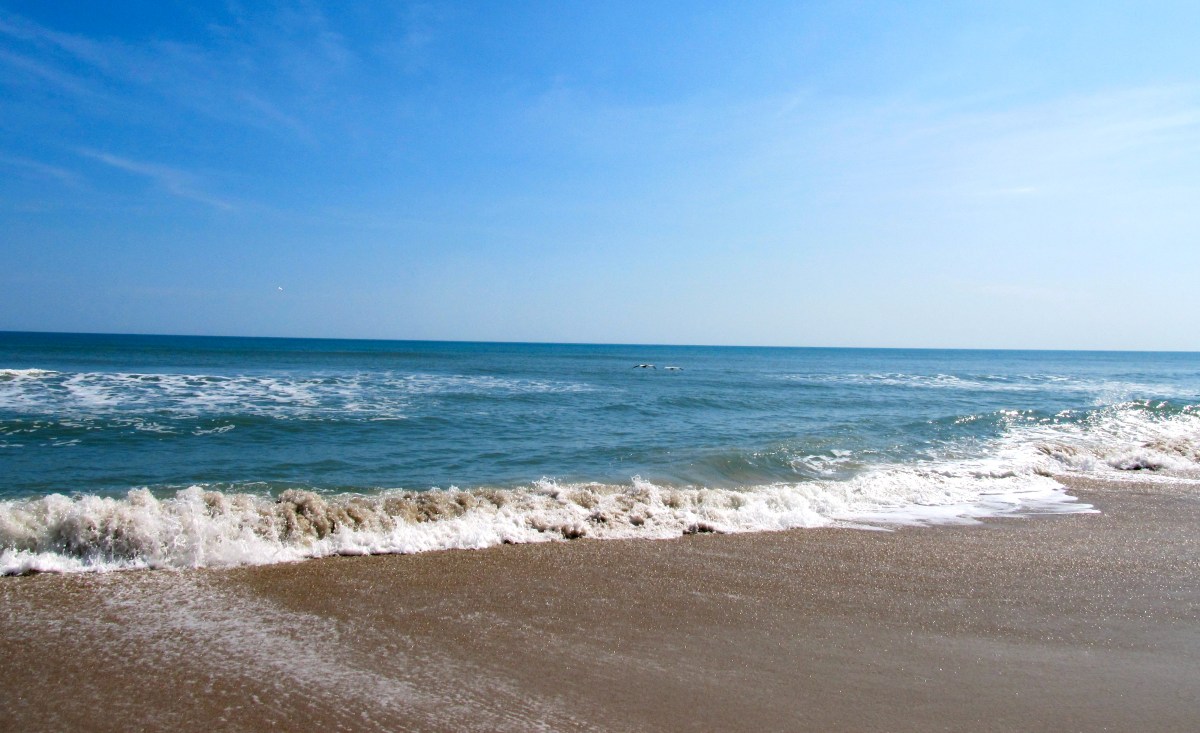
Three years ago this month, I was in Florida for a conference. Since we had a rental vehicle anyway, a friend and I took a day to do some sightseeing, and ended up at the Canaveral National Seashore. It wasn’t exactly warm on the beach, but it was significantly more so there than in Iowa at that time, so we weren’t about to forego the opportunity to walk and sit in the sand for a while.

I remember watching the waves as they rushed onto the beach then pulled back out to merge with the sea. I had the strangest sensation (something to do with the combination of staring at sunlight on water, the overwhelming sound of the water, the rhythmic motion of the waves) that I, myself, was rushing forward, then pulling back.

And indeed I was. On the verge of major life changes, I felt my soul pushing me toward new shores, but my ties to all that lay behind me exerted an equally powerful pull to fall back into the sea of my then-current life. The fluid grace of the water lay in its refusal to fight for one or the other – rather, the water ebbed and flowed naturally with the energy exerted upon it. The waves, the water existing at the leading edge of that energy, had the greatest potential to change and be changed – it could change the beach or be changed itself by what it carried back with it. Generally, both occurred together.

I had been living in the vast ocean of my life for a long time, and suddenly found myself on that leading edge where change was most possible. I lived there, briefly, allowing myself to change and (in turn) creating change – carving new shorelines. But I couldn’t seem to find within myself the water’s ability to flow; I fight for control, insist on “deciding” – or, another way of saying it, choosing sides. Three years on and I still haven’t quite caught the knack of moving naturally with the energy waves. But here I am, still on that front edge, hoping to change and to create change.

I’ve been thinking about that day and that experience quite a bit lately. A colleague said last week, “Everything is about waves! Spooky action at a distance, gravity waves – all the discoveries are about waves! What are we supposed to be learning in our lives from all this talk about waves?”

Perhaps it is simply to accept the ebb and flow that is experienced at that leading edge of the wave we call “change”; to accept that change occurs over the vastness of time and in the immediate moment at once. Perhaps I am supposed to stop trying to control the pace and meaning of change and, instead, experience it as it unfurls.

“The mysteries come forward in waves,” Susan Casey says. And the waves themselves are a part of it all.

The Wave

Run with the flood

Ebb when you must

Mount to the moon’s call

Dare, flow and trust

This tide has to be

Its force will not break you

Cannot unmake you

For you are the wave

And there is only the sea.

            –Joy Pitman

Not Finite

How will you know the difficulties of being human, if you are always flying off to blue perfection? Where will you plant your grief seeds? Workers need ground to scrape and hoe, not the sky of unspecified desire. –Rumi

When we were in graduate school, my friend Cathann mentioned something in conversation that I’ll never forget – we don’t have a finite amount of love; therefore, giving love to one person does not mean we have less to give another. There is always more available.

I’ve not forgotten these words, though sometimes their truth sneaks up on me. It sneaks up on me when I’m not looking for new friends but they appear anyway. It catches me by surprise when I’ve been avoiding connecting with loved ones because “I’m too busy” but we somehow connect anyway – and I find that lightens, rather than adds to, my burdens. Unfortunately, this truth also catches up with me in moments of sadness and regret, when I realize I felt love that remained unexpressed.

I don’t know how anyone else experiences this, but for me, once I’ve loved someone I apparently carry love for that person inside – even if it is buried in the debris of broken promises or hurt feelings. Even if it was a love that I experienced in my childhood but has been left at the bottom of my heart, like a favorite teddy bear forgotten in a box in the attic. I suspect this is true for most of us, if the heartwarming stories we hear of people who have reconnected with past friends, lovers and lost family members are to be believed.

All that love just being hoarded somewhere in the over-stuffed storage-units of our hearts.

I’ve been thinking about this quite a bit lately. A few weeks ago, I happened to see a comment on a Facebook feed, placed there by my ninth grade boyfriend. Now, I haven’t been connected with this man in so many years, I literally gave up trying to count them. Seeing his name, I felt a small rush of warmth and a sudden desire to reach out to him. I didn’t, though. (Honest admission: I did do a small amount of cyber-stalking, but it was just a few clicks on some internet links.) It left me wondering what stopped me – not from rekindling a relationship of some kind, but from simply saying, “Hello! I still think fondly of you from time to time.” The answer that comes back to me, in my most truthful moments, is that I didn’t want to be burdened with any messy-ness (what if he’s weird? what if he’s dangerous? what if he’s awesome and I don’t have time for another long-distance friend?) that could conceivably come from connecting.

And this week, I’ve been grieving the sudden death of my cousin, Tom, whom I hadn’t seen in more than a decade. We spent a lot of time together as kids – he was a few years older than me and, exotically, lived on a farm. Tom was always kind and gentle and protective of me, even when he was teasing me for my “city” ways, or calling me Angie Palucci* – a nickname I hated from everyone else but didn’t mind from him. He’s the one who told me the truth about Santa Claus, because I was upset that the other kids were calling me a baby when their nudge-nudge-wink-wink comments went over my head. Tom’s the one whose crooked smile started with a downturning of the mouth before it lit up his face. Now that he’s gone, I feel the space he has been holding in my heart.

I’ve been regretting that I didn’t make an effort to stay in touch.  Wondering why I never took the turn toward the farm when I drove past on the nearby highway – I know I thought about it every time. I suspect it goes back to that idea of somehow being “burdened” – by people and their inevitable imperfections and needs? by love and its inevitable imperfections and needs?

Or is it the fear of finite inner resources? Fear of my own inevitable imperfections and needs?

I’ve said this before (and it won’t surprise anyone, especially those who know me), but I am a slow learner; I am someone who needs to relearn the same concepts over and over before they stick. Just thinking about that teddy bear in the attic is enough to remind me that I still feel love for it. All this time, I thought I was putting it away in order to make room to love something else, when what I was really doing was protecting myself. I didn’t want to see myself reflected in his button eyes as the limited, flawed person I am.

The reality, the truth I keep losing track of is this: My perfection is finite, love’s is not. There might not be room enough in my daily life to be connected to everyone in a perfect and non-needy way. In fact, I’m sure there isn’t – I will sometimes be the cause of hurt, sometimes let people down, sometimes be so focused on my own needs that I run right over you/your needs. But that’s about my human limitations, and not about love.

The sneaky truth, the one I keep losing sight of, is that love isn’t about me, created by me, or controlled by me; it has it’s own perfection that doesn’t flow from me. Unlike my time, my patience, and my impulse toward altruism, love is NOT finite – there is always more available.

Love itself describes its own perfection.
Be speechless and listen.

~ Rumi.

*(the name of a character on the Doris Day show that played in after-school reruns at the time)


An Answer, To Start With

The Times once sent out an inquiry to famous authors, asking the question, “What’s wrong with the world today?” and Chesterton responded simply,

“Dear Sir,

I am.

Yours, G.K. Chesterton.”*

I know you’re worried about what’s happening in the world. We all are.  The politics of divisiveness. The epidemic of gun violence in our communities. The world refugee crisis. Growing economic inequality. The Zika virus. Regardless of your particular concern(s), the end result is the same: we are worried, frightened, perhaps angry. What are we to do?

In our increasingly polarized world climate, we are surrounded by voices haranguing us to engage in finger-pointing, telling us to shout down those with opposing views (or worse, “punch him in the face” as one presidential candidate indicated he’d prefer), insisting that we fall into lock-step with any one of a myriad absolute ultimatums promulgated by various “parties”. (My friend, Randy Greenwald, writes eloquently about his experience of this as a Christian pastor, here.)

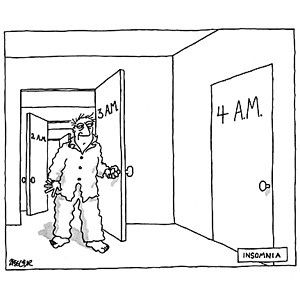
In Drew Dellinger’s poem, Heiroglyphic Stairway, he says it’s 3:00 a.m. and he lies awake because his great-great-grandchildren ask him “What did you do?” when you knew the Earth was being plundered? As it happens, a lot of us are having difficulty sleeping. I mentioned my own recent insomnia to four acquaintances the other day and was stunned to discover that three of them take nightly sleep aids.

In the face of such overwhelming issues, what are we to do, other than medicate ourselves?

G. K. Chesterton’s famous response, above, may be a good place to start. I know: it is so much easier to focus on everyone else, to give in to the urge to fill our heads and ears with “news”, to focus our feelings on an ever-changing horizon outside of ourselves. It may be time, though, to focus inward, to look at our own internal battle lines. In what ways do my choices contribute to what’s wrong with the world? How is my thinking adding to the negative spin?

The first step, they say, is to admit there’s a problem. I recently read this quote that stuck with me, “We are the only author of our thoughts — the only thinker in our lives.” (Rev. June Kelly) Recent advances in science suggest, and are offering proof, that our thoughts have real consequences in the world. But even if we aren’t into the latest scientific studies, we know internally that what we dwell on in our thoughts has an impact on our own behavior and mood. And those two things definitely impact the world we move through in our daily lives.

If it is true that “I am” is the answer to what’s wrong with the world, it is also true that “I am” can be the answer to what is right with the world. Choosing to address your own thinking, and the actions you take as a result, can have huge positive consequences, too. Truthfully, we don’t have to engage in the mud-slinging, polarizing, visciously close-minded rhetoric – the interpersonal violence – we are being pushed toward.

As with so many key concepts in life, this is so much easier said than done. I know. I fight my own first reactions all the time – but gradually, we get better at it as we practice hitting the reset button. I’m trying to hit that button every time my immediate impulse is to dash off an angry retort, paint whole groups of people with dismissively colored adjectives, or raise an angry fist in the air. I’m not saying there is nothing we should be angry or concerned about – just that when we recognize that we, personally, contribute to the problem, we can begin to address how we do so. And when we start to correct that how, we move from making it worse to helping make it better. The same way anything gets better – one person, one thought, one action at a time.

Ultimately, we have just one moral duty: to reclaim large areas of peace in ourselves, more and more peace, and to reflect it towards others. And the more peace there is in us, the more peace there will be in our troubled world.
Etty Hilesum


So, I Said to Myself…

The other night, I fell asleep early in the evening. After several hours of dozing in an armchair, I woke up enough to put myself to bed. I consciously didn’t turn on lights; I even kept my eyelids lowered to maintain the illusion that I was still sleeping. All of this effort was intended to keep me from waking up enough to have trouble getting back to sleep.

Unfortunately, force of habit caused me to tap the mail icon on my phone when I picked it up to set an alarm. And there, staring me in the face, was an email from work. I opened it and read it. Immediately, I regretted doing so: my heart rate rose rapidly, my breathing became shallow, and I was in the throes of a midnight anxiety attack before I even realized what was happening. Suddenly, everything I hadn’t done or hadn’t done perfectly came rushing into my brain. My miles-long to-do list landed with a crushing thud on my solar plexus.

I said farewell to sleep for the night.

One of the things I found myself doing in the course of the sleepless hours that followed, was randomly rereading posts from this blog. The longevity of nearly seven years offers the humbling discovery that, despite the myriad changes that have taken place both internally and externally in that time, I have certain perennial life issues – as evidenced by this post from February 2011:

When I start to feel pressure from the things I know are on the horizon, I have a tendency to give anxiety free-reign. And as I feel more anxious, I grow less patient, less able to take minor setbacks in stride. As anxiety reaches fever pitch, I begin to resent the conditions in which I find myself – as if I didn’t have a hand in creating them.

Because a lot, though not all, of what I will be doing in this busy period is work related, I will have a tendency to blame my job for the outcomes of my anxiety – if I snap at someone, if I drop the ball and let a friend down, if I miss an appointment. So my challenge is to remain centered and on task in my own life, and to not allow myself to abdicate responsibility for my actions.

Parker Palmer, my go-to guy, says this, in A Hidden Wholeness:

“The notion that we cannot have what we genuinely need is a culturally induced illusion that keeps us mired in the madness of business as usual. But illusions are made to be broken. Am I busy? Of course I am. Am I too busy to live my own life? Only if I value it so little that I am willing to surrender it…”

My challenge, now as it was then, is to remain centered and on task in my own life. This includes having the self-discipline to skip checking my email at midnight and to forego entering the spiral of anxiety in order to preserve any hope of sleep! I haven’t exactly been surrendering my life to busy-ness as much as allowing it to slip away, often in empty hours of wakefulness.

It’s an odd feeling when your past self speaks directly to your present quandary. But it is also kind of nice to be reminded of lessons you’ve already learned. Reapplying them is often easier than the initial learning curve.

And on that note, I believe it’s time for bed!


Encounter: Your Art, My Self

“Art, at its most potent, springs from the artist’s longing to bridge her private truth with the truth of the universe and transmute it into a public form that beckons forth the private truth of the viewer.”   — Maria Popova, Brainpickings

I trudged in the front door and dropped the two heavy bags I carry back and forth to work every day. I dragged myself up the stairs, where I changed out of my sweaty workout clothes into comfy fleece from head to toe. Downstairs once again, I put a serving of homemade soup in the microwave to warm up and turned on my computer.

It was just after 8:00 p.m. when the microwave dinged, letting me know my soup was ready. I sat at the table, dog-tired, eating soup and browsing through social media trying to decide whether I would do any of the things on my evening to-do list or give up and go to bed.

That’s when I came upon my friend C’s post announcing that she was about to do a radio show. At first, I assumed the show had something to do with her job, which was a fair assumption given C’s occupation. However, I soon realized the topic was poetry – not her line of work. I clicked on the link and started listening to the live community radio feed.

The show just coming to an end involved a woman reading a book, stopping to compare the current edition with the previous edition of the same volume. I wasn’t really listening, as I quickly made a cup of hot tea. I then ensconced myself on a chair with my feet up, a blanket over me, and a heating pad warming my back – I was in serious comfort mode and ready for some poetry. I didn’t know if my friend would be sharing her favorite poems by other poets, or whether C. would read some of her own poems. Either way, I expected it to be worth listening: many years ago, when we first met in graduate school, poetry was one of the things C. and I had bonded over.

The show began with the usual chit-chatty introductions. C.’s daughter, a senior in high school, was also in the studio and said hello. It was very sweet and a little awkward, the way on-air “spontenaiety” often comes across. And then C. began reading her first poem.

Suddenly, I was transported to a farm outside Kalona, Iowa: the fields and timber, a weathered old man, bees buzzing in and out of the story of a life – of a death – sweetened with a little wild honey.

The second poem had harder edges, but a softer core.  At its surfaces were a father, a husband, a doctor – their words, their actions, their betrayals. Inside, the pain and self-doubts and aching loneliness of surviving it all, unsure of anything other than that life goes on – and that is enough, somehow.

C.’s voice, as she read, was unwavering. Clear and strong. Her life experiences, lined up and revealed to anyone who happened to be listening, rolled from her tongue with just the right cadence and inflection. I don’t know how she did it – only listening, I was a puddle of emotions.

It’s funny: art has the power to touch us in unexpected ways at the oddest moments. What it takes, I think, is a shared agreement between the artist and the viewer (or listener) to bring their own vulnerability to the interaction. C. chose powerful, emotionally risky, poems to share. I had to be willing to open myself to those emotions, to the commonality of our human experience, in order to be moved by them. This is why art, in all its forms, is so important. It teaches us how to have moments of shared vulnerability – how to speak directly from what is deepest in one person to what is deepest in another. The vastness of this interaction, happening in many cases between souls separated by time, by geography, by lifetimes, is part of how we understand ourselves as members of the larger community of humanity.

To all the artists out there, known and unknown, striving to open yourselves to the power of creating, I want to offer a sincere thank you. Thank you for making yourselves vulnerable so I may better understand myself. Thank you for creating bridges that allow us to cross the chasms separating us from one another; for painstakingly crafting a way for us to meet outside our own cultures and times. Thank you for helping us all more deeply understand our shared humanity.


From Just Plain Stupid to Stupid Easy

foot prints in the sand

(Image from Pattysphotos at https://www.flickr.com/photos/34121831@N00/4592567496)

Lately, I’ve spent an inordinate amount of time writing responses to posts on social media that either anger or disturb me. Sometimes, I carefully craft my response, being careful to choose words that are not intentionally incendiary, removing any accusatory or judgmental language. Other times I allow my fingers to type quickly, spewing forth the outraged reactive language running through my mind.

And then I erase them.

As I think about the swift passage of time, the ways my days run together and my weeks come to an end before I have time to blink, I realize that this has been stupidly wasteful of my time. Don’t get me wrong: I’m glad I erased these comments before posting them. But if I tried to add up the minutes of precious time I’ve wasted writing/erasing/writing/erasing them…well, let’s just say there are better uses for my time.

What often happens when I finally face the inanity of one behavior, is that the absurdity of other things I do becomes impossible to ignore as well. For example, on Saturday I spent the better part of the morning taking an online IQ test, simply because a friend on Facebook had challenged others to do so. After something like seventy-five pattern-recognition questions burned out my retinas, I discovered that I would have to pay $9.95 to get my results. No thanks.

Not all of my bad habits are internet related (though most of my time-wasting ones are). If I were to create an exhaustive list it would include things like getting halfway through writing a letter or card, stopping, and never finishing it. Or (God help me!) watching “My Diet is Better Than Yours” instead of turning off the television and picking up a good book. Or staring at the still unpacked boxes in my apartment, thinking about where I will put the stuff they contain…when I actually get around to it.

Everyone has bad habits and self-indulgent time-wasters, I know. I am too old and, hopefully, too wise to strive for perfection in my own habits. On the other hand, experience has shown me that I can spend a lot of time spinning my wheels through inattention – that weeks and months and years of a life can disappear with little to show in terms of actually living in them. There’s the poem about how a man dreamed he was walking with God and saw his life as a set of footprints on a sandy beach. Often, there were two sets of footprints in the sand, but at the times in his life that were hardest, there appeared to be only one set. When he asks the Lord about this, suggesting that he had been abandoned in those times, he is told, “Those were the times I carried you.” My dreaming mind changed this story into a walk down the beach where, looking back, there were no footprints. Not because I was abandoned by God, but because I was abandoning my own life.

A week or so ago, I ran across a post on Break The Twitch, in which Anthony Ongaro shares his strategies for intentionally changing his habits. He talks about needing to establish good habits to replace the bad ones we wish to excise from our lives. Anthony says:

“I often refer to this quote from Annie Dillard when thinking about how to structure these specific actions:

How we spend our days is, of course, how we spend our lives.

The hours of our days become the weeks of our months and so on. If I want to accomplish these goals, I have to do things that will get me closer to them every single day. To create these daily actions, here are the qualifications:

Stupid-easy. Each daily action needs to be stupid-easy, as in, so easy for me that I would feel absolutely ridiculous not doing it. Essentially, take a desired action and breaking it down to the no-possible-resistance level.

Focus on action, not the outcome. I focus on celebrating the successful completion of each daily task, not the outcome that it created. Some days, the outcome is great — other days, it’s crap. That’s why I’m focusing on the habit itself, so that I don’t get discouraged. If I complete it, I am #winning.

Establish early success. The two points above contribute to early success – establishing a habit of succeeding immediately. Quickly creating a successful chain of daily actions from the very start.

Start immediately. From there, I’d start immediately and refuse to wait for a new year or a certain day to get started. If I failed on any particular day I would not wait until a specific day of the week or turn of a year to start again.”

The very first qualification that Anthony shares, “stupid easy”, is a game changer for those of us who have difficulty establishing new, more proactive, daily habits. So many times, I’ve found myself setting expectations that, in execution, are too Herculean to actually accomplish: exercise for an hour a day; always wash the dish(es) I just used; 100 crunches as soon as I get out of bed in the morning; no sweets. (This gives you an idea of what passes for “impossible” for me, anyway, as beginning goals!)

But “stupid easy” – that’s something I think I can be really good at! After all, my time-wasters are already both stupid and easy! In order to begin, I’m going to pick one positive habit I want to establish: taking time at the end of each day for reflection and quieting of my mind. I’ve realized that taking some time to do this is a way for me to set aside the day’s anxieties while setting myself up for a more calm and peaceful sleep. If I just sit quietly, I tend to fall asleep – but not comfortably, nor having put to rest the worries of the day – which sets me up for restless sleep and middle-of-the-night wakefulness. And if I don’t make a ritual of it, I’m less likely to actually do it. So I need an activity that can become rote, while not also revving my brain up to further wakefulness. So here is my “stupid easy” habit, instituting today:

Habit: Daily, brief reflection before bed.

Stupid-Easy method: Write three short statements in my bedside journal each night – 1. Something I’m asking for help with; 2. Something I am grateful for; 3. Something “Wow” or awe-inspiring from my day. (Based on the premise of Anne Lamott’s book “Help, Thanks, Wow“)

I’ll let you know how it’s going. If this “stupid easy” habit gets established, I’ll add another. The idea is that positive daily habits, as they are established, crowd out the just plain stupid ones – the time-wasters and energy-suckers. I don’t know many things for sure, but I do know that life is too short not to inhabit each and every day. If I dream again that my life is a walk along a sandy beach, I want to look back at where I’ve been and see at least one set of deeply etched footprints.


Note: Will you join me (and Mr. Anthony Ongaro!) in trying your own highly beneficial daily activity(ies)? If so, I invite you to share in the comments!


Practicing Klexos

There are ways of thinking about the past that aren’t just nostalgia or regret. A kind of questioning that enriches an experience after the fact. To dwell on the past is to allow fresh context to trickle in over the years, and fill out the picture; to keep the memory alive, and not just as a caricature of itself. So you can look fairly at a painful experience, and call it by its name.

      — “Klexos: The Art of Dwelling on the Past” from Dictionary of Obscure Sorrows, John Koenig

There are things I regret.

For example, the many times I’ve felt lonely when people I love – and who love me – are only a phone call, text, or Facebook message away.

I regret the times I’ve felt someone’s sorrow or pain in my own heart, yet neglected to tell them, “I’m here. I care.” Neglected to just show up, casserole or kleenex or whiskey in hand.

I regret all of the minutes I allowed to slip past while I played mah jong online, or half-heartedly watched “Shark Tank”.

Most of all, I regret the times I neglected to bring my better self to difficult circumstances. The times I’ve let hurt, fear, panic or hopelessness rule the day. While I can rise to the occasion, it is humbling how often I do not.

Thinking about rising to the occasion (or failing to) I recall two arguments: decades apart, each had the potential to end a cherished friendship. In both instances, a friend accused me of acting from hurtful motives so far from what I felt or intended that the accusations seemed unrelated to me, completed unmerited. What I chose to do, how I chose to respond in the moment of hurt feelings and wounded pride, determined the course of those friendships.

In the first situation, I chose to cover my hurt with angry, proud, defensive pronouncements. A friendship built over the course of three years ended, forever, in three thoughtless minutes. In the second situation, I waited to respond, allowing myself to get centered in my own truth. That friendship continues to this day.

If I “look fairly” at these painful moments, what can I see? By applying klexos, the art of dwelling on the past, what can I learn?

First, if klexos is “a kind of questioning that enriches an experience after the fact”, I am discovering that it is important which past experiences I take the time to question deeply. Delving into those times when I failed to behave as I would have liked feels less instructive than mining the times I did choose to act as my best self.

With regard to the arguments in which two friendships hung in the balance, I think I learn more by questioning the second because that is the outcome I want to replicate. How did I convince myself to hold off from responding, to stay in the awful feeling place of the accusations leveled against me? What enabled me to review my own choices and actions with fairness, to allow that even some piece of my friends’ perspective could be merited? What were the characteristics of the communication that followed this internal “centering”, that allowed me to speak honestly but also with compassion – to hold the dynamic tension between our disparate perceptions in such a way that the thread between us didn’t snap in two?

These questions are worthy ones to ask of the past.

Looking back, it is true: I have regrets. But I also have successes, those shining moments in which I chose the right path. If such a thing as klexos actually exists, there is a reason it is described as an art (the expression or application of human creative skill and imagination). The artistry lies in selecting which memories serve as fertile ground for growth, as sound launch-pads for propelling us forward into a closer alignment with who we mean to be, rather than who we regret having been.