I’ve Entered the Long Jump of Faith

“The woman silhouetted in the painting is leaping – with abandon and joy, it seems — across a chasm. She is looking ahead, at her goal, not down at what is or is not currently beneath her feet. Does she know, I wonder, what lies ahead? I doubt it – it seems clear that this is a leap of faith. Faith that she’ll land safely on the other side. Faith that the choice to leap was the right one. Faith that the time for leaping had arrived. And faith that, whatever awaits on the far side of the chasm, will be worth facing and taking the leap.” 
                   —Jenion, January 24, 2013 “Take a Flying Leap”
 
“And with that experience and knowing, perhaps it is time for me to become a person of faith, not just a person of beliefs. Time to close my eyes and take a step, trusting that I will put my foot down in the very place I need to be.”
                    —Jenion, April 4,  2013 “Have a Little Faith”
 

On Monday, April 22, 2013 I finally took the leap of faith that I’ve been working myself up to all year – I resigned from my job without having a clear idea of where I will land when my feet touch down on the other side.

Hopefully, there will be time before May 31, when my resignation takes effect, for looking back and celebrating. But right now, there are so many things that need to be done and prepared. It’s not one of those leaps that happens immediately – it is more like a slow-motion long jump. I pushed off the ground with my resignation, but I won’t actually be out over the chasm of the unknown for a little while yet. I have paperwork, planning, and packing to do before then. Mountains of each. I want to thank the friends and family with whom I endlessly debated my options – your promises that I would never be homeless or hungry went a long way toward lessening the fear of action.

What am I hoping for? I believe it is time to create a different life for myself. One in which I am not as limited by the demands of my job (nearly 20 years as a first-responder, ever on call, others as my top priority) so that I can be free in my off-hours to engage in a variety of pursuits that have been tabled – whether that is creative work or volunteering or exploring. I don’t know what the future holds. How strange is that feeling? I might find right livelihood quickly, or it may take a while. I might stay here or I might go elsewhere. I do not expect it to be easy, but I do expect that I will find my way.

Composing a life is an improvisation, one which calls on us to be clear about what we value so that the decisions we make along the way are made from the right place. Whether we are staying put or moving on, whether we are staying the course or charting a new path, we need to remain centered in what is real as opposed to what is mirage – what is true value as opposed to imposed value (imposed cultural values, such as “more is better” or “busy equals virtuous”). As environmental activist, Julia Butterfly Hill said during her campus address Monday, (serendipitously just hours after I tendered my resignation): “We are all co-creating our world every moment with every choice…Regardless of perceived boundaries. We are not victims, we are co-creators.”

The thing about a leap of faith is that you have to practice actual faith. Faith isn’t the absence of fear, rather it is the knowledge that beyond the fear lies the right path. Faith that, wherever my feet touch ground, I will be walking the path that I am meant to be on.

Dear readers, I hope that you will come on this journey with me – I will certainly be keeping up to date through weekly posts on Jenion! I’m interested in your stories of taking a leap of faith – please feel free to share your stories in the comments section!

Light in Uncertainty: The Candle of Peace

Note: My Thursday posts for December are loosely based on the weekly themes of Advent and the tradition of lighting the candles of the Advent Wreath. The candle for week two of advent is the candle of peace, sometimes called the candle of prophecy or preparation…
 
IMG_1453
 
“We may have ten possible images of tomorrow and for each one of these there may be ten images of the next day, giving a hundred possible images of the day after tomorrow and a thousand of the day after that, and so on, which means that the uncertainty of the future increases rapidly as we move our imagination into it.” — Kenneth Boulding, “Ecodynamics”
 

My senior year of high school, I had a terrible dream that a good friend (Steve) became disabled from an injury sustained in a wrestling match. Steve was a state high school champion and being heavily recruited by colleges, so it didn’t seem implausible. I had moved back to Iowa for my senior year and my close friends were an expensive long-distance call away. But when I couldn’t shake the dream, I called my girl Pam. She said, “I’m so glad you called! I had a horrible nightmare last night about Steve!” She related her dream, which was very similar to mine, resulting in the same disabling injury. To say we were both freaked out by having had essentially the same dream would be to put it mildly.

I had come to know and trust a priest at my new high school, Father Lyle. As soon as possible, I shared the tale of the dream with him. His brief response to my dream was not what I had anticipated. “What will you do when it comes true?” he asked.

In a previous post, here, I shared another dream I had – this one the week prior to my grandpa Joe’s suicide.  In that dream, I met my grandfather in his new guise as a fire-eating bird (which is striking given the method of his suicide).

At the time I dreamed them, both dreams had the feel or appearance of prophesy – a foretelling of something to come. The first was clear and frightening – and never came to pass. The second was difficult to comprehend, shrouded in metaphor and layers of hard-to-grasp meaning. However, it was magical and comforting, even before the event it foreshadowed took place. In the hours immediately following my grandfather’s death, it offered warmth and comfort when both were unexpected.

And that, it seems, is the problem with prophecy: we never know until much later whether the vision, dream, stump-speech or sermon is actually prophetic or merely one of many possible futures woven whole-cloth from our imaginations. We would love to be certain, though, wouldn’t we? We want to know what the future holds as if, somehow, this will offer us a measure of control over our unpredictable, unruly lives. How can we be at peace when we have absolutely no idea what the future holds? 

I have found that the degree to which I am able to be at peace within myself – and to radiate that peacefulness outward into the world – depends on my ability to do the following:

1. Let go of my need to control how the future unfolds. It will unfold no matter what I do; no ouija board, storefront psychic or prophetic dream interpretation can accurately prepare me in advance. Now, letting go of control does not mean sitting on my hands (so I don’t chew my fingernails to the nub) and cowering in fear. Christian theologian, Henri Nouwen, coined the term “active waiting”, which he discusses in terms of the Christian scriptures. I love this concept, because it takes the act of waiting – which most of us hate, think of as a waste of time, or lack patience for – and shifts it from a passive to a proactive state. Active waiting presupposes that we are already on our way, not sitting bored at the departure gate.

2. Think of my life as having a purpose, and that my purpose is unfolding this very moment.  One of my favorite things about working with a life coach this past year has been that she challenges me to keep making this personal mission or purpose more clear in my thoughts, my words, and my choices. In this way, I am preparing for the future that will come. I may not control the future, but there are concrete things that I can do right now that will help to shape my role, and these things need to connect back to my purpose and values. Concrete examples abound – for one, my purpose has been unfolding to include addressing hunger in the world (both physical and spiritual hunger). Maybe someday this will mean a career change to work on the issue full time. But for today, it means being aware of and grateful for the food abundance available to me, having a healthy relationship with food in my own life, and seeking ways to contribute to both education and relief efforts locally (such as raising money for Kids Against Hunger or the film series I sponsored last year on campus).

3. Remember that relationship is the antidote to fear of the future. There are many times when I feel alone and lonely. These are the moments when I am most vulnerable to fear and begin trying to grasp at control of the future. We are meant to be in relationship:

  • with ourselves – spend time in reflection, examine our choices, learn about our own values and purposes; 
  • with others – family and friends, colleagues, even strangers; interacting in a genuine and loving manner with others mitigates the fear and the loneliness, and helps us create a community. I have found that the wider I cast this net, the less I am afraid of a hard landing when I step forward and take a risk because there are people willing to cushion me;
  • with God – I am convinced that we humans are spiritual beings; that whatever belief system we profess, being in relationship with the divine, with the sacred, is vital to our healthy functioning in the world.

So, as I reflect on the candle of peace this second week of Advent, I am working to be at peace within myself at this moment, and with the unfolding future that I cannot control. I pray that as I find some measure of peace within myself, I can share it with those around me – radiating peace into the world in much the same way a candle radiates light and warmth.

Peace be with you, my friends!

Walking in the Dark

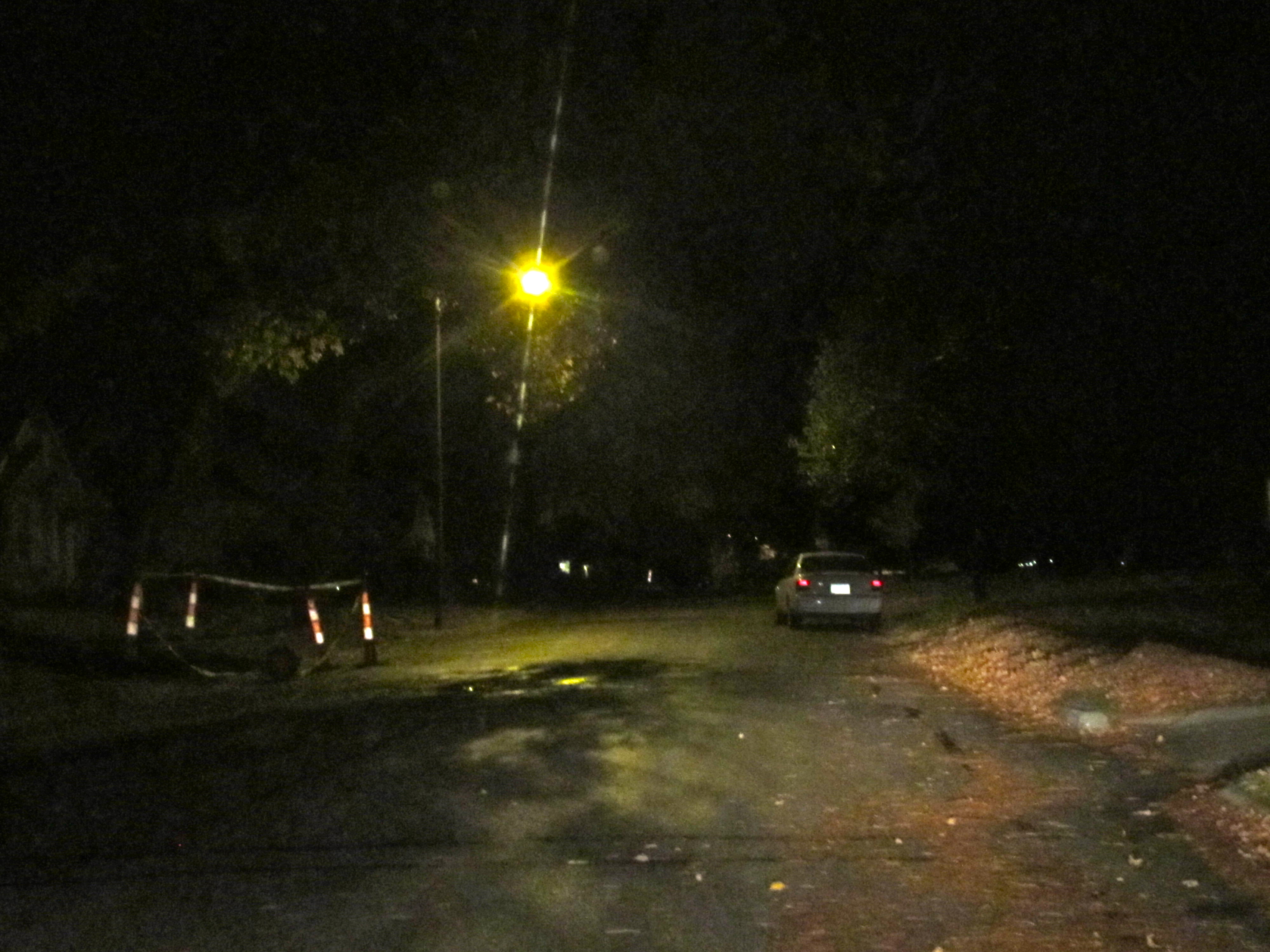
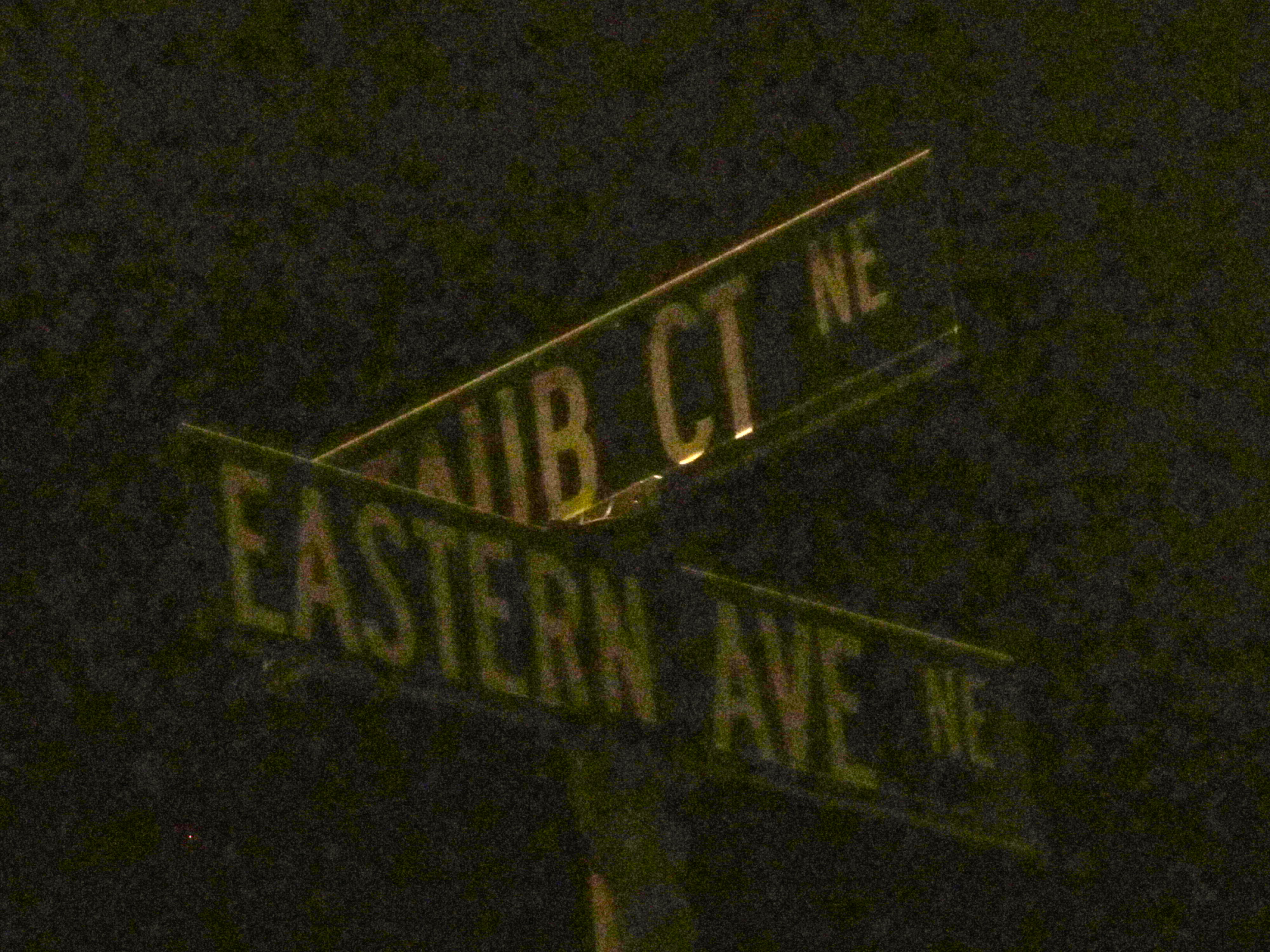
Almost the first thing I notice: nothing looks the same. Though, normally, I have a strong internal compass, suddenly I lose my bearings easily and often. Shadows and pools of light transform even the most familiar streets into alien territory. At corners, I move up close to the street signs, shining my little key-fob light at the words, verifying that I’m someplace familiar, in spite of appearances.

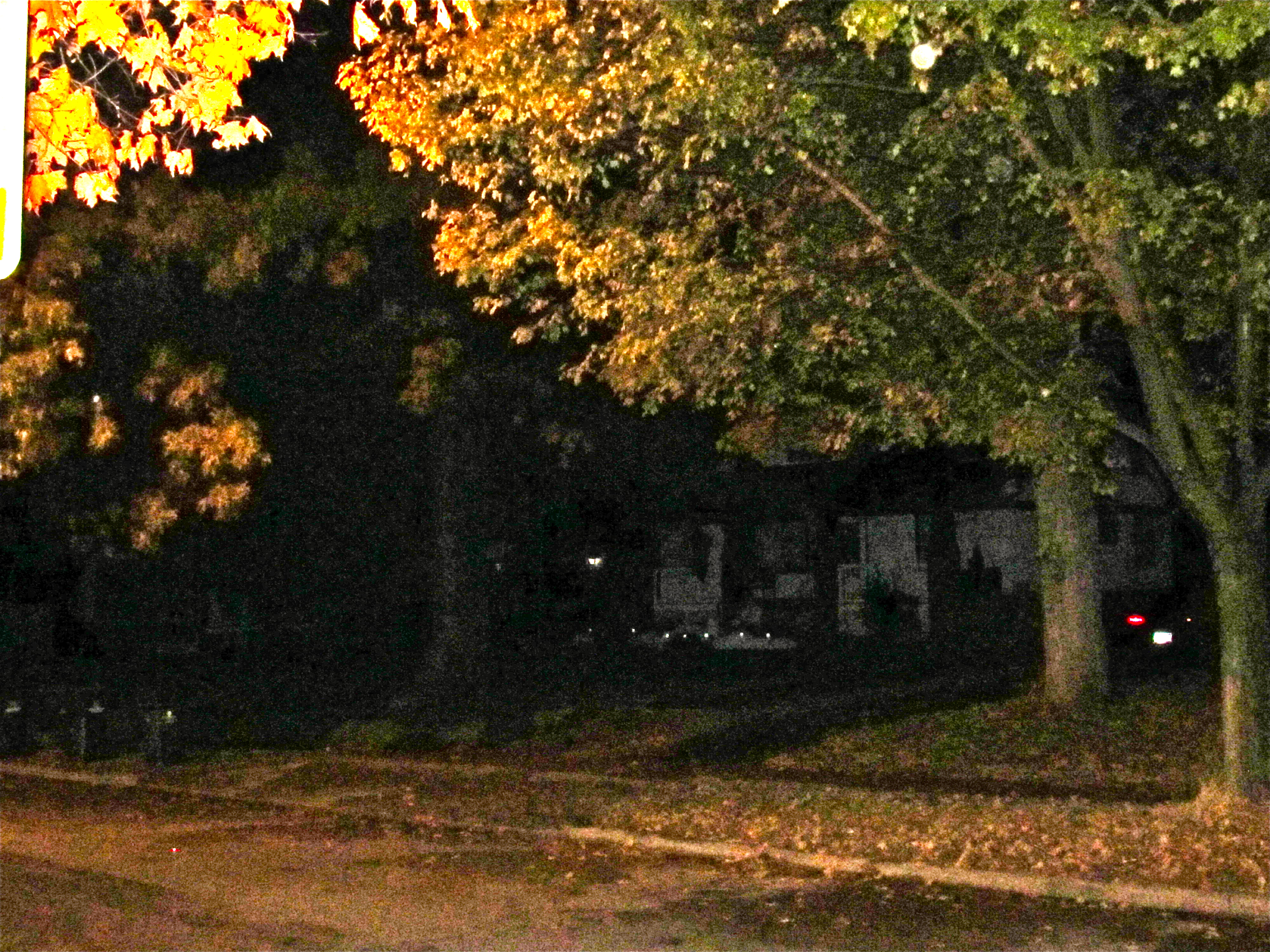
Walking in my neighborhood at night, I notice little things like the discarded banana peel I almost stepped on (imagine what a story that would have made!), or that a surprising number of motion-activated flood lights pick up movement in the street. And I notice big things: the dearth of sidewalks; streetlights shining up into the orange leaves of the sugar maples. I notice clouds scuttling across the bright white harvest moon, blown by the freshening winds of autumn.

Recently, I have been grappling with issues and transitions in my life. Mostly, I have been unable to share them in this blog for two reasons. First, some stories are not mine alone to tell. Second, there are practical considerations which prevent me talking about some of these processes for now. But this blog has become my way of inviting others to share my journey, and your companionship on the road has truly motivated and inspired me to keep moving forward. To be bound to silence for the time being – this has truly been difficult.

Add to that the discomfort we all feel at the thresholds of new places, when we know we want to enter but are unsure of what awaits us – and I am all verklempt. Inside, I roil. Emotion threatens to overwhelm me. An impetus to speak, to act, to move pushes outward from my core – yet I am in a moment of stasis before the rapid acceleration I am certain is to come.

When I must do something, I head out into the night to walk. Up and down streets I’ve taken for granted for years. Past houses full of neighbors I’ve never met, past dogs in yards begging for attention, past fallen leaves and trash cans set out for the morning collection.

As I walk, I talk to myself. Admonitions. To-do lists. Corrections to my faulty thinking. Snippets of poetry. Half conversations – some real, some my lines in imaginary dialogues. Occasionally, I check that this running-at-the-mouth is truly internal, that I haven’t started actually speaking out loud like the mentally-ill homeless woman who alternately breaks my heart and frightens me.

The parallels between the metaphorical road I am walking in my life and these actual night walks are not lost on me. In both cases, I am treading familiar/not familiar territory. Change is surrounding me, from the physical changes of autumn to the emotional and psychological changes required by liminal moments. I have to move forward, with determination and without fear (hello, since when have I not been afraid of the dark?). Focus is required to avoid tripping and to keep from psyching myself out. I am treading both paths alone.

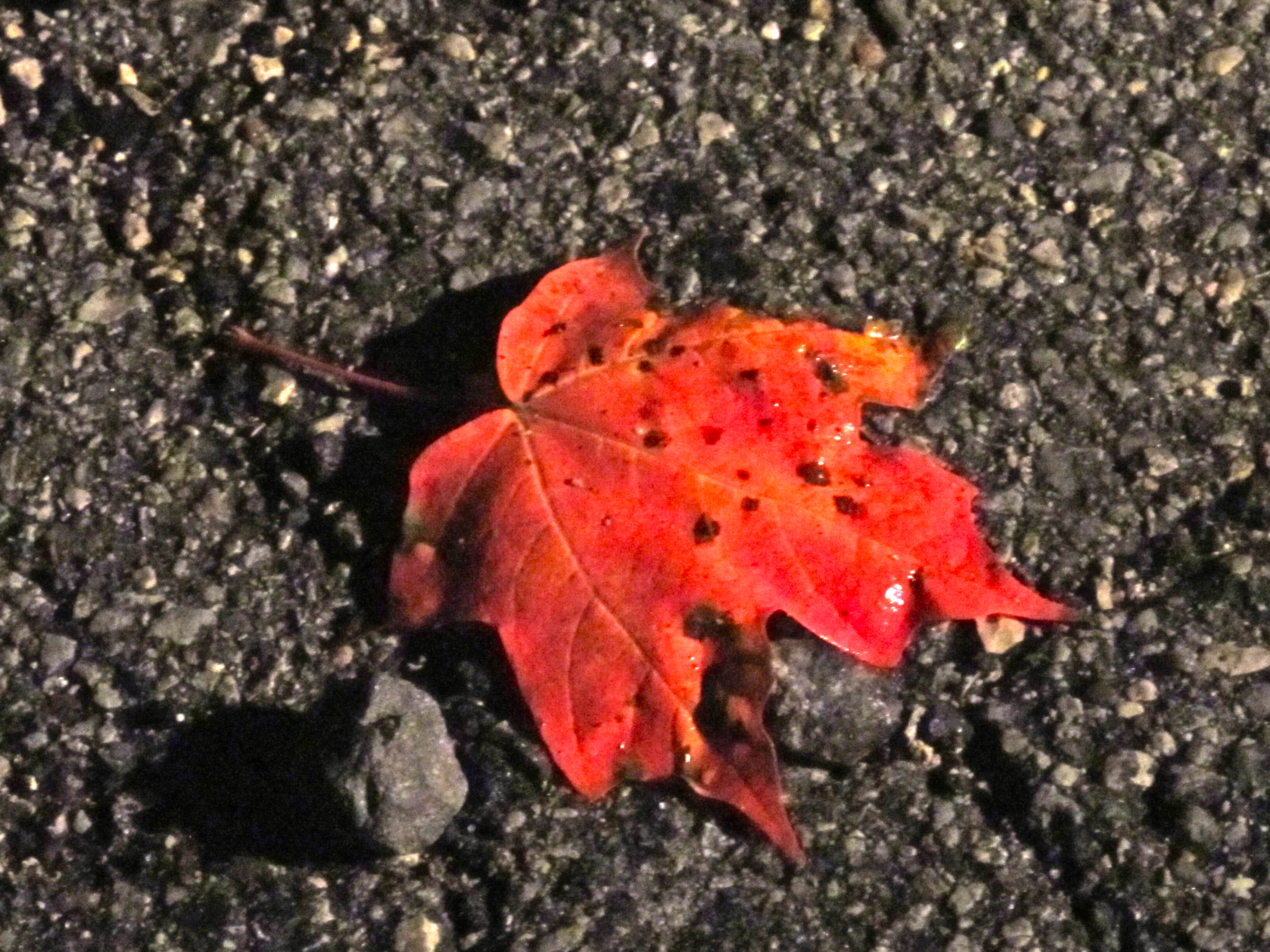
I walk until my shoulders start to ache, usually the first sign of fatigue, which slows the mental synapses and causes my internal voice to grow quiet. My mind is finally free to notice the big and little things I mentioned earlier. I begin to hear the sounds occurring outside my own head: the scuttle of a squirrel chase, the frantic tinkle of windchimes, a distant siren’s wail. I lean into the wind and breathe deeply. Finally…finally…I relax. Finally, I can stop trying to force things. I can let go of the need for specific outcomes, and just lean into the now. Lean into the perfect red-orange of a fallen leaf on the black asphalt at my feet.

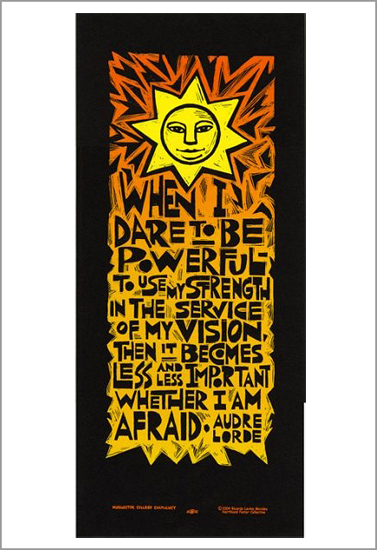
Dare to be powerful.

When I dare to be powerful…

Mostly, I forget that I have power. I forget or stop believing that I have volition, choice. What I remember is what we were all taught to remember: to follow the rules, to play nice, to do what I’m supposed to do or have been told to do. I don’t take issue with having been taught these things – they are one part of the equation of being a person with character and integrity. But there is another piece we should all have been taught – that part of being an adult of character is knowing when and how to break rules that are inappropriate, to play hard when it is called for, to say “It is MY responsibility to decide what I’m supposed to do”. The rare occasions when I dare to be powerful truly require every ounce of emotional strength I can muster, to go against the programming of my youth. However, I’m beginning to learn something important – like all muscles, it gets stronger when used. The more I exercise my power, my choice, my voice, the more powerful I become.

To use my strength in the service of my vision…

My vision? To use anything in service to my vision, I need to have a vision. Friends, for so many years I confused “vision” with “fuzzy daydream about the future”. They are, unsurprisingly, NOT the same! What differentiates a vision, for your life and/or the world you hope to live in, from a daydream? One, steadfastness. You have it and are able to hold it in front of you. Two, actions. You are able to identify – and TAKE – steps necessary to achieve the vision you steadfastly hold before you. Three, a convicted heart. Each step you take convinces your inner being that you are moving in the right direction, no matter how hard or how much it requires you to exercise your power.

Then it becomes less and less important whether I am afraid.

Because I AM afraid. Afraid I’ve made the wrong choice, chosen a vision that wasn’t my highest calling. When I exercise my power in service to my vision, I stand alone to bear responsibility for the consequences of my choosing. I’d rather blame someone or something else if it doesn’t turn out well. (But she told me to do it! I was only following orders. That’s what we were instructed to do in training. Its in the policy manual.) I like having someone or something else to blame, it feels more secure, less exposed. Really? Accepting responsibility for my own life is what makes me afraid? (Until I wrote that, I didn’t know I felt that way. Now I have a mental picture of myself, the “cheese” standing alone, quaking in my boots.)

However, as Cheryl Strayed says in Wild, fear is a story we tell ourselves. We can tell ourselves a different story – one in which fear is less significant because we are using our power in service to something important. We can tell ourselves an empowering story. We can tell ourselves, “I’m not THAT afraid.” (True story: I once talked myself out of a panic attack while driving cross-country alone by telling myself this story over and over – ‘The sun is shining. I am well. I didn’t run over the turtle. I will be safe.’ The only parts I knew for sure were true were the shining sun and the lucky, still alive, turtle.)

What is so important that we should practice using our power in service to it? What is important enough to teach ourselves the contours of courage (which, contrary to some inspirational quotes, doesn’t come naturally to most of us). Simply this: to be who we were meant to be. To live the life we were born to live. That is the ultimate personal responsibility we bear – to be fully the unique and sacred persons we were created to be. When we dare to be powerful, to use our strength in service to our vision, fear becomes irrelevant – still painful, still hard – but irrelevant. Because what is relevant is the vision we are bringing to life in our lives and in our world.

The Sunday Roast: Guest Post by Susan Stork

When Sue and I met, in graduate school at The University of Iowa, we kept trying to figure out how we knew one another. Eventually, we came to accept that while we had never met before, we were clearly meant to know one another in this life. We have been friends and professional colleagues for 26 years now, and the things we could share about each other…well, I’ll leave it at that! Trust is a huge part of this enduring friendship! I am truly excited to introduce you to my friend, Susan Stork!
Growing up, I didn’t have much confidence in myself or my body.  The reasons are immaterial at this point, but suffice it to say that I was awkward, and seemed only to reinforce that when I tried to do things that others did very naturally.  As a result, I tried to avoid doing anything remotely challenging – like throwing a ball, doing a sommersault, playing dodgeball or dancing.  It’s a wonder I ever learned to ride a bike!

Once when I was 8 or 9 years old I was rollerskating on the sidewalk in front of our house when I hit a crack where the sidewalk had heaved up.  I hit the pavement so hard it knocked the wind out of me.  My dad saw it happen and ran over to pick me up.  I can still remember the panic of being breathless and the shame I felt about not having seen the sidewalk crack.   That lack of confidence only increased throughout my childhood.  I was the uncoordinated kid who was picked last for team games at recess, and while I learned to swim, I was anything but smooth in the water.  At school dances I don’t know which I feared most – not being asked to dance or being asked to dance!

There were brief hints of the physical gifts I would later discover I possessed.  After high school graduation, I took a trip to Rocky Mountain National Park with a friend and climbed Long’s Peak.  We started in the dark of early morning (so we could be down before afternoon thunderstorms were a risk) with little more than some advice from hikers we’d met the day before, a flashlight and some water.  We didn’t “summit” – altitude sickness leveled us “flatlanders” – but before we turned around we knew we had done something physically challenging in getting to around 13,000 feet in elevation.  The peak is 14-something.  Not bad for a couple of out-of-shape Midwestern girls whose only prep for the trip had been hours of dreaming during breaks in band practice our final semester of school!  What we lacked in skill, we made up for in endurance.

Miraculously, I had learned to ski in high school P.E. class at our local ski hill, and it was skiing that provided the enticement to go to college in Montana. I loved the active, outdoorsy, and athletic vibe in my environment. Maybe I hoped some of the athleticism would rub off on me…?  I became a good skier during those years, but surprisingly, that didn’t bolster my confidence in my body.  I continued to think of myself as clumsy, soft and weak.

A few years later while in graduate school, my advisor asked me to be on the staff at a summer leadership camp.  Her confidence in my academic and social skills was encouraging, but I was worried about embarrassing myself if I had to do anything too physical.  When I arrived at the camp, I was asked to fill in for a last-minute staff resignation to team-teach a group of about 40 high school freshmen and sophomores for the two-week session.

One of the lessons on teamwork was to be conducted on the camp’s challenge course or ropes course.  This activity presents small groups of people with controlled physical challenges at a series of stations, each with a different goal and many potential solutions.  The learning comes as group members identify potential solutions to the “problem”, recognize and utilize each other’s strengths and weaknesses, and encourage each other to trust that the group will respectfully support each individual’s effort and contribution to the task, regardless of the nature of that effort.

Ropes course day was anticipated by campers and staff with both trepidation and excitement. I was so nervous I was unable to eat breakfast that morning.  A lifetime of angst, shame, and fear about my body and its shortcomings was about to be laid bare to a group of kids, a co-teacher and the ropes course staff.  I considered not going, but only briefly.  I felt obligated as a leader to demonstrate my faith in the power of teams, so I went.  What I learned about teams and about myself that day altered my confidence in ways from which I am still reaping the benefits.

I don’t remember much about that morning, except the station that required us all to cross an imaginary river full of piranhas using nothing more than a series of tires hung by ropes and suspended from a cable.  The first step was to launch yourself from a platform on a knotted swinging rope, and grasp the first tire.  I immediately slipped off the rope and into the “river”.  The entire team goes back to the beginning when one person falls off the course.  But somehow, my team supported me emotionally, got me back on that platform, and when I launched the second time, one of my teammates was there to hoist me up by the back of my pants onto my tire, while another person held his tire steady.

I don’t remember getting across the “river”, but I do remember talking about what that support had felt like as we de-briefed.  For the remainder of camp, whenever I was free, I was at the ropes course helping other groups through their adventures and encouraging the kids in whose eyes I recognized that familiar mix of fear and shame.  By the end of the week I had shimmied through a web of ropes, balanced on a log see-saw, climbed telephone poles and fallen backwards off a platform into the arms of a bunch of kids below.  On purpose.  More than once.

Now let me assure you, I was not a latent athlete waiting to come alive.  I was, and still am, kind of awkward at a lot of physical things.  I still hate dancing.  I still have a rotten throw.  I’m still not coordinated well for things like team sports.  But I am strong and I don’t quit.  I rarely back away from a physical task.  I can push wheelbarrows loaded with rock, carry heavy boxes and furniture up flights of stairs, grow things, stack hay bales and step safely from a dock into a boat.  I can assemble IKEA furniture, kayak two miles across a lake and back again, climb up and down a ladder all day to paint, nail shingles to a roof, and dig out old tree roots.  I like to ride my bike.  I like to train with weights.  I am proud of what I can do with this body.

I will not likely run a marathon, or dance gracefully, or golf.  But that’s ok because I can help the marathon runner unpack boxes and be completely settled in her new home in one day.  I can plant and grow a flowering landscape that the ballroom dancer with a brown thumb needs only to water to enjoy.  And I can skillfully drive a cart so the golfer can play 18 holes despite painful arthritis.  Yes, I am proud of this body.

My ropes course experience happened 26 years ago.   In the years since, I have led countless groups of students through challenge course activities in the name of teambuilding.  I am always conscious that on that day, in that group, there is someone who feels about his or her body the way I did about mine.   And I hope to catch his or her eye at some point and silently, confidently, offer the strength in my body to help them swing to that tire and grasp the power, as yet undiscovered, in her own body and mind.

Drinking The Kool-Aid

The day of my Nana’s funeral was the first time I saw my father cry. It was a shock to me, which is probably why I remember it so vividly. That, and the incident with the kool-aid.

After the funeral, relatives and friends gathered at our house. For us kids, it was like the best party ever – my dad’s sister Rosie’s nine kids were there, five or six of us (can’t remember which siblings had been born by then) and other assorted cousins and kids. We were playing outside, running around sweaty and thirsty and begging for something to drink. So my dad made a pitcher of kool-aid. But as we stood in a line on the back porch ten or so kids realized at the same moment that something was terribly wrong. The kool-aid was beyond tart. Dad had forgotten to add sugar. I remember suggesting we should just go ahead and drink it, rather than bother my Dad with our complaint. That idea was vetoed by the other kids. But I couldn’t get the image of my father’s grief out of my head. It seemed like the most thoughtful thing I could do was drink that terrible, sugarless, beverage.

In November of 1978, when I was 17, Jim Jones and members of his People’s Church committed mass suicide in Guyana by drinking poisoned kool-aid. This is the origin of the phrase, “drinking the kool-aid”, generally meaning blind, uncritical faith in a leader. I am not using the phrase in this sense, though perhaps my use is a distant relative. Instead, I am talking about those times in life when what is before us is a decision to either do or not do a bitter, unsweetened thing. Sometimes, like on the day of my Nana’s funeral, we want to be kind and thoughtful, but there will be no true benefit for anyone if we drink (though there may be real cost involved). At other times, we do the hard or bitter task because the benefit to others outweighs the cost to us. Learning to differentiate between these two types of occasions is an art form.

How do you know, when circumstances are murky or clouded by emotion, whether or not to drink the cup set before you? How much effort do you put forth for others in your life? How many contortions do you make in your day to do what you think someone else wants or needs? These are difficult, sometimes gut-wrenching questions.

I’ve developed a few guidelines that are, I think, serving me pretty well.  They were developed after years in which I often found myself bitter because I was making the effort to drink the kool-aid, yet it was going unnoticed and/or unappreciated by the person for whom my effort was expended.

  • First, I have to ask myself: Do I have a hidden agenda? Do I want to do this as an expression of my care for the other, or is it an attempt to “make” another person love me, appreciate me, beholden to me? Believe me when I say this is one of the hardest questions I regularly ask myself. It is hard because I want to lie to myself. I want to say, every time, that I am only thinking of someone else’s happiness. I want bluebirds to fly out of my mouth because my soul is just that pure. However, if I am drinking from the bitter cup because of a hidden agenda, the bitterness becomes palpable in my reactions to the other person. Ever hear of a martry complex? I am susceptible to this failing, and I truly hate seeing it in myself – so much so that I’d rather be honest with myself about my agenda!
  • Another important question: Will my doing this be meaningful to the other person? I have been known to go to every store in town to get the exact gift I think will be perfect for someone. This is a process which gives me happiness, and whether the other person ever sees or knows the effort is incidental to my enjoyment. I am motivated by my love and the sheer joy of expressing it in this manner, and I can sense those lovely little bluebirds flitting around my altruistic head. There are times, however, when a desire to please becomes a crazed nightmare. One time a friend who rarely asks for help told me she was feeling overwhelmed and could use some help that would necessitate my availability for a Saturday. I was scheduled to work that Saturday, but didn’t want to say no in my friend’s hour of need. I rearranged my schedule, calling in favors and making deals with several other people in order to be free to help my friend. Saturday morning, just as I was donning my superhero cape, my friend called to say that she had changed her plans and didn’t need me after all. My ego was deflated, I was angry, and my feelings were hurt. Didn’t she realize the effort it took to come to her rescue?! But the failure was mine – I hadn’t been honest (“Oh, no, I’m free on Saturday”), I hadn’t been direct (“I am scheduled to work, but if this is really important to you, I’ll make some calls and switch things around”) and I hadn’t asked myself whether I had a hidden agenda (SuperJenion to the rescue!).
  • A final question that I’ve learned to ask is: Does this really matter to ME, or am I doing it because I think I SHOULD? If the answer is that it matters to me, great. I do it. If the answer is “because I should”, I need to dig a little deeper. So the next question needs to be: Why should II am not one of those people who advocate never doing things because we think we should. There are times we SHOULD suck it up and do things, whether or not we want to or they are meaningful to us, because they matter to others to whom we are committed. If this is one of those moments, knowing it goes a long way in adjusting my attitude toward the positive. But sometimes I say “I should” when the reality is it doesn’t matter. That “should” is coming from a place of insecurity – I am afraid that someone else will be angry or not love me if I don’t say yes. So, I drink the stanky kool-aid from a place of fear. I’m the only one who thinks drinking it is a sign of love. Often, no one else really even notices what I agonized over. And then, we’re right back to that icky martyr complex.

The story of the kool-aid that wasn’t “cool” has become a legend in our family. Told and re-told with mirth over the years. For me, it is a reminder that sometimes our kinder impulses can lead us to make empty gestures. All of the adults, including my Dad, found humor in the reactions of their children to the sugarless kool-aid. I needn’t have worried so much about further burdening him in his grief, nor did I need to be the lone child choking down a glass of foul liquid. In my adult life, being clear with myself about my motives and the actual needs of my loved ones, instead of acting from misplaced obligation, insecurity, or hidden agendas has saved me from a great deal of bitterness and martyr-ing. Besides, I’m sure we can agree, a nice cold glass of sweet kool-aid with loved ones after shared effort is truly good for the soul – and what it was all about in the first place!

Saturday Night in Palo, Iowa

So, I am standing in a small bar in small town Iowa, watching the small crowd rock out to a local guy singing the karaoke version of Snoop Dog’s “Gin and Juice”. Standing next to me is a woman I’ll call Beth (because that’s her name) who is pretty much the exact opposite of me in most ways:

Beth                                                  Me_________________________________

Young                                               Not

Tall                                                    Not

Beautiful                                           Not

Married                                             Not

New Parent                                      Not

Pretty sure we are at opposite ends of other spectrums (spectra?) as well, but these examples will suffice to point out our differences. Despite these differences, though, we are in complete agreement on two things: the men in our group (one of whom is her husband) are among the best guys around and neither of us could ever do what the women on the “dance floor” are doing. And what, exactly, are they doing you ask?

Dancing. Dirty, uninhibited, take no prisoners, body-punishing drunken dancing. While screaming out the words to every song at the top of their lungs. Hugging and high-fiving each other. Challenging each other to shout a duet of “Love Shack” or “Baby Got Back” as soon as they can get their hands on the karaoke mic.

And while Beth and I are in agreement we could never behave that way, it isn’t because we are judging the other women harshly. Rather, we are judging ourselves and finding that we lack the ability to set aside self-judgement long enough to cut loose and just enjoy ourselves. Without regard to what the tall and short women standing by the bar watching us are thinking.

The atmosphere in the bar isn’t conducive to deep conversation, so Beth and I stand side-by-side, mostly silent. And I realize that it is fine with me that I will likely never be one of the dancing queens. But I do find myself wondering what I would choose to do if I could just silence my inner critic for a few brief hours. If I could just realize that the bystanders, like Beth and I, are probably actually thinking about themselves. Here are a few:

  • Wear sloppy clothes in public. My friends Molly, Colette, Wendy: all of them can head out wearing sweats or scrubs, unshowered, no make-up and they just look “natural”. I look hideous.
  • Rollerblade. This one has the element of personal injury folded in with the fear of looking stupid in public.
  • Ask questions in public forums. Of course, this would reveal that I am not all-knowing, and I’m not sure the rest of the world can handle that truth…
  • Take an art class. Really? Even as I write this I realize how supremely silly it is – the whole point of taking the class is that you don’t already know how to do it!

Well, those are probably enough examples to illustrate my point here. Like many other women – even women as unlike me as Beth – I have spent a lifetime being socialized to keep my behavior within certain parameters, and I have internalized those boundaries. Above all, don’t look stupid/slovenly/slutty: the adjectives vary but they are all cut from the same cloth. This is one reason so many women aren’t able to cut loose and fully enjoy themselves (without massive quantities of alcohol to loosen their inhibitions). We watch our own behavior and apply such tough judgements to ourselves.

I’ve heard people say that women are each other’s harshest critics. That hasn’t been my experience. In fact, quite the opposite. I have found that women tend to be fairly generous with one another. The problem is one of projection: if I look at the women in the bar and project myself into their midst, I judge myself very cruelly. With self-censoriousness as the starting point, it colors how I view others, too. When I sneer at a stranger (0r her behavior) I am really “hating on” myself.

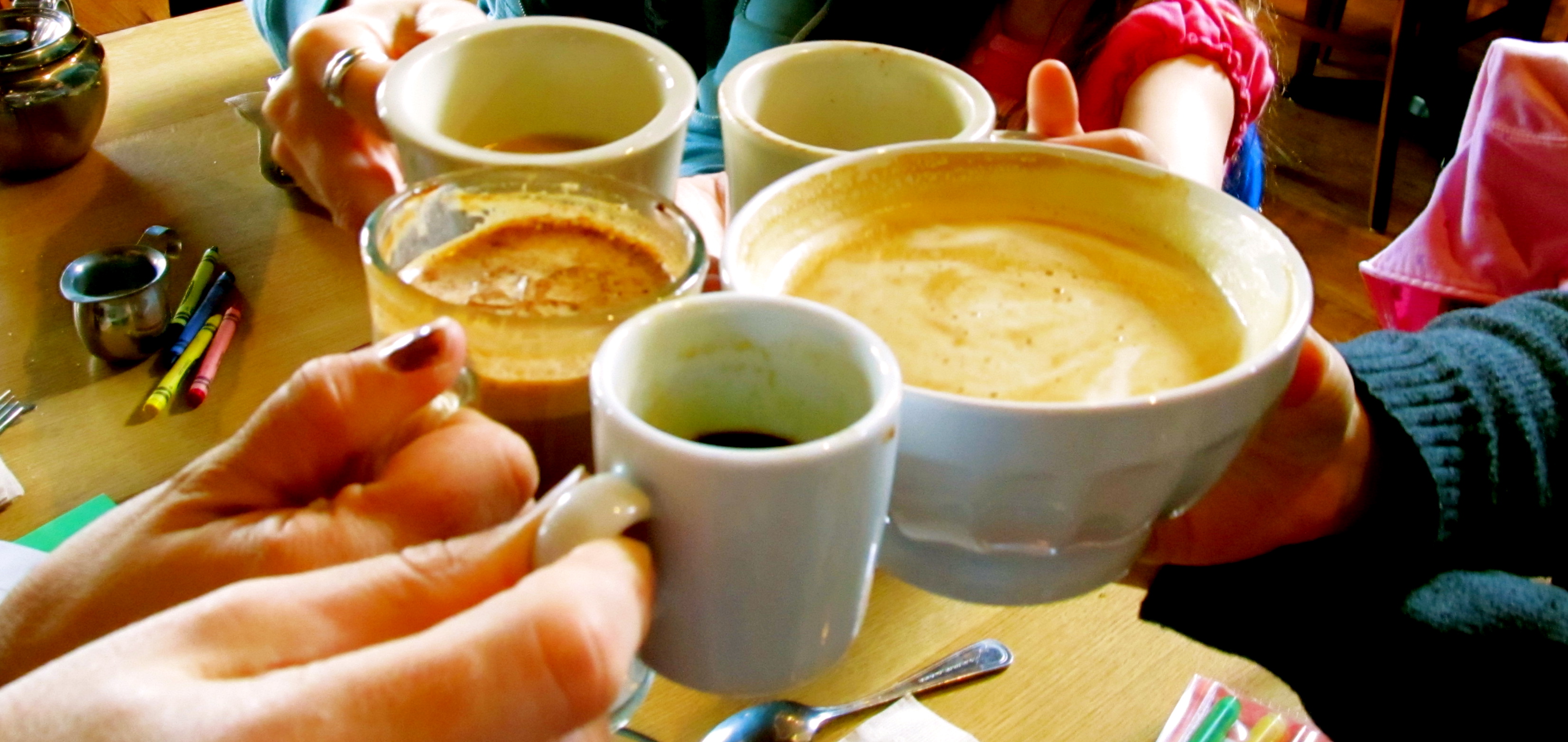
I wonder how our lives would shift if we could extend the same generosity of spirit towards ourselves that we do toward others who are trying new things, cutting loose in public, arriving for morning coffee unkempt? I’m pretty sure one of the first outcomes is that we would feel less judged by others, simply by being less judgmental towards ourselves. Definitely something worth trying!

The Quality of Mercy

Friends, I feel so happy and strong. My life is blessed in ways too numerous to count. I say this, not to brag, but to be clear that this is where I stand: in peace and gratitude.

It is true, though, that life can be hard, full of challenges that we aren’t certain we have the strength or inner resources to weather. Illness, poverty, loneliness (among other things) may show up in our lives in big ways or small, and they also show up in the lives of those all around us. Sometimes we know what challenges another faces, sometimes we are unaware until we visit a friend and find her crying, or a note goes up on the bulletin board at the gym about a member’s family in need of our generosity.

Sometimes, I am closed to the suffering of others. Caught up in the details of my own life, focused on my own hurts or struggles. It happens to most of us. Other times, I am open and feel overwhelmed by concern and a desire to help. Often, it feels like there is so little of substance I can do.

A few years ago, I participated in a book discussion group at work, sponsored by our Campus Ministry department. I can’t remember the name of the book, but the theme was mercy. The author(s) used a working definition of mercy that went something like this: “to enter fully into the chaos of another’s life”. I clearly remember saying, in the ensuing discussion, that I didn’t know whether I wanted to do that – entering fully into someone else’s chaos sounds not the least appealing, especially if you have your own chaos.

And yet.

We are all so good at allowing ourselves to intellectually grasp what another person might be going through. We donate canned goods, drop money in the red bucket, participate on boards and go to fundraisers. These are all good things to do, but we can so often do them without actually engaging with someone in pain. Entering into someone else’s chaos demands the engagement of our hearts, not just our minds. That is so much more difficult, and it can really be scary.

A while ago, I participated in a one-day service project to deliver Meals On Wheels. My experience was different from that of the others who participated that day – it just so happened that my route included some particularly grim experiences. I haven’t been able to go back, though I was happy to donate the proceeds of my hunger challenge that year to that program. So maybe that was too much chaos, way too fast.

But when the people that I know and interact with daily are suffering, entering into their chaos means, first, walking beside them so they know I am there. I’m pretty sure I can do that.

What I don’t want to do is stand in this place of peace and gratitude, happiness and strength, and just watch the suffering flow by. Nor do I want to blunder in and try to fix everything. Neither of these approaches serve in the long run. My old friend (and by friend, I mean author I deeply admire), Parker Palmer, espouses a form of community which holds each person sacred. This is how I hope to express the quality of mercy in my life, and I think it’s a fitting end to this reflection. He says:

“The key to this form of community involves holding a paradox – the paradox of having relationships in which we protect each other’s aloneness. We must come together in ways that respect the solitude of the soul, that avoid the unconscious violence we do when we try to save each other, that evoke our capacity to hold another life without dishonoring its mystery, never trying to coerce the other into meeting our own needs.”
 

A Solo Hike

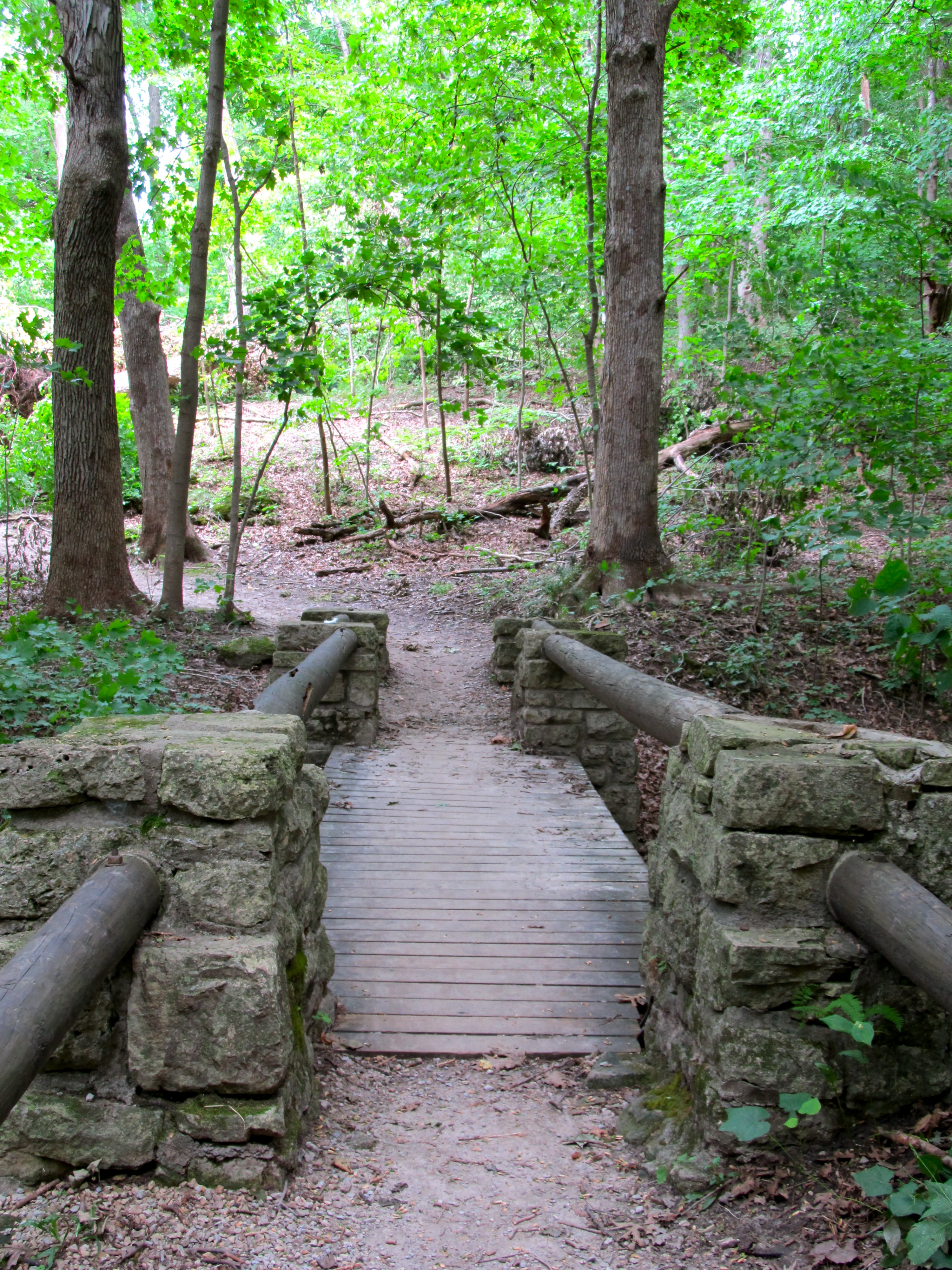
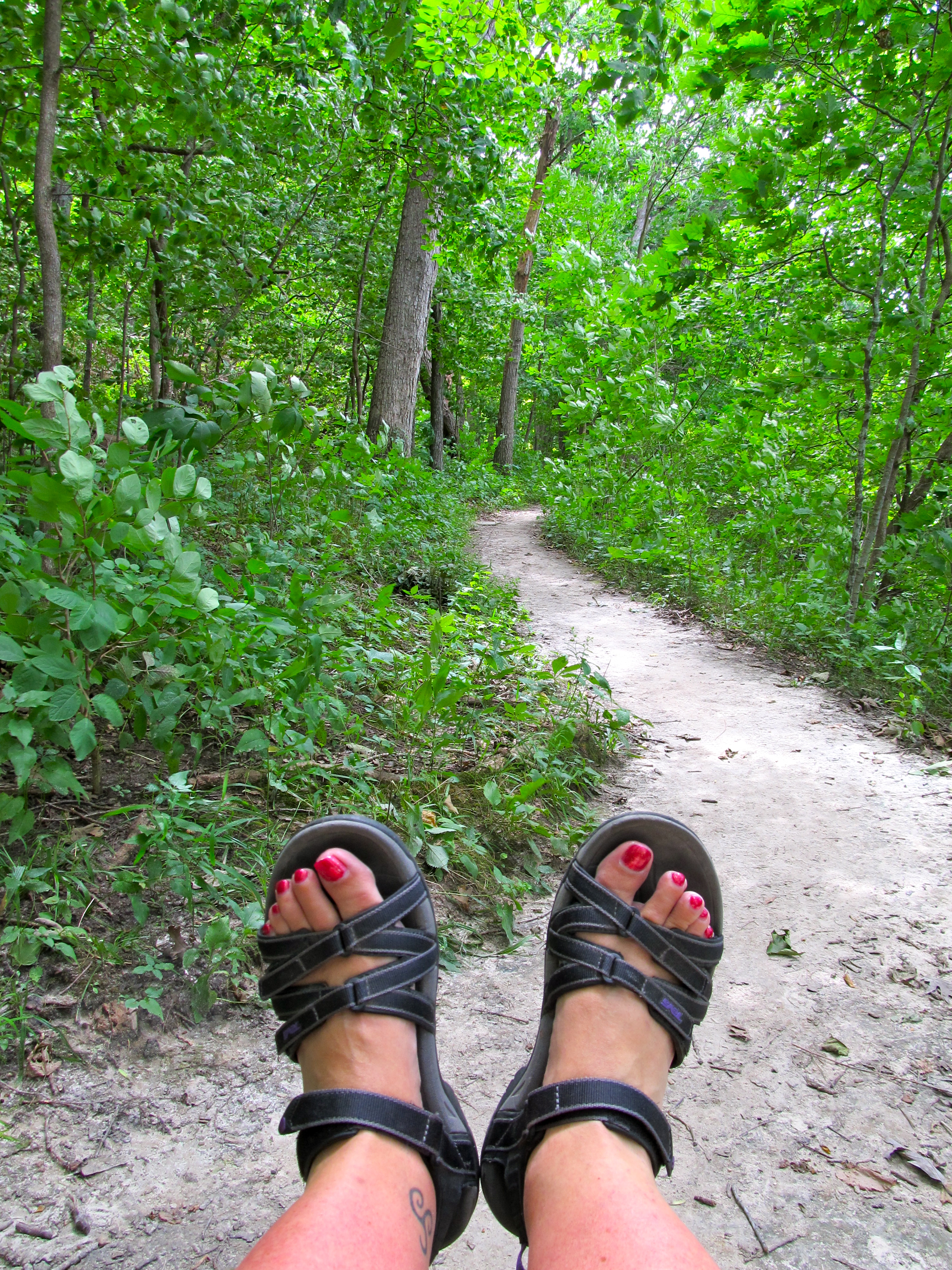
The beginning of the Cedar Crest Trail.

In my entire adult life, until today, I have never managed to go for a long hike in the woods by myself. I have started to, a few times, but always turned around in fear before I managed to go very far. No, I am not afraid of the woods. I admit I am easily startled by even small wild animals, but that isn’t why I have feared such hikes. Some of you know I can be a bit clumsy, and this might be a good reason to avoid heading into the woods solo, however, even the fear of injury hasn’t been the thing that stopped me.

I don’t walk alone in the woods because I am afraid of men. More specifically, I have been afraid of finding myself alone and isolated with a passing stranger who might seize this moment of vulnerability and take advantage of it. Or a couple of passing strangers.

I have had many arguments, with myself and others, about whether this is a realistic fear. I have debated the relative merits of curtailing activities in order to feel more secure (thereby holding myself back from fully experiencing things that might enrich my life) OR of taking a more courageous stance and going full steam ahead in spite of fear. In spite of what I have learned to think about as a woman in this world – that I might be easy prey for someone stronger than me.

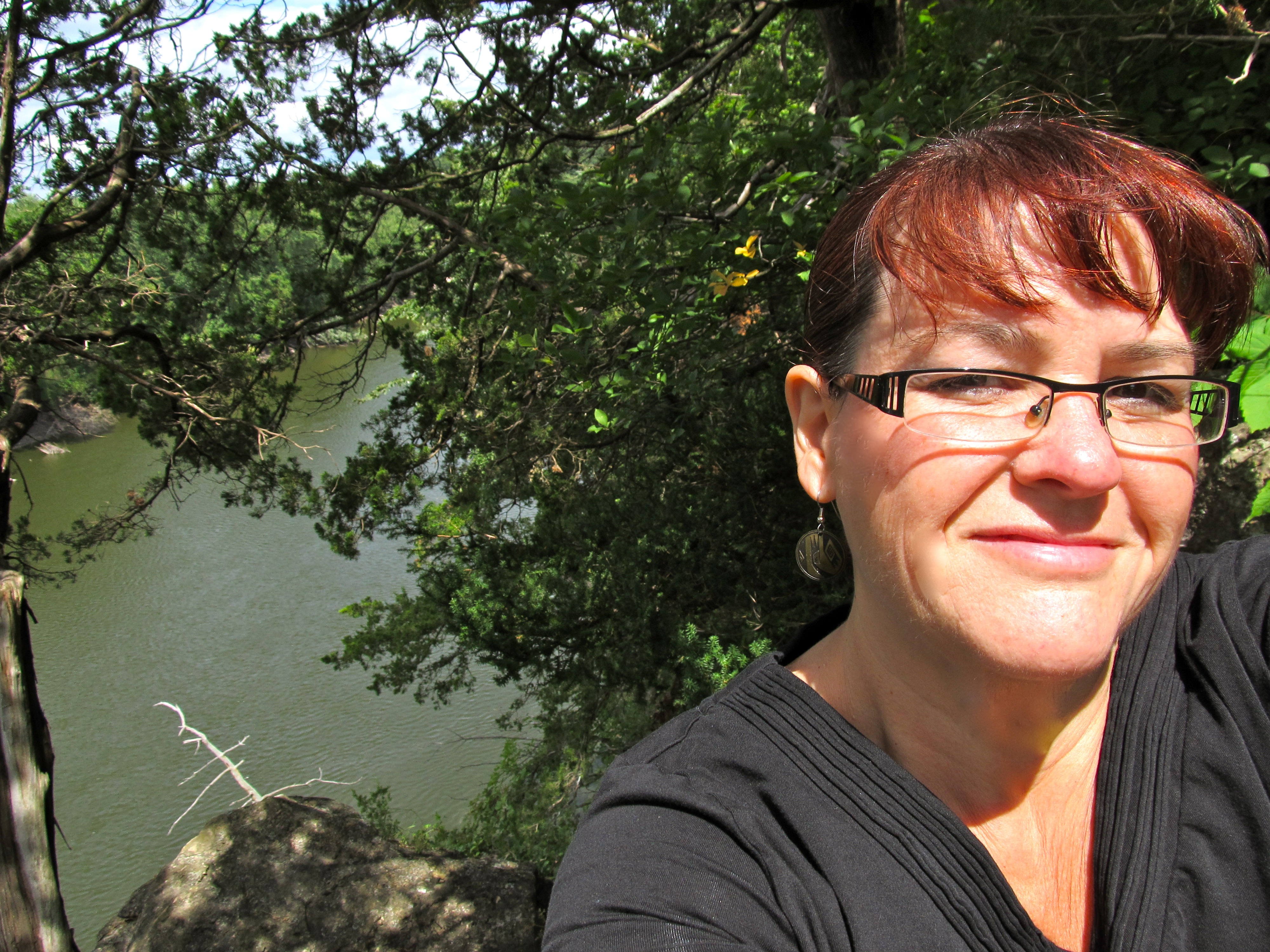
I have been working to fear less in my life. And today just seemed like a good day to set forth on my own. I felt trepidation. When I experienced a bout of vertigo upon stepping too close the edge of a rocky cliff, I worried that I might be incompetent to hike alone on a ridge-top trail! Twice (in the same spot, headed out and back in) I encountered a beaver who was as startled to see me as I was to see him.  The only other people I encountered in the woods today were men, also out enjoying nature alone (well, one guy had a baby snuggled to his chest). I tried to cross paths with them confidently and with trust in my heart.

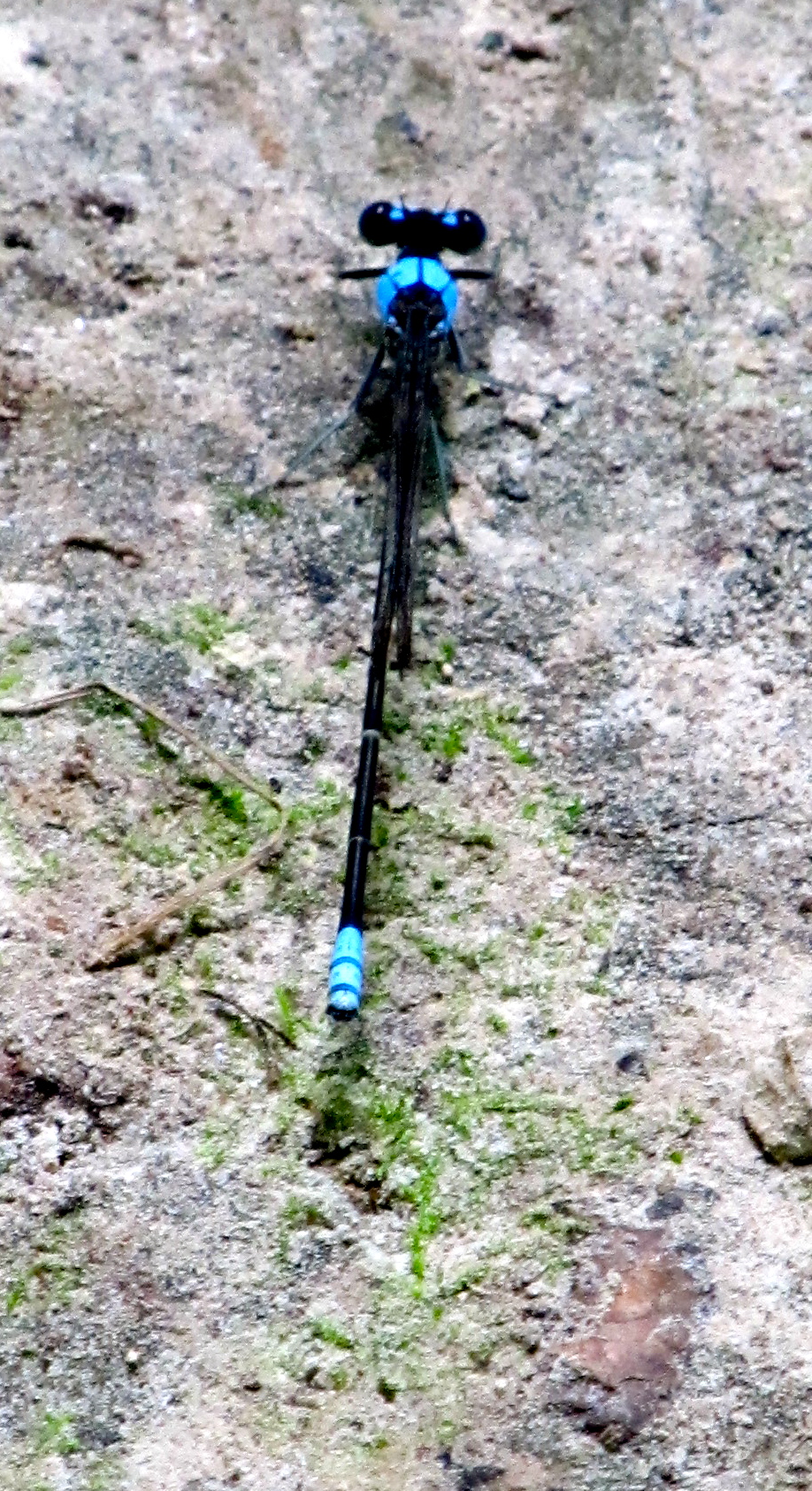
It was beautiful, cool and crisp in the green woods. So quiet I could hear trees creaking in the wind. So still at moments that the shy blue dragonflies hovered all around me, nearly alighting on my toes a couple of times.

Holding still, you can't see his gossamer wings!

A few hours after returning from my hike, I sat chatting in a friend’s living room. She asked if I had told anyone where I was going, when I would be back. She scolded me for not doing so, and shook her head at my impulsive trek. I could only agree with her.

And yet. There was a moment on my solo walk, breathing deeply in the loveliness and solitude, when I felt such happiness that I literally broke into a run. Me. Running. Not in fear, but in joy.

Resting on a trail-side bench.