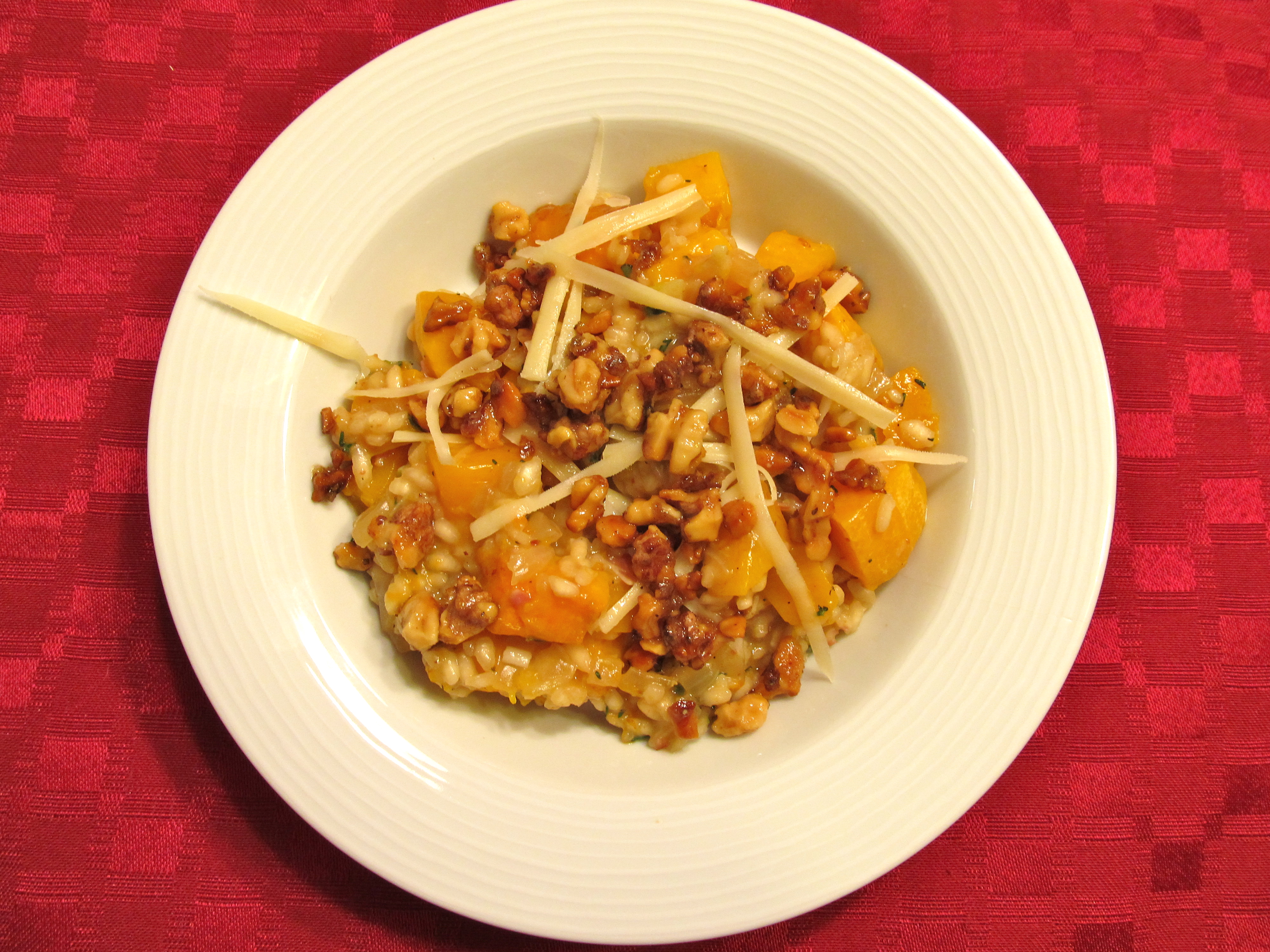
Roasted Butternut Squash Risotto with Sugared Walnuts

Continuing on my quest to try the recipes I’ve been collecting, I ambitiously set out to make my first ever risotto. As I have complained previously, ingredients readily available elsewhere are sometimes difficult to find in my small midwestern city. However, since even in my town, people have not only heard of but actually eat risotto, I expected no trouble. Three grocery stores later, and I returned home with two boxes of pre-packaged risotto, after having read the directions to know the rice was separate from the seasonings, so I could use it in my dish. (I complained incessantly for several days, which paid off in that I believe I now have a “local” source for Arborio rice…Sam’s Club!)

This dish was time consuming, but not difficult. I was not pleased with the garlic: since you add it to the squash uncooked, and it basically only warms, it tasted raw. I will need to experiment with adding it sometime during the cooking process. The recipe suggests 20 minutes of stirring and adding the liquid, but I found it took more like 30.  It was worth it, though!

One serving of my first risotto!

Flashback Friday

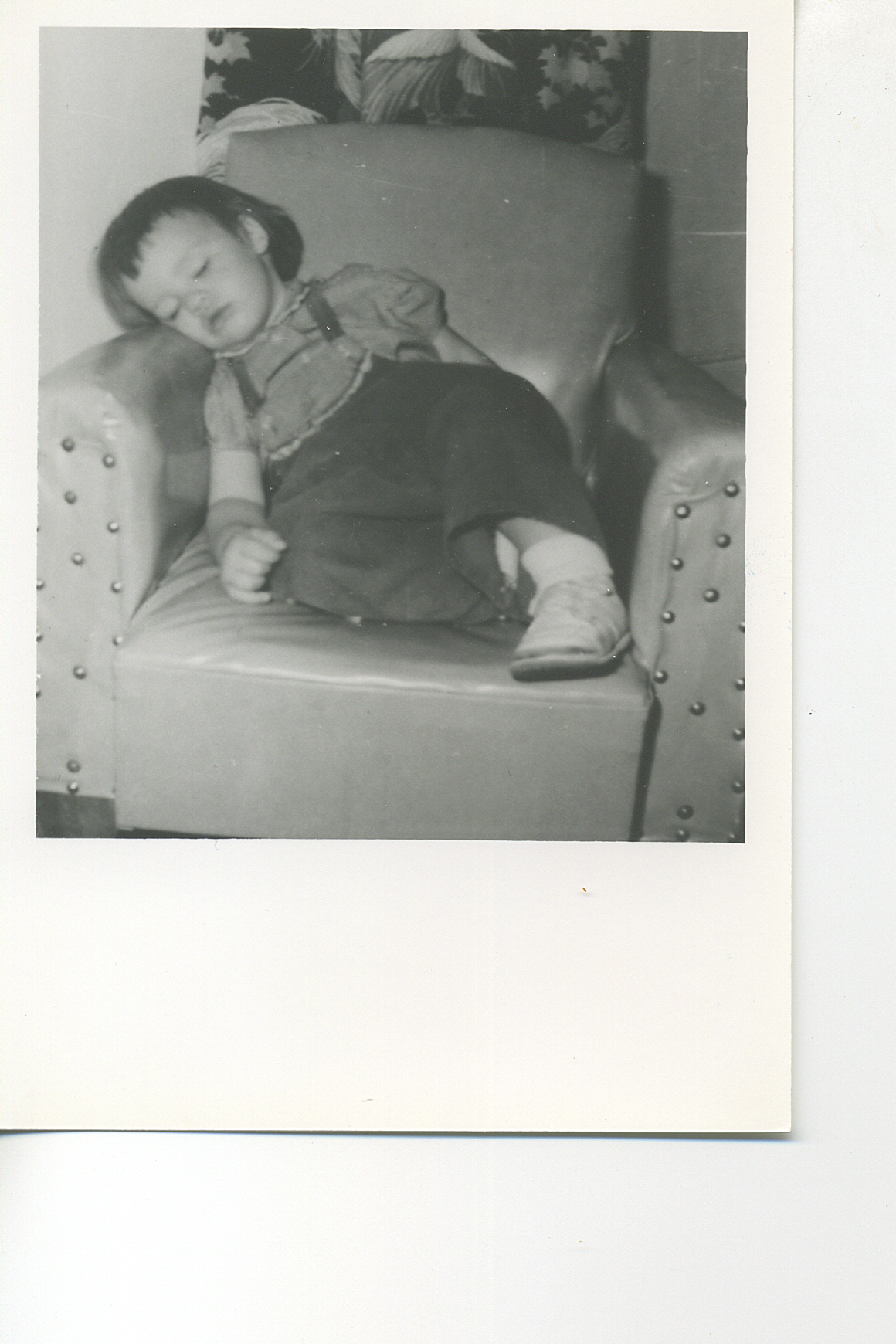
My mother says that, as a child, I could and did sleep anywhere. We would be shopping, for example, and my mother would stop to talk with someone. When ready to move along, she would turn to find me lying on the sidewalk, sound asleep. I have struggled a little with sleep this week, which leads me to feel nostalgic for moments like the one depicted above!

Living the Questions

Be patient toward all that is unsolved in your heart and try to love the questions themselves…Live the questions now. Perhaps you will then gradually, without noticing it, live along some distant day into the answer.

–Ranier Maria Rile

Letters to a Young Poet


Be patient toward all that is unsolved within your heart. Yeah, right.

Because patience is something we are all busy cultivating, in this culture of instant gratification. Because patience is something we humans are so good at right from the start – ever been around a young child who wants something? Yes, patience is a virtue we only possess if we actively seek and practice it, because we are not (most of us) born patient.

Lacking patience, how does one live within the questions long enough for the inner self to discern, then make known, the answers? It is not easy. Have you ever had an itch that would not go away, despite extreme bodily contortions to reach and scratch it? Living with the internal itchiness of unresolved questions can be truly uncomfortable. I’ve been given the advice to trust my gut, which is fine if your gut is a trustworthy ally. Mine tends to be a trickster, responding from fear but pretending otherwise. (And then prompting me to eat because food will make me feel better.)

Rilke’s suggestion that, gradually, without realizing it, we might live into the answers someday isn’t particularly comforting. I mean, how are we supposed to move forward without answers?  Steve Jobs, in his 2005 commencement address at Stanford, uses the image of connecting the dots. That each decision, each step we take, is a dot. He goes on to say that the dots cannot ever be connected moving forward, they can only be connected looking backward, in retrospect. We have to keep choosing and trust that the dots will connect.

My tricksy gut tells me he’s right. Cultivate the patience to wait for the answers to make themselves known, while trusting that the choices I make in the meantime will connect in a coherent way someday. Remaining where I am because I am afraid to move forward without all the answers, may seem safe. But the truth is, I’m just stuck. To get unstuck, I need to cultivate my inner Wile E. Coyote (from the Roadrunner cartoons). I need to be willing to keep moving forward right off the edge of the canyon into the unknown. Now, Wile E. always looks down, and in doing so loses his faith that he can make it to the other side, causing him to plummet to the canyon floor. That’s where the trust part comes in: take a step and keep going, trusting that I’ll get to the next dot. Because I will. Even when Wile E. Coyote falls, he gets back up and tries again in the next episode.


Why random?

I read somewhere that this is Random Acts of Kindness Week. Don’t misunderstand me, I am all for random acts of kindness – paying for the person behind you in line, waiting for the other driver to pull out, leaving a good book on a table for someone else to enjoy.  The other day, I watched some youtube videos showing people standing in European squares with signs saying, “Free Hugs”. The people who took advantage of the offer seemed genuinely pleased to do so. There is no reason to take issue with these small efforts to make another person’s day a little brighter.

The question posed in the title of this post isn’t meant to invalidate those acts. Instead, I’m wondering why we (and by we, I mean I) don’t focus more on kindness as a daily choice within our normal interactions. Most of us are not unkind, but we’re lackadaisical in our daily routines. We get hurried, stressed, defensive, tired…and suddenly, not meaning to, we behave in unkind ways. And those on the receiving end are rarely random strangers.

So this week, I’ve been trying to keep kindness uppermost in my mind. I have committed a few random acts, but I have also really made an effort to express kindness in my interactions with those I see every day. Its is early morning on Wednesday, so I only have two days experience to go on, but so far it has seemed to me that focusing on kindness has opened my days and my heart to experience greater compassion. I’ve given away more hugs, for one, because I’ve seen greater need for them. I’ve been humbled to discover that my first response in some situations has been ungenerous – my second response has invariably been kinder.

I’m not certain that the level of focus devoted this week is sustainable, any more so than any other “awareness campaign” might be. However, if the kindness quotient is raised even a little by devoting attention to it this week, both my world and my own life will be enriched by that.  At least, that is my small, tender hope on this foggy Wednesday morning.

That best portion of a good man’s life; his little, nameless, unremembered acts of kindness and love.

William Wordsworth

English Poet

The place to improve the world is first in one’s own heart and head and hands.

Robert M. Pirsig

Author of Zen and the Art Of Motorcycle Maintenance

Celebrate Love

love is the voice under all silences,

the hope which has no opposite in fear;

the strength so strong mere force is feebleness:

the truth more first than sun more last than star

— e e cummings


Today is Valentine’s Day. For many, the day is all about romantic love, which is wonderful and worthy of celebration. However, I want to think about LOVE in its broadest sense, in its many and varied meanings. How, after all, can one little word carry so many ideas, so many definitions, in its four little letters? As the poet, Michael Blumenthal, says in “The Word Love“: a word/I have uttered time and time again/and now hesitate to say at all–/being, as it is, always too much/to stand for what we really mean,/and never enough.

For years, now, the song “Love’s the Only House” by Martina McBride, has been a sort of theme song for me. Not because I know how to love better than anyone else, but because I firmly believe that right action (toward self and others) flows from love. This song reminds me that, every day, I am offered the opportunity to choose from a place of love…or from somewhere else (fear, anger, selfishness, etc.). When I choose from love, I may not choose perfectly, but I do remain whole.

Happy Valentine’s Day!


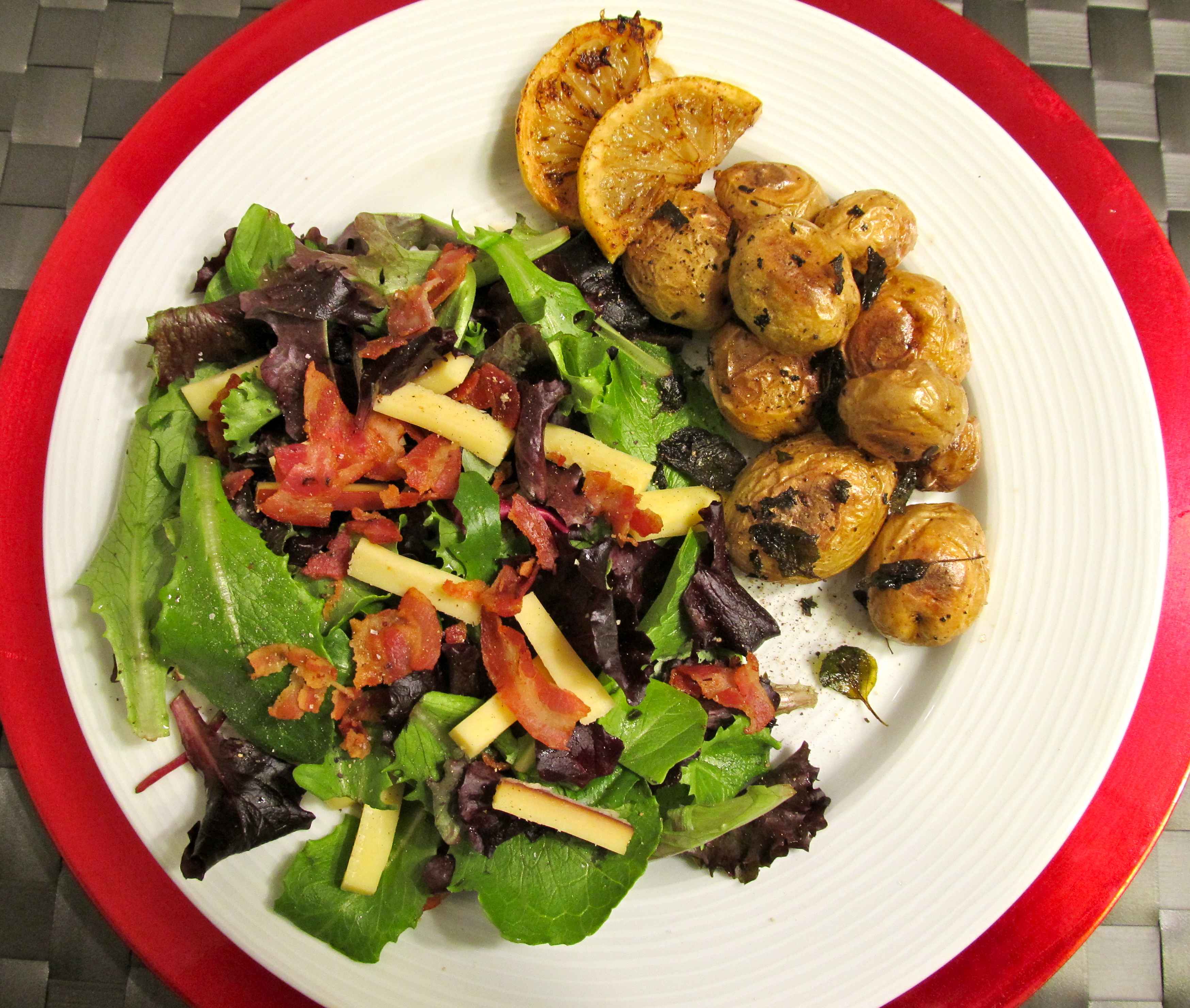
Roasted Potatoes with Oregano and Lemon

After homemade soup, potatoes are tops in comfort food. For most of my life, I just assumed they needed to be eaten as a side with a meat entree. Luckily, I’ve reconsidered that credo. I have wanted to try this recipe for a while, but in a small midwestern city, the options can be somewhat limited – we rarely have fingerling potatoes available in the grocery stores (though they are abundant at the summer farmers’ markets). Yesterday, I discovered small Dutch gold potatoes and snapped them up. The main dish: potatoes. The side: mixed baby greens with crispy pancetta and smoked gouda. Honestly, I didn’t think the dish could smell better than the scent of roasting potatoes and fresh oregano, but the dash of lemon juice at the end made my mouth water!

(Recipe can be found on recipe tab, above)

Next Generation

Today, I spent two hours interviewing high school seniors who were competing for top scholarships at the university I work for. Prior to meeting them, I had a chance to review lists of the activities in which they have been involved throughout the four years of high school. Each young person’s list was more than a page in length, meaning that the activities for each numbered in the high teens through the twenties. Band, sports, community service, church-sponsored activities, peer mentoring. The lists were impressive.

However, when asked to tell us about an issue in her community or the world about which she felt passionate, one student told us that she is concerned about how stressed high school students are these days. They have pressures from family, from friends, from teachers, the community and the colleges competing for their enrollment. She felt that more attention should be given to helping students develop a sense of self-worth and self-determination, rather than so much effort expended in making them marketable.

According to the National Survey of Freshmen, the entering college class of 2010 is the least emotionally healthy class ever. And for the first time, anxiety has overtaken depression as the leading mental health issue reported by students.

Taken together, the student’s words and the survey results give me pause to reconsider the activity lists submitted to us. Were they impressive? Or an example of our society’s desire to put form ahead of substance?

These days, students arrive on the steps of our institutions of higher learning carrying some pretty heavy baggage (both literally and figuratively). They come with plenty of self-focus but very little self-knowledge; having dabbled in many things, often without developing true passion for any one activity; expecting to face difficulties, but with very little resilience when problems arise. Perhaps the root of this is the very idea that our role as the adults in their world is to help them see themselves as a commodity to be groomed for the market – whether that is the college scholarship market or the job market.

Working with college students has been both my career and my vocation. I am not afraid that today’s young people are any more likely to screw up the world than previous generations. I am, however, very concerned that we are likely to screw them up in lasting ways. I recently listened to a TED lecture by Sir Ken Robinson: Bring on the learning revolution! in which he talks about the absurdity of three year olds being interviewed for pre-school. He goes on to make a case for a revolution in education, as opposed to reform. I believe that if such a revolution is to occur, there will need to be a concurrent revolution in the way parents and communities talk about and model what it means to be a mature human being. Otherwise, our adolescents will continue to be stressed, and we will never move beyond this Age of Anxiety in which we are living.

When the Pendulum Swings

When I was younger, in high school and college, I was very deeply involved in religious activities. Several times a year, I went on weekend retreats, which were invariably peak experiences. People who hardly knew one another would open the contents of their hearts, bond quickly and intensely, and share a high well beyond any experienced in normal, daily life. Returning to normalcy post-retreat was always difficult. People returned to their daily selves, and the shared experience grew less powerful as a touchpoint with one another. As the retreat ended, you told yourself things had changed, that you had changed. But the truth was, your old self and habits nearly always reasserted themselves.

I remember Pastor Ross addressing this: faith isn’t a feeling, he said. When the feeling of the retreat passes, you discover that faith is a verb. Something you actively do, not something you passively feel.

It has now been many years since I’ve been on that kind of retreat, or experienced exactly that kind of high. However, for just over a year now, I have been on a journey which has led to similar feelings: happiness, joy, a sense of purpose, renewed (or just new) relationships. My life has had a quality of incipience, every day on the cusp of a new experience or revelation. It has been amazing. I have gushed about it. I have sworn that everything is different now, things have changed, I have changed.

And all of that is true. However, no peak experience, no emotional high lasts forever. And when that feeling goes away, when the pendulum begins to swing on the downward arc, what does one do? More to the point, what should I do?

Option #1: Chase the High

A friend recently invited me to join her at a movie premiere in New York. The movie, directed by Robert Redford, stars several actors I enjoy. I loved that she asked, but for a variety of reasons needed to decline the offer. Several people told me I was crazy; in fact, one person said she wished she had my life because she would live it better than me. Well, that’s possible, I suppose. However, I am still me. I will still make decisions, for good or ill, based on my own values and gut feelings. I will never be the type of person who drops everything else in my life to jump at unusual experiences just to be able to say, “See what I did?!” So, chasing the high isn’t really an option suited to my temperament.

Option #2: Wallow.

As the pendulum drops from its apex, its easy to allow your emotional self to plummet into sadness and depression. Truthfully, there have been many times when this proved to be my modus operandi. In the current case, the things that have changed the most in my life are internal. The outward trappings have remained essentially the same. And now I am faced with the same life choices and decisions that have always awaited my attention: What should I be doing with my life? I have learned to be honest with myself, which felt really good at first, but which can be a bit depressing. For example, I pretended for decades that I didn’t have feelings like other people. Now, I’ve admitted to myself that I do and some of them are angry or disappointed or sad. Part of me wants to roll around in those denied emotions for a while, just feeling them. Luckily, my emotional health is more robust than it once was, and I can’t see the point in wallowing. So, Option #2 is a no go.

Option #3: Remember that to BE has always been a verb.

I’ve (briefly) studied two foreign languages in my life, and while I don’t remember much of either, I do remember that to be was the first verb we learned to conjugate in both of them.  So this option suggests that, regardless of what I am feeling, I can keep breathing, keep moving forward. I can keep living in the present, living as this new self I’ve worked so hard to become. And I can have faith – an active choice, not just a momentary feeling – in my ability to continue creating a meaningful life.

In summary: Option 1: too hard; Option 2: too soft.  Option 3…just right! Now that I’ve chosen an attitude, I just have to figure out the right action plan to go with it. And that will be both the hard and the rewarding part. I don’t know what will come next. But I do know that the pendulum will eventually hit its nadir and begin another upward climb!
Winter Night

“…That’s how little I understand winter, how it can bewitch its inhabitants (for it is more like a country than a season, a thing to which one belongs), so they cannot say and don’t know whether they love the winter or hate it.”

— Patricia Hampl, from “A Romantic Education”

Do not ask me tonight whether I love it or hate it. Tonight, Winter may be a country or a hostile season — whichever, it has me fully in its frigid grasp and I cannot get warm. So I have been browsing through Winter: A Spiritual Biography of the Season to see what a wide variety of writers have to say about winter, spirit, imagination. I definitely recommend this collection!

As I skimmed through the book, thinking about winter and writers, the idea of cold never far from the surface of my thoughts, I was reminded of a poem by William Stafford, which I think is worth sharing (thought it is NOT included in the book).

Ask Me

Some time when the river is ice ask me

mistakes I have made. Ask me whether

what I have done is my life. Others

have come in their slow way into

my thought, and some have tried to help

or to hurt: ask me what difference

their strongest love or hate has made.

.

I will listen to what you say.

You and I can turn and look

at the silent river and wait. We know

the current is there, hidden; and there

are comings and goings from miles away

that hold the stillness exactly before us.

What the river says, that is what I say.