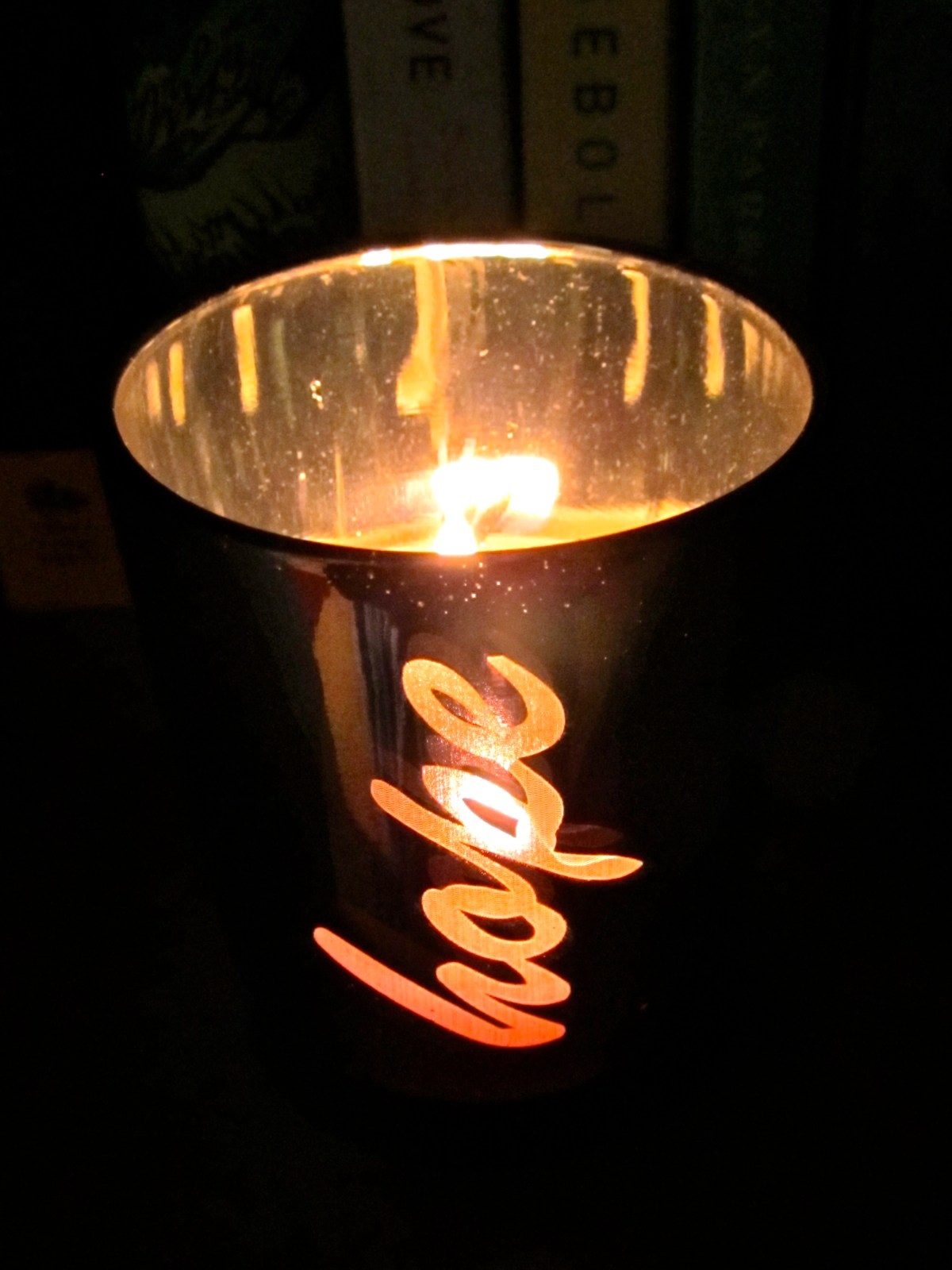
Truth Arrives in Silence

Note: This post continues my reflections on “truth”, my word for 2016.
WP_20160110_16_54_40_Pro (1)

“We can’t rob our gifts of their mystery. We can only rob ourselves of our gifts.”

– Ken Page

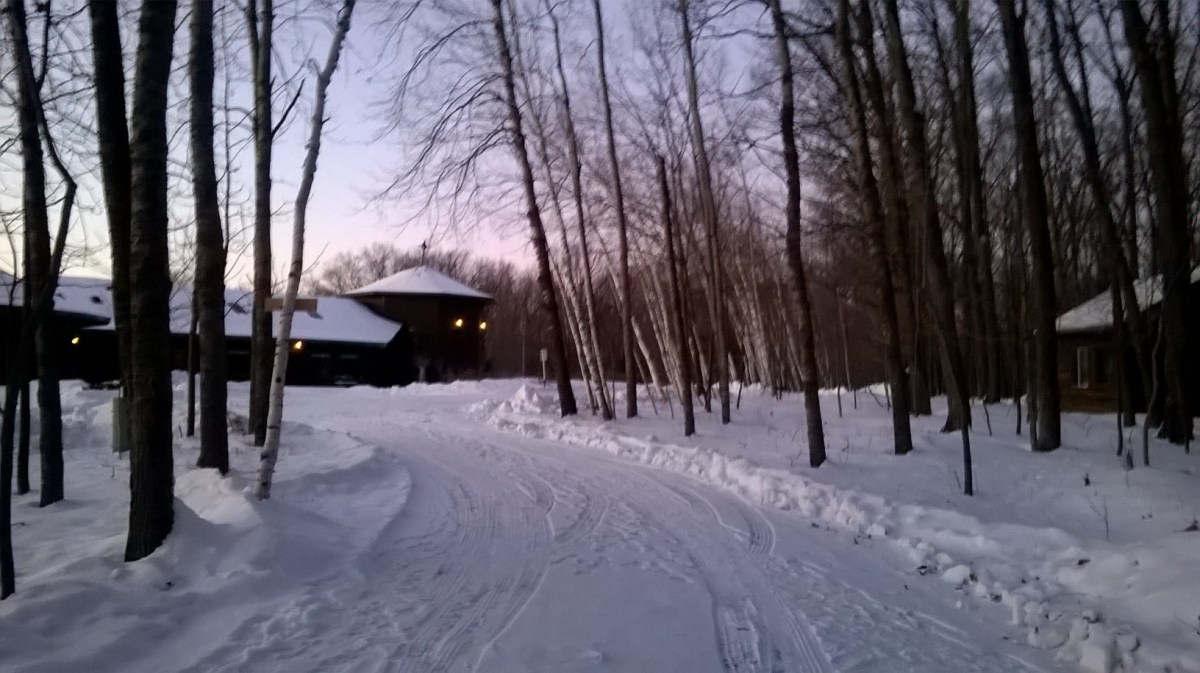
The temperature dropped to 19 below that first night. I huddled in my plywood cabin under several blankets, completely surrounded by the silence of the snowy woods. Except for the loud cracks of trees popping in the cold, the silence outdoors was vast. Inside, the sounds of some small animal skittering behind the wall or the heater whooshing to life were intermittent, startling me every time.

With none of the usual noise-makers present (no phone service, no television, no computer) I was thrown upon my own inner resources for mental occupation. Of course, I was staying at a retreat center so that was the point: remove the noise and distractions of daily life and allow your inner self to come out.

The first thing that happened was that I fell asleep, and stayed asleep for almost 10 hours. Considering my recent 4-6 hours per night, often punctuated by periods of wakefulness, that long sleep verged on the miraculous.

The next thing I noticed was that the anxiety that had been my near-constant companion for months, let go of its stranglehold on my throat and lifted itself up off of my chest. I didn’t really care where it had gone, I was just so grateful that it had! I didn’t mind that the day’s temps had never rallied above zero. I bundled up and grabbed a walking stick and headed out to hike in the woods, following trail markings to make my way.

Into my silent mind paraded all the things – you know the ones: the things I hadn’t done, the things I had failed at, the things I never quite managed to get a handle on; the things I should have, ought to have, and meant to do or become. Usually, these things make me feel so awful, so down on myself, that I quickly find something to do to get out of the silence that invites them in. Instead, I kept walking.

The path through the snow and ice covered woods was rough and uneven. I was grateful for the walking stick that allowed me to keep moving, for the boots that kept my toes warm, for the scarf that filtered the freezing air as it entered my body.

Next to arrive in the mental parade: all of the beauty surrounding me, outside of me. I noticed ice crystals on the frozen creek, forming dramatic and intricate patterns; the bare trees reaching in stark loveliness toward the blue sky; the turkey tracks forming their own path in virgin snow just off the walking trail. I felt a surge of positive energy rising from my feet on the ground up through the top of my head. I looked around me in wonder.

Last to arrive, buoyed up by the surge of gladness in my heart and shyly tip-toeing into the silence, came my deepest gifts – the beauty that resides deep inside me. Psychologist Ken Page calls them Core Gifts, saying:

“…They are simply the places where we feel the most deeply, where we most ache to express our authentic self…we spend large parts of our lives fleeing their call… Yet, as safe as we may feel by avoiding our core gifts, there is a grave cost to this avoidance…We create a vacuum where our self should be, and our nature abhors that vacuum.”

Nature abhors that vacuum. So we fill it with noise and busyness and the consuming of stuff. We adventure and we schedule and we work. Anything to avoid the silence. A friend recently told me that she can’t have silence, because if she is surrounded by silence for too long, “…bad things happen. No, I can’t do silence.” But the bad things come first because they’re closest to the surface. We’re aware of them on a daily basis even if we don’t look at them straight-on. Deeper, beneath that layer of mental and emotional filth, the good stuff is hiding. If we never allow silence, we rarely break through to the gifts.

Deep inside, hidden in the silence, is the mystery of my best self. I put it there to keep it safe from the inevitable hurts, shame, embarrassment that it felt when I was a child and others glimpsed it. Vulnerable as it felt in the open, it turns out that a locked box isn’t the optimum place to keep my best self. If I never make room for silence, I never make space for my best self to emerge in daily life. I only leave space for what is always lurking just below the surface; I only allow room for anxiety and fear and loneliness.

I’m not claiming that two days at a retreat center allowed me to retrieve my best self for good. But I am suggesting that real, substantive, silence is a good thing. We feel uncomfortable at first. We immediately access the crappy stuff. But if we stick with it, eventually our inner butterfly emerges from the crysalis we’ve hidden in our hearts. Our best self unfolds its gorgeous wings, and we become aware that, perhaps, the thing we’ve been fearing and avoiding is the core of who we are. And it glistens like a diamond – or like glittery snow on a brightly cold day in the silent north woods.

.

Truth, 2016

It was New Year’s Day and I was feeling ambivalent. About pretty much everything. I wasn’t in the mood to reflect on the year just ended, nor did I feel quite up to staring down the barrel of 2016 with unblinking fortitude.

I noodled around online instead.

A post popped up on a friend’s social media feed, its flashing letters calling out to me like a carnival barker: “Find Out Your Word for 2016!” Easily distracted by shiny objects, I clicked on it. In almost exactly the same split second it took me to regret clicking, the word generator selected randomly for me:

Your word for 2016 is – Truth.

“Crap”, I thought. “That’s the last word I wanted”. Without even reading the explanation that came with the announcement, I hurriedly moved on to a different site.

But, of course, the damage was already done. Why, I wondered, had I responded so vehemently to the word “truth”?

#############################################

Two summers ago, when I worked the opening shift at Starbucks, I often spent long afternoons riding my bike. My friend, Mike, was bike commuting from our apartment building out to his office in the suburbs and I would sometimes ride out to meet him for the commute home. The trip was 17 miles each way, and offered a variety of surfaces and several hills in each direction.

I finally hit my stride with hills that summer. I can’t say that anything in particular clicked into place, other than that I had, perhaps, finally spent enough time in the saddle. Anyway, the hills on our commute back to the city were long and rolling, so we would fly down one hill and immediately begin ascending the next. Mike was always ahead of me heading into the uphill climb, but about half or two thirds of the way up, I would pass him.

Now, don’t get me wrong. Mike was in great shape – lighter, stronger and faster than me. When we rode together he often needed to moderate his pace so I could keep up. But I overtook him on those hills, and it was exhilarating! Not because it activated a competitiveness in me – although I wouldn’t be human (or honest) if I didn’t admit there was a smidgeon of that. But the main reason I found it so wonderful? It was evidence to me that I had developed a kinesthetic knowledge, a way of uniting my body and the machine I was riding into one efficient, smooth, and cohesive entity. Riding those hills well was deeply satisfying in a way that had nothing to do with anyone or anything else: my body my bike.

#############################################

This past year, I barely rode. I changed jobs twice and I’ve been living in a place of transition. Consequently, I was experiencing what a colleague calls “grief resistance” – riding just hasn’t felt fun since I returned to Cedar Rapids, missing the cycling culture (and my bikey friends) in the Twin Cities. Several times a week, at the gym, I climb aboard a spin bike and ride. Sometimes, I close my eyes and pretend I’m riding outside, actually going somewhere rather than just spinning my wheels. But mostly I just make myself pedal, varying the tension and the speed to get my heart pumping and work up a sweat.

Driving home from the gym after a less-than-satisfying session, I had a depressing vision of myself living like that every day – on auto-pilot, tired, anxious, my body heavier and more lethargic than I prefer. And that is when I began to more deeply understand my aversion to the word “truth” as my word for 2016.

The truth is, I’ve been avoiding my own truth for a while now. Avoiding consciously addressing what my heart already knew: that I’ve been abdicating my responsibilities to myself and my life. I’ve been making excuses instead of making active choices.

The truth is, going through life transitions is challenging; it can be really hard to do – like riding a bike up long or steep hills. You can fight the hill, complain about the hill, whine the entire way up the hill – but eventually you’ll need to crest the hill, however you feel about it. The kicker is that there will always be another hill, whether immediately in front of you or just visible on the horizon.

The truth is, hills are a fact of life – both the literal and the metaphoric ones. You can let them depress you or you can find them exhilarating. The main difference is in your approach.

#Truth


I Love My Uncle Tommy…And Other Emotions that Require Examination

For years, I had a recurring dream that Tommy Smothers was my uncle (here’s a link if you’re too young to recall the Smothers Brothers). Don’t ask me why my dream consciousness threw Tommy Smothers into the archetypal role of beloved-but-distant uncle in a repetitious drama of melancholy and regret. It just did.

Those dreams felt so real, though, that I would wake up distinctly sad, yet warmly affectionate toward a complete stranger – one whose schlocky humor I had out-groaned many years earlier.

One night a few years ago, friends and I had tickets to see a band at a nearby casino. As we made our way past game rooms, dining rooms, and souvenir shops to find the concert venue, I happened to spy none other than Tommy Smothers! Unbeknownst to me, he was also performing at the casino. Such was the power of our dream connection (on my end at least), that I was actually walking toward him, ready to greet him with a welcoming hug before I came to my senses.

Our eyes met briefly, just before I pretended that it had been my intention all along to duck into the restroom just behind where he stood. His held a certain wariness that I’ve sometimes seen when in proximity to celebrities – an inner bracing against the force of fans who presume too much. That look, a perfect mixture of wary and weary, cut straight to my heart. Poor uncle Tommy, I thought.

I share this story as an illustration: what we feel is not always a reliable basis for action.

This is not to say that emotions should be discounted. Only that, sometimes, they need to be examined before they are used to guide decisions or choices. It isn’t really a problem that I feel an inexplicable tenderness toward Tommy Smothers, unless I behave as if that dream-generated emotion is a sound basis on which to act.

There are many examples, most of them less absurd, that illustrate this point. From the seemingly insignificant – transient emotions like anger toward other drivers or disappointment over a Rose Bowl loss (sorry, I’m a Hawkeye and it is still fresh) — to bigger, more impactful emotional situations, there are many times when a mature response calls us to do more than feel our emotions. Sometimes we need to examine what we’re feeling with a critical eye. We need to ask ourselves “What is the truth behind what I’m feeling?”

In an age when we are called to live with passion, to trust our guts, to express rather than swallow our emotions, it is out of fashion to call for emotional restraint. Isn’t that the big defense used for fear- and hate- mongers like Donald Trump? That he is just “saying what we’re all feeling”? I suggest that we are confusing living and acting from our truth with living and acting from our momentary feelings. Distinguishing between the two requires reflection and a willingness to honestly examine our own choices – two other things that, coincidentally, seem to be out of fashion right now.

Viktor Frankl, psychologist and Holocaust survivor, encapsulates this powerfully:

Between stimulus and response there is a space. In that space is our power to choose our response. In our response lies our growth and our freedom.

Our emotions are powerful stimuli. I am not advocating that we attempt to ignore them, or that we not consider them when making decisions and choices. I am, however, advocating for that space to which Frankl refers. Advocating that we see the space, and make use of it to center ourselves before choosing our responses.

It was easy for me to choose not to approach Tommy Smothers at the casino. It is harder for me to choose to behave in a hopeful and proactive manner when I am feeling anxiety about the future. It is harder for me to hold back from lashing out when a friend has hurt me. It is very hard to confront my feelings of fear when I am in unfamiliar surroundings. I don’t judge myself for having those emotions. I have them, and I need to allow myself to feel them. But I also need to recognize that there is a space between them and my choices – and in that space, lies my opportunity to remain centered in my core self, my core values.


Notes from the Middle Ground

“An optimist stays up until midnight to see a new year in. A pessimist stays up to make sure the old year leaves.”  — Bill Vaughan

I’m torn: The optimist in me wants to take an inspirational look ahead, to set a positive tone for the new year. The pessimist in me wants to review the past twelve months, enumerating and wallowing in its difficulties. One approach seems disingenuous, the other disenchanting.

In a small way, today’s conundrum is representative of my whole life: it often feels like this life has been an exercise in seeking a comfortable perch somewhere in the middle. When I saw an astrologer to have my natal chart drawn, she said my personality was evenly balanced between the four classical elements of earth, air, water, fire. Every personality test has born that out – I tend to balance in the middle, on the fulcrum-point between polar opposites (extrovert/introvert; red/blue; task/process).

I know, this doesn’t sound like a problem. However, we are all living in a world – a culture, a moment in time – when polarities carry the day. Today’s is a zeitgeist in which, simply to be heard, voices stray as far to the ends of the continuum as they dare. As the ends of the continuum exert an outward pull, the middle ground stretches thin, making it ever-more-difficult to balance there.

Throughout my life, voices around me have declared, “That’s the way it is. You can’t change it.” These same voices have proudly staked out their territory as that of realism, casting me onto the ever-shaky (and mostly disrespected) ground of idealism. These days, I’m coming to think of idealism as the middle ground. It appears to be the only place from which a voice that hopes for peace, that trusts in love, that doesn’t cast other human beings as evil demons can emerge.

Let the realists have that territory at both ends of the spectrum, since they claim it anyway. In many ways, the middle ground is the only hopeful ground on which to stand. Someone told me recently, “It is a fallacy to believe that every voice holds equal weight.” That’s a realistic statement if I’ve every heard one. Still, is that right? Is that just? Here in the middle where there is less shouting, I can hear more voices, can allow them each their weightiness. Here in the middle we talk and we ask first, shoot later. In fact, we don’t shoot until/unless we’ve exhausted other options, so mostly shooting isn’t necessary. Living in the middle requires impulse-control, requires me to hold my fear in check, expects me to breathe through the anxiety until I am able to do more than lash out.

There’s a belief out there that the middle ground is lacking in passion, and I’ve often labored under that assumption myself. At times, it was the reason I tried to abandon the middle. But now I see that isn’t true. For me, calm and peace and reason are to be striven for with passionate abandon from right here, in the very middle. I may sway to the left or to the right, but mostly I seek a creative path straight through the center, to the heart of things. Here in the middle, I’m not supporting the status quo – that is a story that keeps getting told in order to force people to the poles. In fact, it may be the status quo is held in place by the equal but opposing force exerted at the ends of the continuum. More people in the creative middle might have the effect of causing the tension to ease; eventually the tightrope could slacken and bend into a new shape, into new possibilities. What is that old proverb – if the only tool you have is a hammer, everything becomes a nail? When everyone is standing on one end or the other shouting at the top of their lungs, perhaps a different volume, even a whisper, issuing from the middle may offer new insights.
Just to be clear, I am not talking about passively standing in place. I am not saying that things ought to stay the same – I am claiming a reinterpretation of the dominant paradigm. I am simply unconvinced that ratcheting up the adversarial model we’ve been living in is getting us anywhere. The pessimist in me feels overwhelmed by today’s world. The optimist in me sees possibilities for making tomorrow’s world better. Change won’t happen if we continue to do what we’ve been doing, only more so. And I refuse to allow my dreams of a better world to be defined by the rhetoric of extremism, left or right.
Which brings me back to my original conundrum. Which lens  will it be – optimism or pessimism – through which I will view this ending of one year and beginning of a new? Now that I think about it, that may be the wrong question, after all. Perhaps the lens required in this middle ground I’ve staked out is the lens of hope. As Vaclav Havel, creative thinker, writer, activist so eloquently articulated:

Hope is definitely not the same thing as optimism. It is not the conviction that something will turn out well, but the certainty that something makes sense, regardless of how it turns out.


The Christmas Curse

Ever since the Wise Men, there has been a “rule of three” associated with Christmas. Three ships a’sailing in on Christmas Day in the morning. Three ghosts to visit Ebenezer Scrooge. And in my family, the three disasters Christmas Curse.

The Curse isn’t in effect every year. Most Christmases for my family are filled with the normal holiday joys and mishaps that accompany large group gatherings. There are heirloom recipes that fail unexpectedly, or disastrous spills of red wine on something white. We forget to take family photos until the day after the big celebration, as people are leaving – exhausted and unshowered. You get the idea. Like most families, mine may be momentarily flummoxed by these occurrences, but we are able (eventually) to take them in stride with good will and humor.

Now and then, though, The Curse kicks in and all bets are off. My brother, for example, experienced the Curse as days before Christmas the furnace went out in his house, then a second furnace died in the apartment he rents to an older tenant, then his wife had an accident with the family car. Service and repairman sightings in Chicago the day before Christmas are more rare (and more precious) than sightings of Santa emerging from the fireplace with a bag of goodies. Boom. Best-laid plans for a relaxed family Christmas derailed.

I could regale you with stories of the various manifestations of The Christmas Curse over the last fifty years. But I won’t. Suffice it to say, despite these events, we’ve always somehow survived and lived to tell the tales. Usually, with enough distance, we are able to laugh about them. They become part of the cannon of family lore, told and retold as evidence of both the existence of The Curse and our family’s resilience.

This year turns out to be a Curse year. The three events happened to my parents, and all three were financially impactful. More heart-rending than the money (and this is saying a lot, because my folks are on a fixed income) was that the Curse necessitated moving the holiday celebration from their home to my sister’s. When you’ve planned every detail of the perfect Christmas, needing to renegotiate every one of those details can be overwhelming.

Yesterday, I woke in the guest room at my parents’ home and stumbled out to the kitchen for my first cup of coffee. My parents had been up for hours, making lists of things that needed to be done – people to be called, stuff to be packed for transport to my sister’s, items to be replaced as aftereffects of the three curse events. As I sat listening and huddling into the warmth of my cup of joe, I heard the following exchange:

Dad: Listen. The thing to remember is I love you and you love me.

Mom: Yes. Let’s cling to that.

Then they both erupted into gales of laughter.

And that, my friends, is the thing to remember whenever The Christmas Curse strikes: love and good will always carry the day. Fifty-plus years of experience should have taught us that The Curse has an answer in The Christmas Blessing – as the old carol says, “love came down at Christmas”.

Regardless of the cares and worries wearing on our hearts, let’s cling to that.

Merry Christmas.


If There Are Angels…

The World I Live In

I have refused to live

locked in the orderly house of

     reasons and proofs.

The world I live in and believe in

is wider than that. And anyway,

    what’s wrong with Maybe?

You wouldn’t believe what once or

twice I have seen. I’ll just

   tell you this:

only if there are angels in your head will you

   ever, possibly, see one.

–Mary Oliver from Felicity

One  summer, my sister and I went to Mesa Verde. We arrived in the dark night, driving up the unguarded side of the mesa slowly, so as not to get beyond of the illumination of our headlights. We caught a number of animals in our high beams: a fox , coyote, small furred things we couldn’t name.

In our bare-bones room at the lodge, I tried to relax into the silence but the rustlings of nature outside our window felt hostile in the darkness. I slept fitfully.

In the morning, the sun illuminated our nighttime fears, showing them up as the mirages they had been. Reassured, we went to the commissary and ordered pumpkin pancakes, coffee, crisp bacon. I watched my sister’s face whenever she wasn’t looking. Throughout our lives, she has been a bright light – finding laughter at the moments it is most likely to hide, maintaining a positive view when the rest of us could only see disaster. But that summer, my shining sister was struggling, her inner light shaded by cares. I felt my heart breaking for her because there was nothing else it could do. Nothing I could do.

We chatted as we ate. She told me about her latest interest: angels. She had been using angel cards, had attended some spirituality conferences where a major subgroup of programs had been about making contact with one’s angels, seeking guidance and assistance.

I listened and spoke encouragingly, but inside I was judging. Not because I didn’t believe in angels. But my angels were the “real” ones, from the old-decidedly-not-the-new age. I had learned about my angels in Catholic school: the guardian angel I prayed to every night of my childhood, St. Raphael the archangel, St. Cecilia my confirmation saint. In my mind I envisioned a heavenly cage-match between Sr. Caramel Mary, BVM and Doreen Virtue. The good nun was a mighty force to be reckoned with.

After breakfast, my sister went outside while I used the restroom and poked around in the gift shop. When I walked out into the brilliant sunshine, the high desert heat was already radiating upward in waves. I spotted my sister on a bench, face raised toward the sky, eyes closed. As I approached her, she opened her eyes. “Did you just pass an older couple on your way out the door?” she asked excitedly. Her face was flushed and her eyes held a liveliness they had been missing just minutes before.

“No,” I said. “There was no one, just you.”

“Well,” she said. “You must have passed them because they just walked into the building. Anyway, you won’t believe what they said to me.”

Apparently, my sister had taken a seat on the bench and was just enjoying the sunshine, looking around at the desert and the deep blue sky. An older couple walked toward her from the parking lot, and stopped beside her at the bench.

“Beautiful morning, isn’t it?” asked the man. Then he proceeded to walk toward the park building.

The woman lingered a moment beside the bench where my sister sat. Leaning toward her, the woman spoke. “You’re glowing, you know. That’s always the case when you walk with angels. It shows.” Then she told my sister to have a lovely day and went to join her husband. My sister watched them walk toward the door out of which I emerged moments later, then turned back to contemplating the desert.

“You had to have seen them,” she said to me. “You would have walked right past them.”

But I had seen no one, except my sister sitting alone on the bench outside.

We got in the car, driving the slow park speed limit on our way to see the cliff dwellings for which Mesa Verde is famous. As we rounded a curve, suddenly there were horses. The wild horses of Mesa Verde are also famous, and famously elusive. A park worker had told us, on our arrival the previous night, that he had worked there for three summers and had yet to see them. But within minutes, here we were – surrounded. I stopped the car and we gazed at the lean creatures. They were clearly horses, but unlike the sleek, well-fed beauties we were used to seeing in the midwest. Dark and gaunt, they appeared a wholly different breed. Otherworldly, even. I made eye contact with the one nearest my window.

You only see, its dark stare seemed to say, what you believe you’ll see.


Beautiful

Image

My first Christmas gift this year was from Mike, who bought me a ticket to see “Beautiful: The Carole King Musical” at the Orpheum in Minneapolis. I have loved the title song since King’s “Tapestry” album was released in the early ’70s. It might have been the very first example in my conscious experience of what is now called “setting positive intent”:

You’ve got to get up every morning with a smile on your face
And show the world all the love in your heart
Then people gonna treat you better
You’re gonna find, yes, you will
That you’re beautiful as you feel.

Throughout my life, I’ve gone back to this song as a reminder that how I experience my day and the many interactions that take place is, to a large extent, dependent on my own approach and perspective. When I’ve fought through depressive episodes, when I’ve felt lonely, when I’ve been new and unfamiliar with my surroundings, I have often found this song on the tip of my tongue.

I remember one particular day in January 2014. In Minneapolis, we had been in the grip of the Polar Vortex for weeks. The actual temperature outside was -19 (and it didn’t feel much warmer in my frigid apartment). I was poor, underemployed, lonely in my first winter in a new city. I bundled up in my giant oversized parka, hood up with its fur trim cinched tight around my face. I felt like I was looking out at the world through a fuzzy tunnel. Scarf, light gloves inside heavy mittens, wool socks and plastic bags inside my boots – it was like girding myself with armor every time I left home. Glancing in the mirror before leaving, I thought I looked only vaguely humanoid.

As I walked the few blocks into downtown Minneapolis, I saw almost no one else on the sidewalks. The weather was “not fit for man nor beast” – except the occasional urban yeti, like me. In that low moment, as I walked simply because it was the only thing I could think of to do, I approached the light rail station on 3rd Avenue. There were a couple of miserably cold people waiting for the train, and I found myself quietly singing, “Waiting at the station with a workday wind a-blowing…”. Then I realized that literally no one could hear me anyway and, for the first time in my life, I decided to belt out a song in public – no music, no other voices, just me – the singing Sasquatch.

Crazy as it sounds, that made all the difference. By the time I turned back toward my own neighborhood, things didn’t look so bad. I stopped at the coffee shop, smiling at the other patrons as I peeled layer after layer of outerwear off and piled it on a table. Michael, the owner, asked if I’d like my usual. I said yes, then made my way to the restroom (where I peeled several more layers). I stopped at the sink to wash my hands and glanced into the mirror as I reached for the soap dispenser. My hair was full of static electricity and stood out from my head in a penumbra of excited strands. My cheeks were bright red, my eyes sparkled, and I was smiling. In that moment I felt two things: beautiful and happy.

Lately, since seeing the Carole King musical, the song has been on my mind frequently. It is often my mantra as I go about my days in the difficult first year of a demanding new job. Then, the other day, I happened to watch a video making the rounds on Facebook (below), in which a high school student asks others if she can film them. While the camera captures their reactions, she tells them her project is taking images of things she finds beautiful.

Each face transforms when the subject realizes that he or she has just been called beautiful. In that moment, each of those individuals does – in fact – become beautiful. Objectively, their features haven’t really changed –  they have the same lips, the same nose, same skin tone, they are the same weight. But their energy has changed. And that makes all the difference.

It got me thinking about the fact that it is really good to hear from others that they find you beautiful – to hear them compliment not only your appearance, but your beautiful qualities, skills, unique gifts. I should do that more often for the people around me whose actions, presence and care make each day and our world a bit better, more bearable.

More important, though, it reminds me that I can create a mindset of positive energy for myself, rather than wait for someone else to call it forth. When I make the effort to do this, I radiate that positive energy outward – something desperately needed in our world right now. And that, my friends, is a beautiful thing.

Hope in Darkness

IMG_1444

“The dark does not destroy the light; it defines it. It’s our fear of the dark that casts our joy into the shadows.” — Brene Brown

Every year in this season leading toward Christmas, when the days grow shorter and the nights exponentially longer, I think about darkness. Usually, I am thinking about the literal darkness that greets me in the morning and also accompanies me as I leave work at the end of the day. The mere lack of sunshine is enough darkness to provide fodder for spiritual reflection. Usually, I welcome these “dark days” as an opportunity to pause, to think about darkness as a metaphor, to remember that although light is what we typically strive for, we need to acknowledge – even accept – our dark places as well.

This year feels different. The news is filled with stories of our “dark side” as a human family – from Syria to Paris to Minneapolis and Chicago, from Colorado Springs to San Bernadino – our blood pools in the streets and our anger rages out of control.  Compounding that, it is full-blown election season in Iowa and we are bombarded with political squabbling of dubious gravitas and there is nowhere to hide.  This is the year of Donald Trump, whose campaign strategy – at best – appears to be “lie, bluster, name call, repeat”.

This December, my experience of darkness is not about seasonal metaphor. It is more palpable, more pressing – certainly considerably more DE-pressing – than typical. Despite the fact that I am far from the front lines on any of these issues (except the barrage of political rhetoric), my spirit is buffeted by the waves of ill-will, argumentation, hatred.

Where do I (we) find hope in this season of darkness? Does light exist, even in those moments when it is hardest to see?

Barbara Kingsolver says, “The very least you can do in your life is figure out what you hope for. And the most you can do is live inside that hope. Not admire it from a distance but live right in it, under its roof.”  In other words, hope isn’t something you have, it is something you do (like love, like faith). In this sense, finding hope begins by looking within.

What do I hope for? I hope that love and right and reason and civilization win, in the end. I hope that peace reigns in both our hearts and in our world. I hope that, when difficult choices are presented to me by the darkness of our human failings, my actions will bring light instead of an increase of the dark.

But how do I “live right in it, under its roof”, once I’ve identified what I hope for?

I suspect the answer is deceptively simple; easy to conceive of but hard to do. For example, one day a couple of weeks ago, in the heat of Minneapolis protests over the death of Jamar Clark, I read that a woman I’ve admired for several years, Lisa Bender, stepped between a police officer’s gun and a protester. “I’m a council member. If you want to shoot someone, shoot me,” she said.  I’ve seen enough movies, read enough stirring novels of courage, to imagine taking such a step as a noble gesture. But in real life, that step had to cross a giant chasm of fear and uncertainty. And here’s the important part: it came not as a single act of courage; it was no “one and done” behavior. It came as part of a daily commitment of presence and engagement with her community, aligning herself with those whose voices are most in need of amplification to be heard.

Living under that roof shows just what kind of radical act hope can be.

I am inspired by Lisa’s example. However, many days I feel I barely have the energy to keep the machinery of my life operational. Radical hope feels outside my scope. Until I realize that holding my authentic center while being buffeted by the cyclones and sand devils of daily life can also be about living under the roof of my hope. My Facebook friend, Shannon, is a woman I’ve never met (long story). Her husband is an American service man, and they are stationed in England. After the attacks in Paris, in the first flush of anger and fear, she asked her friends to talk on her Facebook wall about the dynamic between maintaining safety and expressing compassion toward Syrian refugees. As one might imagine, there were a wide variety of responses. What I appreciated about Shannon’s response was that she invited dialogue rather than invective. She posted articles that were well articulated but came to a variety of conclusions. She didn’t foreclose on a predetermined answer. One could say it was just a lengthy Facebook thread – but in today’s climate, it felt like a ray of welcome light.

I am coming to believe it is a radical act to keep the light shining in my heart, when darkness threatens to take up residence there. Some days, it is enough to remember what we hope for – we can’t learn to live inside of something we can no longer see in the darkness that is swallowing us. Some days, we find the wherewithal to do more. In our world, it can be radical to act from hope rather than from despair.  When we do this, we are able to contribute some measure of light to the world around us – whether that takes the form of activism, engagement, charity, compassion, mercy, love or laughter.

In this season of darkness, I have hope that it will be enough.

**********************************************************************************

Note: This morning, just before posting this reflection, Lisa Bender posted a lovely reflection on Facebook. In part, she said: “One of the things about being a parent of little kids is that I can’t get sucked into that magnet because they need me to try and make all this bad shit stop before they get big enough to really see it. They force me to have hope and to act on that hope day in and day out in every little way I can.”


A Little Liver for Thanksgiving

Today is Thanksgiving, and as I sit in my kitchen drinking coffee, I am not thinking about turkey, dressing and pumpkin pie. Instead, I can’t stop thinking about liver and onions.

When there are eight people seated around your dinner table every night, most of them growing children (but one of them a fairly picky adult eater), and your grocery budget is woefully tight, you rarely cook a meal that you love. Instead, you make a lot of meals that spring from your creative imagination and a combination of hamburger, tomato sauce and pasta. This was my mother’s nightly conundrum, for more years than anyone cares to count.

Which is why it was such a big deal the night she made liver and onions. My mother loves liver and onions. The entree plate was brought to the table, and as Mom carved the liver into portions for each of us, my father cleared his throat. “Now kids,” he intoned in the voice he used when we were expected to pay attention. “Your mother worked hard on this meal. This food is good for you, and I expect every one of you to eat it without complaints. Is that understood?” Six sets of wide eyes looked around the table at one another soberly (even Matt, the baby in a high chair, looked solemn). We passed our plates around the table until each one had a serving of liver sitting pristinely in front of us.

My mother began eating. The baby, whose goopy food we surreptitiously eyed longingly, ate. But the rest of us sat quietly, attempting to figure out a way to meet my father’s dictum without actually consuming the liver.

Until my sister Chris, the oldest and boldest among us, spoke up, “Dad, why aren’t you eating any liver?”

My parents’ eyes met down the length of the table. My mother’s held a challenge, while my father’s looked slightly panicked set above the embarrassed flush that had bloomed on his face. He reached out with his fork, stabbed a piece of liver off the serving platter, and plunked it onto his own dinner plate. Cutting off a large bite of the meat, he put it in his mouth and chewed.

And chewed. He kept chewing for minutes. All activity at the table stopped, every set of eyes focused on my dad’s chewing mouth. Finally, after what seemed an eternity, he attempted to swallow. And gagged instead. Despite several valiant efforts, he simply could not swallow the well-masticated liver. Eventually, he got up and spit it into the wastebasket. Turning back to the table, he declared, “Shirley, you will never serve liver to this family again!” Six kids, including Matt, whose baby face was wreathed with uncomprehending delight, erupted into victorious cheers.

And so, despite her own love for liver, my mother never served it to us again.

I’ve told this story many times – I can’t remember if I’ve shared it on this blog before, but chances are I have. Every family has its defining moments, the stories they tell over and over that are evocative of who they are, what their shared story might be. For the younger kids in my family, the liver story is likely what it seems to be: a story about how we conquered the dread enemy, liver. But for my parents and the older ones of us children, it has a number of layers. Layers we don’t explore when we tell the story, laughing around holiday tables when we are all together.

First, there’s the layer of my mom’s sacrifices to her family. Liver is symbolic of the many things she gave up, without complaint, in service to her family. Not that she never complained, she’s not an actual saint after all. When she did complain, though, it usually wasn’t about what she gave up (liver, a winter coat, nice things). Instead, when she complained, it was generally in response to an unwillingness on the part of others in our family to cheerfully acquiesce to the family’s greater good.

Then there’s the layer of my young father, trying to do what was right but underprepared to head a household so large in times of change and upheaval. His sense of fun was a joy to us kids, but his ideas about being a husband, a parent, a “patriarch” as my sister named him, required aging. Like the proverbial fine wine, he mellowed with age and into his role. In the years while that was happening, it was sometimes a wild, raucous, ride.

There’s even a tiny layer of ambivalence about liver. After all, throughout my childhood we happily ate braunschwager sandwiches and the liver spread served on appetizer trays at the supper clubs of the day. Apparently, onions weren’t enough of a disguise. Liver with cream cheese…well, cream cheese (like a spoonful of sugar) makes lots of things go down better.

A layer that runs deep underneath this story is one about money and hunger. My folks worked hard, every single day. They took care of us kids, they loved us and each other through the chaos and incredible noise levels, and they even managed to stay involved and contribute to their community and their church. And they did all of this while balancing precariously on the edge of a precipice – the chasm of poverty right there, where one toe inched in the wrong direction found only air rather than solid ground. Fear of that chasm informs much of my family’s story, especially in those early years when we were all young.

It was not an unfounded fear. Most nights, the hamburger-tomato-and-whatever casserole was served in a dish that would more reasonably feed four. It was supplemented by white bread and peanut-butter (some years, the peanut butter and blocks of cheese were provided via cheap government subsidy). Each night, we took turns passing the food from my Dad to his right or to his left, so that no one was consistently at the end of the line, when the serving remaining was a bit meager. Sometimes, we drank milk made from powder and orange juice made from powder (years later, when we could afford to purchase real orange juice, my younger siblings complained that it didn’t taste right – they wanted their Tang back!)

In spite of all of this, we always had a bountiful meal for Thanksgiving. I can remember my mom purchasing items well in advance, one or two things each pay period in order to spread the cost out. Happy were the years when Dad’s company or one of his vendors was giving away turkeys or hams as part of a holiday bonus! Our excitement over the feast – over the honest-to-God-more-food-than-we-could-eat meal, knew no bounds. Our anticipation was exquisite. And it was born of the knowledge that this was special, outside of the daily tightrope we walked between enough/not enough.

Today, as I sit in my apartment remembering, I am incredibly thankful for all that I had and all I now have. In particular, I am grateful for the times in my life I’ve lived at the edge of that chasm of poverty – close enough to know how lucky I was not to fall in, far enough not to have grappled with the true reality of hunger.

Today, as I sit in my apartment anticipating a feast later, surrounded by loved ones and worried about over-doing it, I can’t help but think about the world we live in. A world in which those with enough are seemingly filled with fear of those with not enough. A world in which the two eye one another as if they are alien, rather than also human beings. A world in which we are busy protecting what we have from those who have not. I can’t help thinking about that, because that isn’t what my parents taught me. They taught me to care about the greater good, not just my own satisfaction. They taught me to remain open to growth and change. To appreciate a little good stuff mixed in with the liver. They taught me to act well in spite of fear and the anxiety of what that chasm next to us might hold.

These are the layers of my family’s story that we don’t talk about when we tell the one about the liver. These are the layers that make me want to do more and be more. The layers that make me want to call out the false ideologies being espoused all around us. These are the layers for which I am truly thankful today.

Happy Thanksgiving.


This is NO Time to be Un-Iowan

When I was a child, I had a recurrent nightmare in which I was on a deserted country road, at the bottom of a long hill. As I looked ahead of me, toward the top of the hill, A Very Terrible Thing would appear. As the Thing (a giant, a tornado, a car full of bad men) crested the hill, I was overcome with panic. My mind (and my pulse) raced, attempting to find some way to elude the Thing. But there was no place to hide and I could not, I knew instinctively, outrun the Terrible Thing. I would wake from this dream breathless, sweating, my heart pounding furiously in my chest.

This week, my waking hours – and I’ll wager many of yours – feel like we’re collectively in the grip of this terror. We’re frantically searching for a way to be safe from the Very Terrible Things that have appeared, not in our dreams, but on our very real horizons.

It didn’t take long for the shock and sadness at the lives lost in Paris on Friday night to morph into angry, hate- and fear- based tirades. So on Sunday, I decided to get outside, to just stop watching the news coverage and following the social media sideshow. I got on my bike and rode around a mostly deserted city. Not far from where I live, I noticed a roadside sign pointing me toward a local Cedar Rapids landmark, so I followed it.

A few minutes later I arrived at the Mother Mosque of America, the longest standing mosque in North America – right here in Cedar Rapids! Iowa welcomed its first Muslim immigrants in 1885, I learned (though the mosque was built in 1934). It is a small building, with a mediterranean-blue dome. It gave me pause to think about the many ways the state of Iowa has, throughout its history, stood for what was right over what was popular:

  • in 1851 the Iowa legislature passed a law allowing the Meskwaki tribe to purchase land, a very unusual act among states of the time;
  • also in 1851 we were the second state to legalize interracial marriage;
  • in 1857 the University of Iowa was the first state university in the nation to open its degree programs to women;
  • 1867 saw Iowa outlaw segregated schools;
  • in 1869, Iowa became the first state to allow women to join the bar;
  • in 1934 the Mother Mosque was established;
  • 2007 we became the second state to allow full marriage equality.

One of the things people outside of Iowa don’t often realize is just how progressive we can be. But even in Iowa, change is rarely accomplished without fear – without real and/or conceived negative possibilities. That afternoon, I took comfort in the number of times my home state of Iowa has managed to set aside fear in favor of people.

Only a day or so later, Governor Terry Branstad joined thirty plus other governors in stating that Iowa refuses to accept Syrian refugees. But here in Cedar Rapids, where Syrian families have successfully settled for more than a century, this strikes me as a very un-Iowan stance – I’ll leave it to the many other commentators to say whether it is unChristian and/or unAmerican.

People of good faith can disagree about the right course of action to pursue, and I don’t claim to have all the answers. However, I do know that refusing to help people in need because we are afraid is not the right choice. My own faith and worldview tell me that protecting myself, my family, my friends, my goods,  should never be confused with the Highest Good.

Let’s make no mistake: this is one of those historic times when the highest good lies in the balance. Our history as humans is rife with examples of both those moments when we chose to shelter and protect, to stand up for what was right, and those times when we closed ourselves to the world’s great need out of fear. (If you can’t cite examples, you haven’t been on social media this week!) There’s a reason that, when we look back, some of those choices are lauded and celebrated while others are decried as shameful.

In history class, or on memorial occasions, we vow “Never again” to the shame. We say, “How could those people have done that?”  We say, “I would never…” But here, in THIS moment, even as our hearts whisper that we should rise to the occasion, the fear is real and really hard to conquer. Very Bad Things are out there, the evidence cannot be ignored. However, even in my nightmares, the answer is never to become a Bad Thing myself in response.

So today my response is to argue for openness. To argue that the highest good is the common good – encompassing all people, not only those who share my national or geographic or racial or religious designations. I choose people over fear. I have to say, regardless of our governor’s stance, I think that’s the Iowa way.


Poem Of The One World – Mary Oliver
.
This morning
the beautiful white heron
was floating along above the water

and then into the sky of this
the one world
we all belong to

where everything
sooner or later
is a part of everything else

which thought made me feel
for a little while
quite, beautiful, myself.