Friends, this week has been very full. As I sat to write this post, I was overwhelmed: by flashes of memory, random thoughts, a wide variety of emotions. I am so grateful for the love, support, help and kindness of others which allowed this week to progress smoothly and (almost) painlessly. And I am also, quite simply, tired!
I considered not posting. It wasn’t that I had nothing to say, rather, it was that there were too many possible paths to take. I couldn’t marshall my thoughts to write coherently, nor did I have the energy to write much!
In the end, I decided to share a few words from two men named Francis who are suddenly quite prominent in my life: St. Francis of Assisi and Pope Francis. Their words and examples speak very directly to the person and the life I hope to create, to the reasons for undertaking change both personally and in my work. Their wisdom, I believe, speaks eloquently to each of us, exhorting us to live our lives for something more than personal satisfaction. My days have been filled with activities and tasks that have exhausted me physically. But my heart and my mind have been engaged and inspired by so much more.
“In reality, those who enjoy more and live better each moment are those who have given up dipping here and there, always on the lookout for what they do not have. They experience what it means to appreciate each person and each thing, learning familiarity with the simplest things and how to enjoy them. So they are able to shed unsatisfied needs, reducing their obsessiveness and weariness.”
“Inner peace is closely related to care for ecology and for the common good, because lived out authentically, it is reflected in a balanced lifestyle together with a capacity for wonder which takes us to a deeper understanding of life.”
— Quotes from Pope Francis’ encyclical, “Laudato Si”
On Sunday, as I frantically packed dishes and stemware in the kitchen of my Minneapolis apartment, I mentally ticked off my to-do list over and over. As my available time shortened and my anxiety grew, I considered what items might be dropped from the list. Always, it seems, what I hope to ideally do and what it turns out I can humanly do are vastly different. One item that could have been dropped was making a brief trip up Eat Street to the alley between Little Tijuana and The Black Forest Inn. Instead, I stopped in the middle of wrapping my grandmother’s pink depression glass water goblets and grabbed my car keys (which was a compromise, as I had hoped to bike).
One of my cherished activities over the two years I lived in Minneapolis was my daily photo project. I had a few photos taken while running last errands that morning that I could have used for my final post in the project. But the one I had my heart set on was a photo from that alley off of 26th Street. On one of my first excursions in Minneapolis, when I began wandering the city with no real destination – just a desire to get to know the city – I had happened upon a beautiful mosaic tucked into that alley, on what had been the nondescript side of the building. The mosaic asked the question which ends Mary Oliver’s poem “The Summer Day” (above).
Tell me, what is it you plan to do/with your one wild and precious life?
The day I first came upon that mosaic, the final lines of Oliver’s poem seemed to embody the spirit of my decision to change my life, to move to Minneapolis, to take a time out from my professional life. I wanted to fully inhabit my one wild and precious life.
Eventually, though, I found the poem and read it in its entirety. I’m a reasonably intelligent person and an educated reader of poetry, so I understood the poem. But I’m certain I didn’t get Oliver’s point. Now, two years on from that first reading, what I believe she is saying to me (and I grant that her message to you may be different) is this: it is in the midst of life’s chaotic moments that I must take the time to be “idle and blessed”. Those moments when what I feel I should do or must do is scurry and work and tick off the items on my endless mental to-do list are exactly the moments when I need to “pay attention…to fall down into the grass…” What can be more important, she asks me, than those moments of complete attention, the wonder and amazement and gratitude for this earth, this creation we are all a part of? What can be more important than truly feeling the reverence without which all my scurrying and doing is mere activity?
So, on my last day as a resident of Minneapolis, I took the time to visit that special place and photograph the mosaic. And in this first week at a new and challenging job with many balls in the air as I transition to this new life, I am intentionally taking the time to quiet myself, stop the activity and pay attention. It helps that I have the privilege of going, each morning, to Prairiewoods where I am surrounded by abundant beauty and people who have deeply contemplated these questions. Life is wild and precious, regardless of what we may have planned. Here’s hoping we all learn to pay attention anyway, all learn the importance of allowing ourselves to be idle and blessed, to take the time to kneel in the grass or stroll through the fields.
“If you know one landscape well, you will look at all other landscapes differently. And if you learn to love one place, sometimes you can also learn to love another.”
― Anne Michaels, Fugitive Pieces
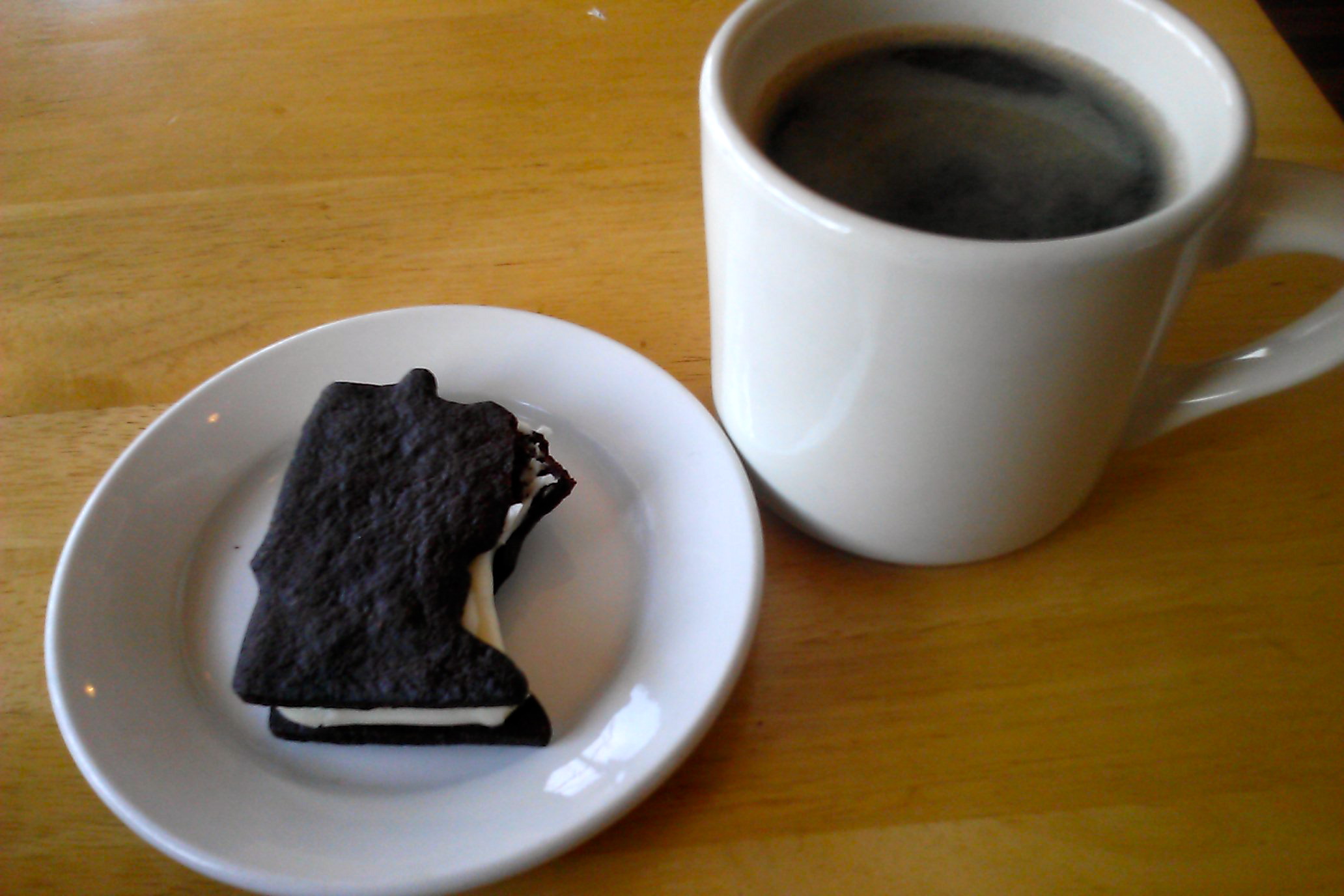
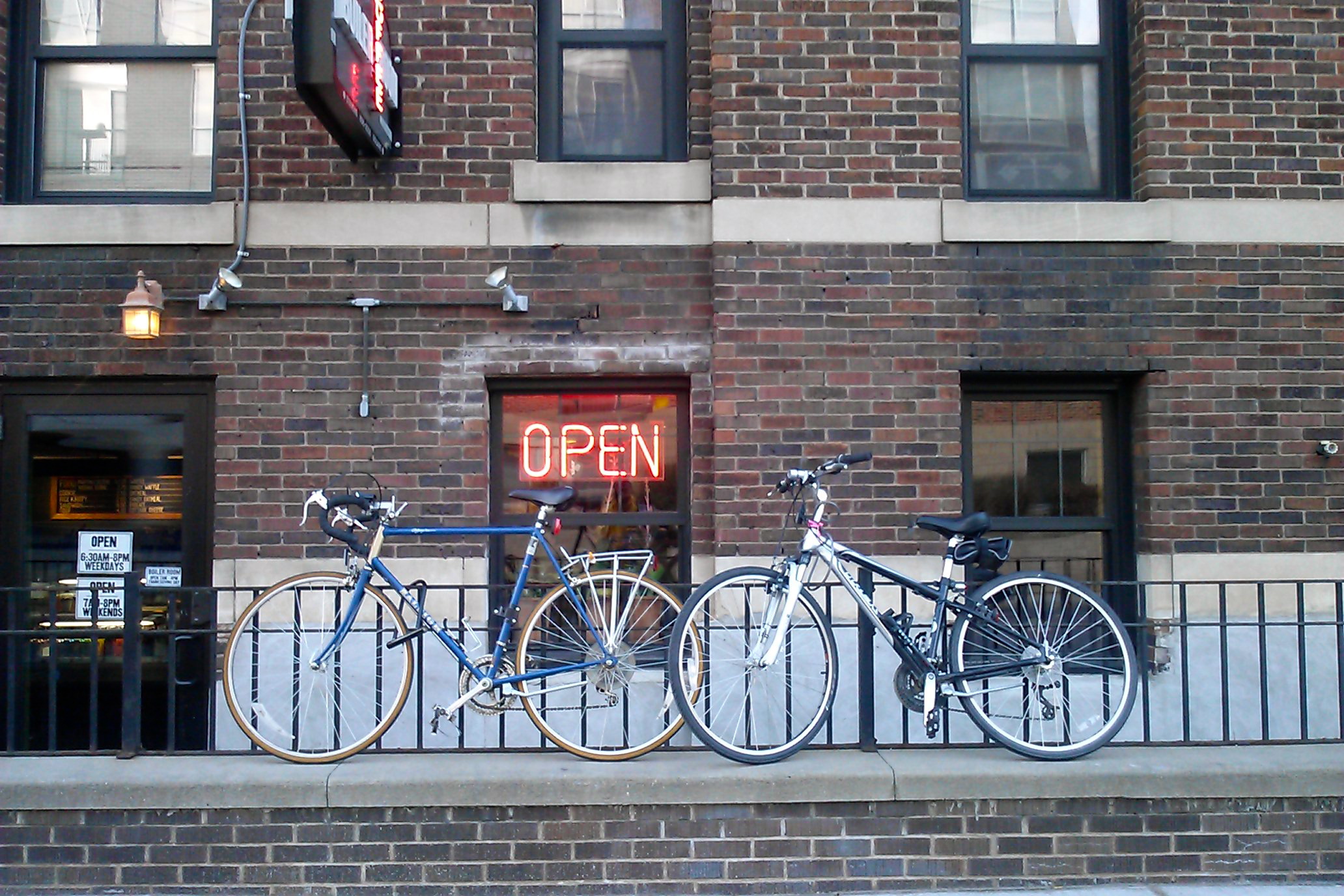
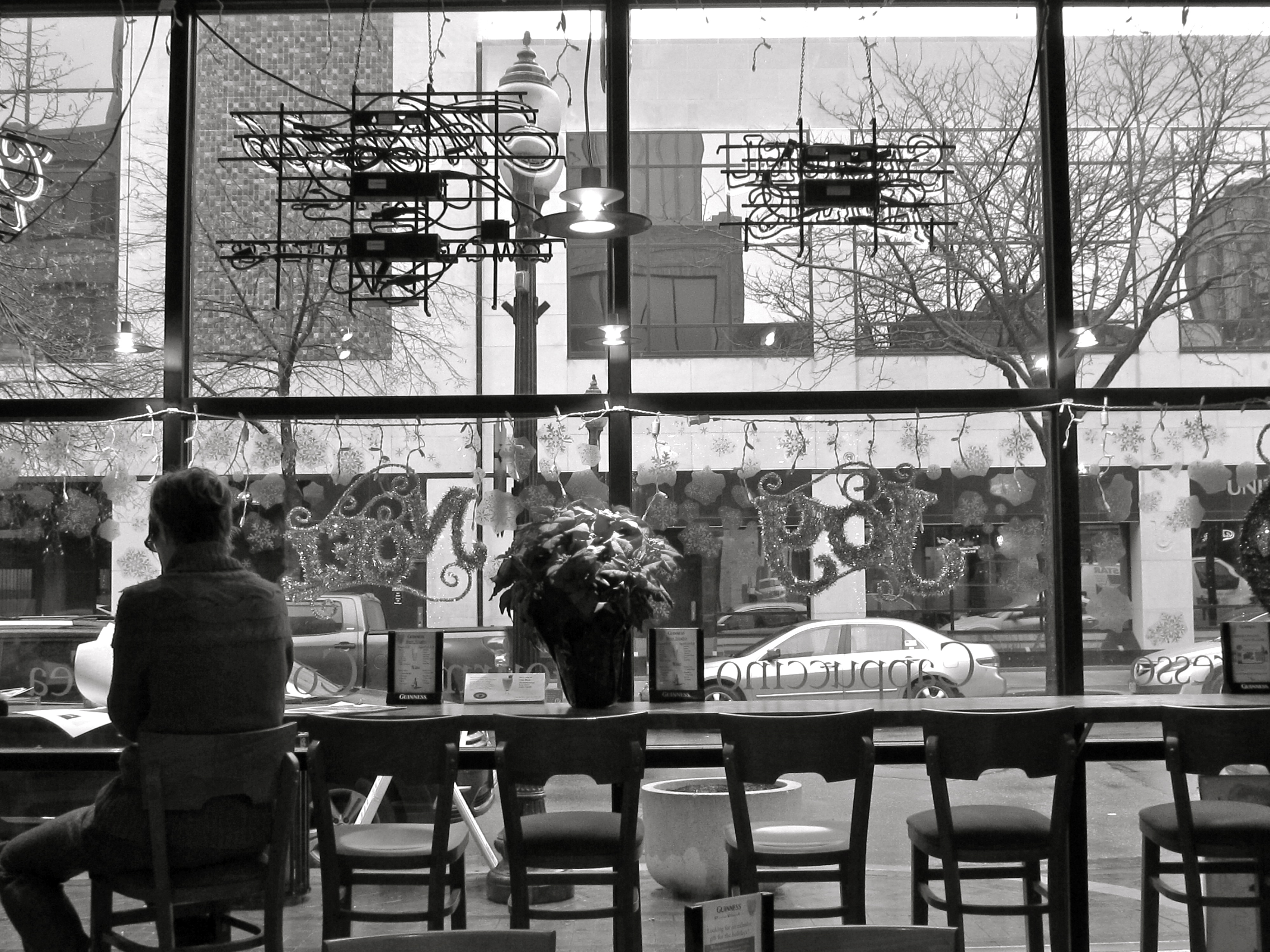
I walked the long block in the rain. The only other people I saw were in cars driving past, on their way to work at 7:50 a.m. The door to The Boiler Room stood open, and as I walked in I was greeted by Michael, the owner and sometimes barrista. He asked, “How many days left?” When I said, “Three,” he replied, “Wow! That went fast!”
He doesn’t even know the half of it! Michael was referring to the brief weeks since I’ve known I would be leaving Minneapolis. But his comment made me think about the entire two years I’ve lived here and how they have flown past. Time is such a strange and fickle construct – after all, the first winter I was here was one of the longest, coldest, snowiest on record. Every moment of that winter time seemed to crawl miserably by. Yet now, it all feels like a flash of light passing ever so swiftly before my eyes.
I arrived in Minneapolis just in time for the Fourth of July holiday weekend. Mike and I spent two days celebrating: a Twins game, riding bikes back and forth across the Mississippi River, eating great food at local restaurants. The other two days were a marathon of driving, loading, unloading and more driving to get me officially moved. Once that weekend was over, though, Mike went back to work and I was left to my own devices in a new and, mostly, unknown city.
That first day, I got on my bike and rode. I found The Midtown Greenway, and rode until I hit the river. Now I know I took the West River Parkway, but then I had no idea where I was headed: I just kept riding as long as there was a trail. Eventually, I ended up at Minnehaha Falls (though I didn’t know how to find the falls and rode right past). I took a photo of the train depot there, and texted it to Mike with the caption, “Guess where I am?” Looking back, I laugh at the fact that, actually, neither one of us knew where I was!
Before that ride, I was drawn to this city for many reasons. But that was the day that Minneapolis took up residence in my heart. The day I felt for the first time that we truly belonged together. Like most relationships, my love affair with this city has had its ups and downs. During the Polar Vortex of 2013-14, I seriously considered a break up. Often, when I was poor and discouraged by an interminable and dehumanizing job search, I thought that perhaps love was not enough to live on. Through it all, though, there was a thread of joy that kept me feeling that this thing between Minneapolis and I was just “right” somehow.
Here’s some of what I’ve learned from loving this place:
For attraction to deepen into love, you have to see beyond the superficial. Early in my time here, I happened upon a local resident’s blog. The purpose of the blog was to showcase how, in the mind of its creator, the city was becoming uglier every year. While I understood the author’s points and the political statement he was making, I just couldn’t comprehend taking such a negative view. In my response to his blog were the seeds of one of the best things I did over the two years I’ve been a Minneapolitan: my #dailypicofmpls Instagram project. I made it a point to get out and about, both in my own neighborhood and in the larger city, to really SEE things. Big things (like the iconic Stone Arch Bridge) and little things (like quirky messages hand-chalked on sidewalks). I chronicled the sights I saw, indelibly imprinting the city on my heart one block at a time. I tried to embrace it all: the good and the bad; what was ugly and what was lovely.
When you love a place, the issues that matter to that place become issues that matter to you. After the fall elections of 2013, I found myself celebrating representation by people who value similar things to me. For the first time in my adult life, I attended events featuring my ward’s councilwoman; our mayor; the city’s bike and pedestrian coordinator. On a bicycle tour of “The Grand Rounds”, I saw firsthand the unequal distribution of city funding. At Open Streets events I visited both affluent and less affluent neighborhoods, but was able to celebrate the vibrancy and unique character of each. On my own street, I spent time in places where I was the only non-Somali person present, I visited a powerful exhibit of Native American Artists at the First Nations Gallery, and I silently filed past the ghost bike commemorating a cyclist struck and killed by a drunk driver.
Love (like growth and most other worthwhile things) takes seed and flowers when you push yourself outside the confines of your comfort zone. For much of my life I let my introvert tendencies have ascendency – meaning I mostly sat back and waited for things to come to me. Living in a large metropolitan area, working part-time, and knowing exactly four people here when I arrived meant that mode of operation was not an option. So I pushed myself – to attend events, to talk to strangers, to make connections. I went to group bike rides solo. I walked and biked all over, often stopping to enter coffee shops and strange places (a chandlery, a visual arts center, a tiny neighborhood fresh foods market). I tried paddle-boarding, mountain biking, alley-cat racing. I volunteered as a bike parking attendant and as a photographer. I went to odd places and famous venues to see live music by musicians I’d never heard of. I joined a writer’s group and a joyful community of cyclists. Not every experience was wonderful, but each one helped me understand the value of being proactive rather than passive in my own life. And some truly beautiful souls entered my life as a result!
As I walked back to my apartment from The Boiler Room I thought about the many things I will miss about Minneapolis, then about how little effort I made to love Cedar Rapids during the seventeen years I lived there last time. While there are many people I love(d) in Iowa, the only patch of ground I made any effort to care about was the hill on which Mount Mercy University stood.
I know now that I have to extend my own boundaries in ways I never did before I came to Minneapolis. I’m willing to concede that my failure to love Cedar Rapids as a place may have been a failure of my own imagination rather than a failure of the city to have anything to offer. More than that, I never invested myself there as I have here. Hopefully, I’ll be able to put what I’ve learned from my sojourn in Minneapolis into action in Cedar Rapids.
In the meantime, I’m going to let the rain today express my sadness about leaving the City of Lakes. Don’t misunderstand: I am excited about the new opportunities opening in my life. But for a little while, I need to feel the emotions connected with leaving this city I’ve grown to love so deeply. And, because there’s no equivalent to The Boiler Room in my new neighborhood, I may have to brave the downpour for another Americano.
Our bikes outside The Boiler Room, Thanksgiving Day, 2013
A little over two years ago, I sat in a booth at The Blue Strawberry in downtown Cedar Rapids, Iowa, nursing an Americano. Across the booth from me was my life coach, Charlynn. Over a year into our monthly sessions, Charlynn was describing a retreat center she had recently visited when she said, “That’s the perfect job for you! You should be director of a retreat center.” While both of us thought she was onto something, even Charlynn admitted that it seemed a little specific as a career option, with limited opportunities available. Despite that, I am happy and humbled to tell you today that, in a little over a week, I will take up the reins as Director of a Franciscan ecospirituality center.
The path from that day to this day has been full of bumps and blind corners. Or, as the quote above would characterize them, “coconuts of wakefulness”. If you’ve ever been hit over the head with a coconut, real or metaphoric, you’ll understand that my experiences have been sometimes painful. But pain is only one thread of the tapestry. Last week, I wrote about faith, hope and love – and their shadow twins (as described by Parker Palmer) doubt, despair and pain. Each time I’ve been about to slide irrevocably into the shadowed realm *BONK*, I’d be hit over the head with wakefulness – an experience that heightened my awareness of the moment, that brought me back to the light.
For this post, I tried to separate faith, hope and love into three individual strands, so that I could share “coconut” stories of each, and how my understanding of each has developed over this journey. What I’ve discovered is that they are so intertwined in lived experience that I can’t really take them individually.
When I was at the edge of financial ruin, frightened and paralyzed by self-doubt, and an anonymous gift of $500 in cash was handed to me (or when a friend bought four new tires for my car, or came for the weekend to lavish attention upon me), was that gift awakening me to an important truth about love? About hope? Or about faith? In all honesty, the unexpected, unlooked-for, unearned generosity of others has been a big old coconut to the head for all three.
For one, it has awakened me to the deep truth of these words:
Love is patient, love is kind. It does not envy, it does not boast, it is not proud. It does not dishonor others, it is not self-seeking, it is not easily angered, it keeps no record of wrongs. Love does not delight in evil but rejoices with the truth. It always protects, always trusts, always hopes, always perseveres.
Love never fails.
—1 Corinthians 13: 4-8
For two, it has consistently reminded me to keep the faith that there is a bigger picture that we can’t see from where we’re standing. Right here, right now, we can see what is in this moment. But the faith, hope, and love we experience in the present are individual brush strokes in the huge canvas that is a life. And it is a canvas we are not painting alone. Even in those moments when we feel most alone, there are other hands holding brushes and creating with us. I can take this on faith, because I have been privileged to occasionally glimpse it in live action.
For three, it has given me an injection of hope when most needed. Hope, which gets me dressed and out the door every day even when things are hard – even when there is a polar vortex holding steady right over my head. When I felt lost to myself and a friend invited me to join a writing group: hope. When I needed to connect, and was welcomed on a team: hope. When I was beaten down by rejection, but pushed, prodded, and encouraged to try again: hope.
Wouldn’t it make a great story to say that Charlynn and I mapped out a plan while sitting at The Blue Strawberry and, VOILA!, the plan has finally come to fruition. The truth is more complex, and (maybe) more miraculous than that: There was no plan. But we did set an intention: I would follow my intuition and my heart’s desires where they would lead. It was an intention to be guided by faith, hope, and love to wherever I am meant to be. I cannot thank those who have walked this crooked path with me enough – for your generosity, kindness, friendship. I cannot repay you; I can only assure you that I will continue to need your presence, and that I will attempt in every way to pay the abundance you’ve shared with me forward to others (and hopefully loop it back to you as well).
I have no idea what the future holds in store, I only know that I’m stepping onto a new path soon (actually, the transition has already begun). What I do know, thanks to some well-placed *BONKS* to the head is this:
…these three remain: faith, hope and love. But the greatest of these is love.
“The deeper our faith, the more doubt we must endure; the deeper our hope, the more prone we are to despair; the deeper our love, the more pain its loss will bring: these are a few of the paradoxes we must hold as human beings. If we refuse to hold them in the hopes of living without doubt, despair, and pain, we also find ourselves living without faith, hope, and love.”
—Parker Palmer, Let Your Life Speak
There is a weight loss commercial that plays fairly often on a local television station. A woman shares her before and after photos, tells a snippet of her story, then ends with the line, “Now I can finally be who I am created to be.” Every time I hear this line, I cringe. First, I dislike the suggestion that she could not be fulfilled until she reached a specific weight. Second, it suggests that there is a great deal of specificity to “what we are created to be”.
Here is what I have come to believe: we a not born for a singular purpose. Instead, we are called to a life of purpose, the expression of which takes many forms throughout the span of our years. In order to live lives of purpose, we must learn, also, to live on purpose.
Two years ago, I quit my job and moved to the Twin Cities to experience a new chapter in my own quest for a purposeful life. I wasn’t sure what I wanted to do for my livelihood, I just knew that what I had been doing for 20+ years no longer called me. In fact, I felt depleted and beat-up, as if I had survived a war-zone instead of a long career in the ivory tower of academia.
Occasionally, when driving, I make a too-severe course correction, causing my vehicle to sway dangerously out of control, whiplashing from side to side like it might tip over. Then I regain control and equilibrium and continue on my way. The past two years have seemed a lot like that – the necessary swerves of a powerful course correction. The fact that they may have been necessary does not decrease the difficulty and/or fear I felt while experiencing them.
In the quote above, Parker Palmer references several paradoxes of human experience. First, he says, “the deeper our faith, the more doubt we must endure”. When I moved to Minneapolis, I was deeply convinced that that I was taking a leap of faith. I believed that, although the way forward wasn’t immediately clear, all would be revealed to me as it fell into place. It did not take long for doubt to creep in. I was so joyful when I first took that leap! I remember my father telling me, “Hold on to that feeling, because there are days coming when things will be really hard – and all you’ll have is this memory to remind you why you made the choice to leave your past life.” In my doubt, I remembered his words, but I found it nearly impossible to recapture the joy that had provoked them.
I was so hopeful, back then, as I took up my new life. But Palmer reminds us that we are likely to experience hope and despair as twin arcs. First, I would have creative ideas, meet interesting people, dream big dreams and hope for big outcomes. Then, nothing would come of these things and despair would swallow me whole. What carried me through the slough of despond was attention to detail. I would notice and allow small spots of beauty or evidence of connection with others to lead me back toward the hope that I would find a way to engage with purpose again in my life.
Finally, Palmer says “the deeper our love, the more pain its loss will bring.” There were people I loved and with whom I felt a deep connection. But I left them behind when I moved here. The longer it took to establish meaningful relationships in my new community, the more pain I felt at being adrift in a sea of strangers.
I share these experiences of doubt, despair and pain because they have been excellent instructors. From the deepest doubt in myself, I have learned humility. From the darkness of despair, I have learned that light has to be created and nurtured from within, then shared with an outward thrust into the world. And from the pain of loneliness and loss, I have learned that connecting with others is not only a human urge, it is a necessity for a fulfilling life.
Most important, I have learned that the majority of us will not experience a lightening bolt of inspiration which shows us, in unerring detail, our life’s purpose. Rather, if we wish to live lives of purpose, we must seek out purpose in the life circumstances in which we find ourselves. This isn’t to say we don’t have volition or the freedom to choose. It, first, means that life doesn’t happen in the logical, sequential, easy to read manner that our faith, hope and love expect. But it also means that all three – faith, hope, and love are both emotions that we feel and choices that we make. That is the “on purpose” part of the equation.
These reflections come on the eve of new course corrections in my life, which I will share in more detail in next week’s blog post. These two years there have been deeply felt learning experiences on both ends of the spectrum: faith and doubt, hope and despair, love and pain. The thread of purpose has been woven through each aspect of experience as I have wondered what purpose(s) I served, as well as how my daily choices could be made with intention. There have been times of clarity as well as times when I couldn’t see the path before me. Still, faith, hope and love are powerfully resilient in service to a life of purpose.
When I was a child, I used to speak like a child, think like a child, reason like a child; when I became a man, I did away with childish things. 12For now we see in a mirror dimly, but then face to face; now I know in part, but then I will know fully just as I also have been fully known. 13But now faith, hope, love, abide these three; but the greatest of these is love.
I’ve always admired musically talented people, especially those who seem able to hear any music and play it back without practice or written music to follow. It is as if their ear, hearing the notes, immediately translates them into a language that they know how to speak and, voila, the music flows back out of them almost magically. When I am around musicians who can play by ear, who improvise, who easily pick up a new instrument and bring forth a tuneful sound, I am often mesmerized. I feel awed by what they are able to do.
How do they first discover that they can do this?
Not being in possession of this gift myself, I don’t really know. But I imagine that, for some, the discovery comes in childhood, before they’ve been taught by life experience to doubt the possibility. But for others, there might be a moment when they decide to give it a shot. Perhaps they’ve felt the potential for a while, maybe even taken some music lessons, but haven’t had enough self-confidence to just break out and go for it. And then they do, and the whole language of music fully opens to them.
Of course, to be really good, to improve, they must practice. But what I’m interested in exploring here isn’t how a good musician hones his or her craft. Rather, I’m interested in that intersection of potential and reality, and of what it takes to cross that threshold.
We all have these thresholds in our lives. These places where we can either continue to live with our unrealized potentials or we can attempt to bring them forth into reality. How do we begin?
I discovered an Alan Alda quote that really speaks to crossing this threshold: “You have to leave the city of your comfort and go into the wilderness of your intuition.” The wilderness of our intuition. For most of us, intuition remains a wilderness precisely because we choose not to explore it. In the age of Google maps and street views, we are very unused to making any move without mapping it out first. And that is in the physical world, where we operate most of the time with relative ease. Imagine, then, how much more difficult it is for most of us to move into the wilderness of intuition, where we aren’t comfortable being, where everything is unfamiliar at first.
Sure, there are those who seem to follow their intuition with ease. But just as I am not musically gifted, I am also not one of those who easily stepped into the wilderness, following the call of my intuition. Nor has it always been an easy path. Here are a few things I’ve learned on this expedition out of my own City of Comfort and into the wilderness of intuition.
Fear walks beside you. Panache Desai, in his book Discovering Your Soul Signature, says “Life and life situations will call us out on our fear, every single time.” For me, fear comes in many forms – concern that I am not putting my attention where it needs to be; fear that something bad (illness, an accident, etc.) will happen and derail me; fears about lack (of money, of love, of time). The key, according to Desai, is to learn to allow. He reminds us that emotions are simply energy in motion. He says, “I have to learn, again and again, to catch myself…allow the fear to run through me like a river out to sea.” When I am able to breathe through my fear, then let it go, my sense of abundance and gratitude reasserts itself and I am able to keep moving forward.
Trust is essential. There are two types of trust that I have found important in the wilderness of intuition: trust in my own gut AND trust in a higher power. First, my gut. I ignored it for so many years of my life that I had to take what amounted to a remedial course in learning to heed it. I set small tests for it before making big decisions based on it. Each time – whether I listened to it or not – the lesson has been the same: my gut knows the way. And there are few feelings worse than hearing your gut say, “I told you so, but you didn’t listen.”
As for trust in a higher power, when I set my foot to this new path in the wilderness, I intellectually believed that God (the Universe, the Source of All Being) would provide. Believing that in my head is a radically different thing from living with it in my heart. It turns out that I suck at trust. Despite mounting evidence that trust is warranted, I regularly experience a crisis of faith – usually when I forget to allow fear to move through me and, instead, stop to live within it’s energy.
The wilderness is a teacher. When I was a teenager, I saw the animated film, “The Point”. In the story, the hero Oblio is the only kid in The Land of Point born without a point (his head is rounded). It is against the law to have no point, so Oblio is banished to The Pointless Forest. Where he learns, of course, that everything has a point. In many ways, leaving my City of Comfort to enter the Wilderness of My Intuition has reminded me of Oblio’s journey. Some of my lessons have been strange ones, gleaned from interacting with unusual people and experiences. Some have been emotionally difficult, while others have been truly joyful experiences. Following your intuition may lead you into odd places, but what you learn (about yourself, about your world, about your callings in life) is essential.
Which brings us back to the idea of practice. Just as musicians, however innately gifted, must practice to develop their skills, learning to follow your intuition requires practice. You will want to regularly return to your city of comfort, which is ok. It is your touchpoint, your safe spot where you are surrounded by support. However, to grow and develop as a person, you will need to also make regular forays into the wilderness. Seeing, then seizing, the moments when the threshold between potential and reality can be crossed is how we learn to get really good at playing our lives by ear. And that, my friends, is an incredibly gifted way to live.
I laughed out loud when I first read this meme on a friend’s Facebook page. I think the idea of an inspirational quote ending in such an unexpected way definitely worked as an attention-getter. More than that, though, it served as a much-needed reminder that, in every situation, I can choose to be happy or to be miserable. My choice doesn’t change the situation, but it significantly impacts my experience of it.
The past few weeks have been challenging in a variety of ways. A friend, who happened to be with me last week when one shoe dropped (there have been so many shoes dropping lately, you’d think I was a centipede) jokingly called me Job. We shared a laugh at that: right before my car, in which I had driven us to get ice cream to soothe my painfully sore throat, refused to start for the trip home.
In that moment, I realized that I had a choice: I could focus on the difficulties of the situation or I could focus on the blessings. After all, I was (thankfully) with a friend who had both the means and the generosity of spirit to help me out. I’m happy to say that, today, I chose not to give in to my inner miserable cow.
Victor Frankl, whose thoughtful ruminations and detailed recounting of life within the Nazi death camps, came to the conclusion that attitude is the final freedom each person holds. In speaking of the selfless behaviors of some people in the camps, Frankle says, “…but they offer sufficient proof that everything can be taken from a man but one thing: the last of the human freedoms — to choose one’s attitude in any given set of circumstances, to choose one’s own way.”
We each face challenges in our lives. No one can say whose challenges are greatest, nor can we judge how others choose to face them. We CAN, however, be creative in seeing past our own misery. Just to be sure I was truly paying attention to the message, another friend posted the following video which brings the point home in an incredibly poignant manner. I love the message that joy can grow out of the worst of circumstances if we choose to put our energies there rather than investing in our misery.
These are the weeks when it seems that every time I am too busy to think, much less look out a window or step outside, the sun is shining. And every time I have a few minutes to breathe, to walk or ride my bike, it is raining. I grow frustrated and feel stymied as my small windows of opportunity close.
Realizing (eventually) that it is counterproductive to rail at the weather, I wonder what message the rain brings me, what it is calling me to notice.
Monday afternoon, as I drove south on Highway 218, the rain reminded me that it is a life-giver. The fields were a rich loamy black, the ditches vibrantly green, and flowering trees perfumed the air as I passed. On the car’s radio, in-depth reporting about the drought in California offered a necessary counterpoint.
That night, tucked into bed in the home of a friend, rain tapped gently and rhythmically against the windows, splashing through leaves and bouncing off the ground, finally silencing the chorus of tree frogs enough to bring much-needed sleep. Rain is a comforter, a soother.
On Tuesday, driving again, the rain closed in, clouds and mist reducing visibility. My brain was filled with many thoughts and ideas and plans that needed sorting. In this instance, the rain served as an aid to focus.
On Wednesday, the rain helped me set a positive intention for a long day of work. As long as it was raining, why not set to work with a will?
Today, it has rained and will rain again for most of the day, the forecasters say. So I will redirect my plans and spend what free time I have with a friend, being enlightened and energized by art at the museum. And while I may have wished for hard riding or a hike in the woods, I know this, too, will feed my soul.
The rain has been a patient teacher while I have been its reluctant pupil. It has reminded me that life is lived in each moment I inhabit fully. Wishing moments away because they aren’t what I had planned or what my first choice would be is an ungrateful rejection of the gift that each minute brings. It is me, breathing just a little and calling it a life (to borrow from Mary Oliver). For even in those brief moments between obligations, between chores all of the “must dos”, I can throw open the windows and let the air reach my soul. There is no reason to let a little weather stop me.
“No wonder we hear, in your mournful voice, the complaint
that something is missing from your life!
Who can open the door who does not reach for the latch?
Who can travel the miles who does not put one foot
in front of the other, all attentive to what presents itself continually?
Who will behold the inner chamber who has not observed
with admiration, even with rapture, the outer stone?
Well, there is time left –
fields everywhere invite you into them.
And who will care, who will chide you if you wander away
from wherever you are, to look for your soul?
Quickly, then, get up, put on your coat, leave your desk.”
(Mary Oliver “Have you ever tried to enter the long black branches”)
“…I suspect the truth is that gratitude should be the center from which I live into each moment of this precious life I’ve been given. Each moment experienced as gift – I wonder how that would change my perceptions? My interactions? My creativity and flexibility when faced with life’s challenging and emotionally depleting days? What if I could also add my own imperfections to the list of items I am grateful for? Wow, that would likely be a game-changer. Imagine saying, “Thank you for my fear.” “Thank you for my confusion.” “Thank you for my flawed nature.”
—“The Very Things”, Jenion, March 28, 2013
Sometimes the smallest things lead us to the very place we need to be. This week, an unexpected comment on the two-year-old post quoted above has reminded me of a simple but important truth: even at the times when life feels difficult and overwhelming, there is much to be grateful for.
This week I am grateful for:
the few but precious moments of soaking up sunshine;
for friends who bring me meals because I am too tired to eat;
for colleagues who share their emergency stores with me;
for an evening with my writing group and their positive encouragement and support;
for stolen moments on my bike;
for loved ones near and far who share their cares and who hear mine.
As I re-read that post from 2013, it occurred to me that being able to say “Thank you” for our own imperfections is synonymous with saying thank you for our humanity. Thank you for this chaotic, messy, sometimes scary, always edifying human experience called life. The times when our lives feel overwhelming or especially hard may be exactly the best times to allow gratitude into our crowded hearts.
…On that morning, not much else will have changed. Whatever is blooming will still be in bloom. Whatever is wilting will wilt. There will be fields to plow and trains to load and children to feed and work to do. And in every moment, in every action, we will feel the urge to say thank you, we will follow the urge to bow. ~ Rosemerry Wahtola Trommer
On the day I met my friends Kate and Victoria, I found myself (somewhat tipsily) telling them that I felt certain we were destined to be friends. They were very kind to me, a strange woman squatting next to them in a bike shop parking lot, pledging friendship after a hot afternoon of alley cat bike racing. They were kind, but I’m also pretty sure they thought I was just drunk.
In the intervening year, as our friendships have grown, we have laughed about that moment. But the truth is, I’m so glad I spoke aloud what my heart had whispered to me.
Writer and philosopher John O’Donohue writes about the “anam cara” or “soul friend”, a person “to whom you could reveal the hidden intimacies of your life.” He also writes that many of us have such friends but we are largely unaware – our lack of awareness and presence in our own lives cloaks that friend’s presence. He says, “Sadly, it is often loss that awakens presence, by then it is too late. It is wise to pray for the grace of recognition.”
It is wise to pray for the grace of recognition.
You would think we would easily recognize our “soul friends”: those who are most emotionally available to us, those whose friendship calls forth what is best in and for us. How could we not recognize those friends who would as willingly walk beside us through difficulty as well as through sunshine?
O’Donohue has an answer for that question, as well. He writes, “Though the human body is born complete in one moment, the birth of the human heart is an ongoing process. It is being birthed in every experience of your life.” In other words, we learn these lessons and skills slowly, through experiencing those moments of grace, as well as through experiencing their opposite. Like a friend who recently lamented to me, “Why do I always chase after the cool people, when I should be focusing on the ones who are always there for me?”, we get distracted by the shiny and showy. We forget, or fear, to delve beneath the surface, to test the depth of intimacy that is possible with these individuals.
In friendships where we plumb those depths, we learn a great deal both about ourselves and about the other. Years ago, a friend confided her deepest life secret to me – I was stunned and humbled by her choice to share it with me. Afterwards, there was no longer any possibility of a surface friendship or acquaintance between us. Which isn’t to say we were no longer able to hurt one another or betray one another. Indeed, hurt and/or betrayal then became open territory for discussions and sharing, too.
I would take the injunction to “pray for the grace of recognition” one step further. It is wise to pray for the grace of recognition and the courage to speak it. For example, my dear friend called the other night just to tell me, “Whatever happens in life, I will always take care of you.” She said she told her husband she was going to call and say that, and he told her I already knew. Which I did. But the gift of having it declared aloud was precious and meaningful to me at a time of uncertainty in my own life. An “anam cara” knows when it is important to speak.
Recognizing and cultivating soul-friends may require us to invest our energies differently than casting a broader net of acquaintanceships does. It also opens our lives up in so many ways, as we experience the generative nature of intimacy. “Love begins,” says O’Donohue, “with paying attention to others, with an act of gracious self-forgetting. This is the condition in which we grow.” In my life, the intimacy with and support of my closest friends has freed me to take risks and to attempt creative work. They are the foundation that underpins my flights of discovery. As I hope I am for them.